Dow 50,000? With the ‘Fed put’ as a backstop, anything is possible
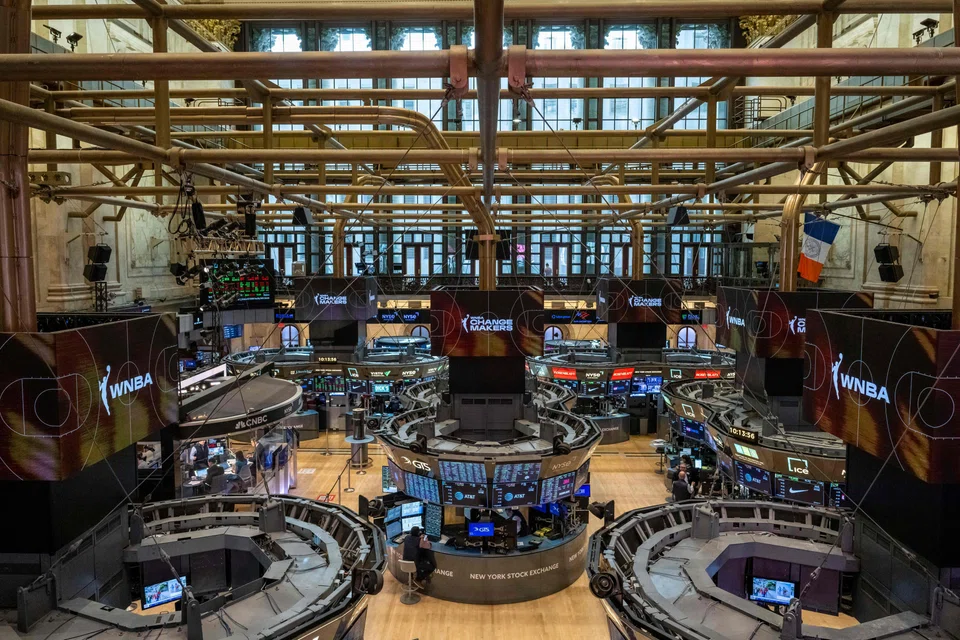
WALL Street’s all-time highs over the past few years have become so commonplace that they no longer make headlines.
In fact, even when the Dow Jones Industrial Average touched 40,000 briefly in May, there was hardly a mention in the media. Furthermore, every steep plunge is quickly followed by a sharp rebound that more often than not takes the major indices to new record levels.
Where does this confidence that emboldens large numbers of investors to keep pumping money into a market which has set 31 all-time highs in the first half of this year alone, despite interest rates being at a 23-year high, come from?
Defenders of the bull market will undoubtedly point to the rise of artificial intelligence (AI) and the seemingly unlimited potential it offers in terms of earnings, as far as tech stocks are concerned.
For sure, the rise of AI has played a part – as has excess liquidity. A “soft landing’’ for the economy? Maybe. Much less discussed, however, is a factor that has existed for so long that it has now been taken for granted.
And that’s the fabled “Fed put” – essentially an explicit promise by the US Federal Reserve to backstop any major market or economic collapse by cutting interest rates and expanding its balance sheet (or, if you prefer, print money) by as much as it takes.
Bloomberg correctly identified this as a major factor in a May article – “Wall Street’s risk appetite stays strong despite high rates” – that noted that the Fed put “has been a fact of life in markets for so long that people have become conditioned to act as if the central bank stands ready in its role as market saviour”.
It is termed a “put” because put options gain value in a falling market and are often bought to insure portfolios from sudden plunges.
It first appeared in 1987, when Fed chair Alan Greenspan slashed interest rates after the Oct 19 crash to prop up the stock market. It worked – but it also set the precedent for Fed intervention and bred the belief that the central bank will always step in to ensure a quick recovery if the market crashed.

The second appearance came in 2001, when Greenspan lowered rates to 1 per cent after the Sep 11 attack. The third was in 2008 under Fed chair Ben Bernanke, in response to the US sub-prime crisis, which the Fed itself ironically contributed to when it fell asleep at the regulatory wheel by allowing US banks to conceal worthless mortgages in complex instruments. These were then sold to unsuspecting customers as “minibonds” or “high-yield notes”.
That crisis led to the Fed’s balance sheet expanding to about US$4 trillion, which sent stocks soaring. But to appreciate how reliant the market became on being fed (pun intended) easy money, recall that in 2013, news that the central bank would taper its pace of liquidity injections brought about a huge sell-off in stocks and bonds – an episode dubbed a “taper tantrum”.
Covid-19 came next, prompting current chair Jerome Powell to bring rates down to almost zero in 2020 and expand the central bank’s balance sheet to an eye-watering US$9 trillion. There should therefore be no surprise that US stocks have risen in a virtual straight line since.
Dow 50,000, anyone? With the Fed put rendering valuations largely irrelevant, why not?
Decoding Asia newsletter: your guide to navigating Asia in a new global order. Sign up here to get Decoding Asia newsletter. Delivered to your inbox. Free.
Share with us your feedback on BT's products and services