

Dwindling BNPL numbers show tough reality even as accreditation deadline passes

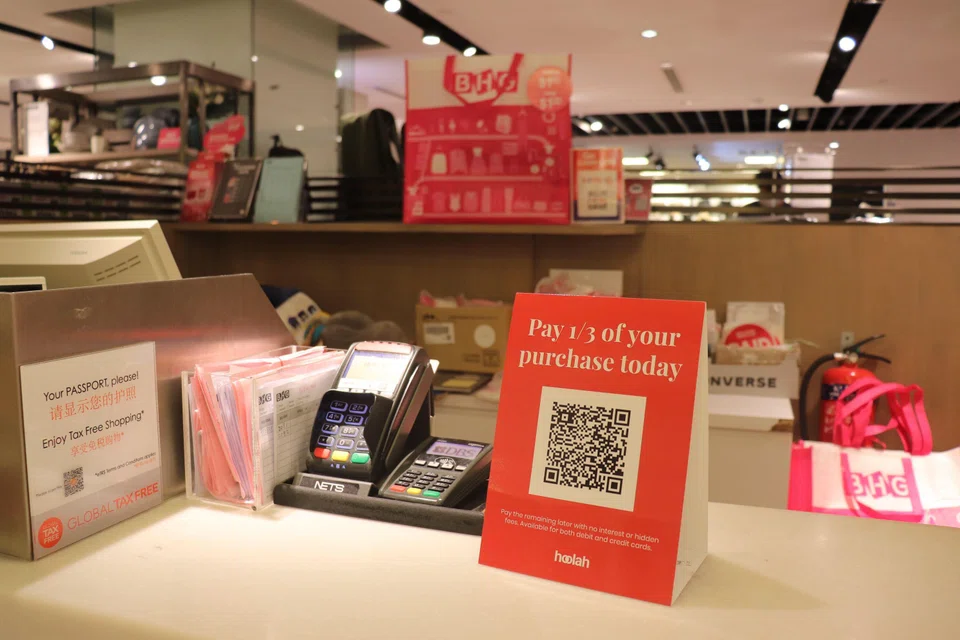
AS QUICKLY as they bloomed, “buy now, pay later” (BNPL) players have wilted in the face of the rising costs of funds.
The Singapore FinTech Association said five BNPL service providers were on track to get accredited last month. This would have allowed them to display a trust mark proclaiming their compliance with the BNPL Code of Conduct.
The Code was launched by providers in October 2022 to serve as a check against unscrupulous behaviour such as the levying of hidden fees, and to ensure transparency for consumers. All BNPL service providers were required to be accredited by Mar 31.
The guidelines came amid palpable public unease some two years ago – shortly after the advent of BNPL – over the usage of the service among the younger population.
Worries over BNPL’s influence on the financial sector, however, appear to be overblown. The Monetary Authority of Singapore estimated BNPL usage at S$440 million in 2021, or less than 1 per cent of credit and debit card payments for that year.
To be clear, there is very little incentive to comply with the Code and get the trust mark. Even without the accreditation, BNPL providers can continue operating in Singapore.
But what has been tougher for BNPL players than compliance is grappling with market conditions.
BNPL providers essentially offer interest-free loans. But as interest rates rose over the years, the cost of offering these loans has grown beyond the cut that these players take from merchants.
Even before the compliance deadline, a number of these providers had already dropped out of the race.
Singapore startup Pace entered voluntary liquidation in August 2023, even after it acquired the assets of competitor Rely to increase its market share. The same year, Australia-listed BNPL provider Zip also exited the Singapore market.
Customer-rewards platform ShopBack in March this year shuttered its PayLater service, which it launched after acquiring BNPL player Hoolah in November 2021.
The final five BNPL players that crossed the trust mark finish line were Atome, SeaMoney, Grab, LatitudePay and Abnk.ai, which is understood to have replaced Ablr in the accreditation process.
That is just over half the eight BNPL companies that were around at the launch of the Code of Conduct.
Of the remaining five, only two – Atome and Abnk.ai – are pure-play BNPL providers.
Even then, Atome is a part of the Advance Intelligence Group, which uses artificial intelligence for credit scoring and modelling. Atome’s customer data is considered useful in tuning these models.
Last July, the fintech startup entered a partnership with TikTok to offer instalment payment options on TikTok’s e-commerce platform in Malaysia.
Meanwhile, SeaMoney and Grab both have access to an ecosystem where captive customers could potentially use the service, and LatitudePay is part of a larger financial services group in Australia.
The true test
BNPL providers without such backing are finding it tough to be an attractive option at the checkout page.
Unless a customer is looking to spread a big-ticket purchase over three or four payments, there is no other attraction to use BNPL over the usual payment methods.
Rather than regulations, market conditions have proven to be the true test for BNPL players.
BNPL is still essentially a payments business with slim margins, and this has contributed to the weeding-out of pure-play providers, with no other revenue stream to fall back on.
Should costs creep up, these margins can evaporate. Coupled with the volume of transactions needed for a payments business to make sense, it gets very costly very quickly.
The great BNPL experiment appears to have come to an end. Unfavourable market conditions – marked by rising interest rates – have proved that BNPL as a sole business is unsustainable.
TRENDING NOW

LTA proposes combining car COE categories, adding rebate-surcharge system

StarHub to acquire MyRepublic’s mobile business amid ongoing telco consolidation

DBS, OCBC, UOB rout lops billions off STI as inflation, rate concerns spook investors

Grab CEO’s wife Chloe Tong on life with Anthony Tan and finding her purpose

