

Early-career continuity is a competitive advantage
Helping young workers gain footing in first jobs is both social investment and business strategy
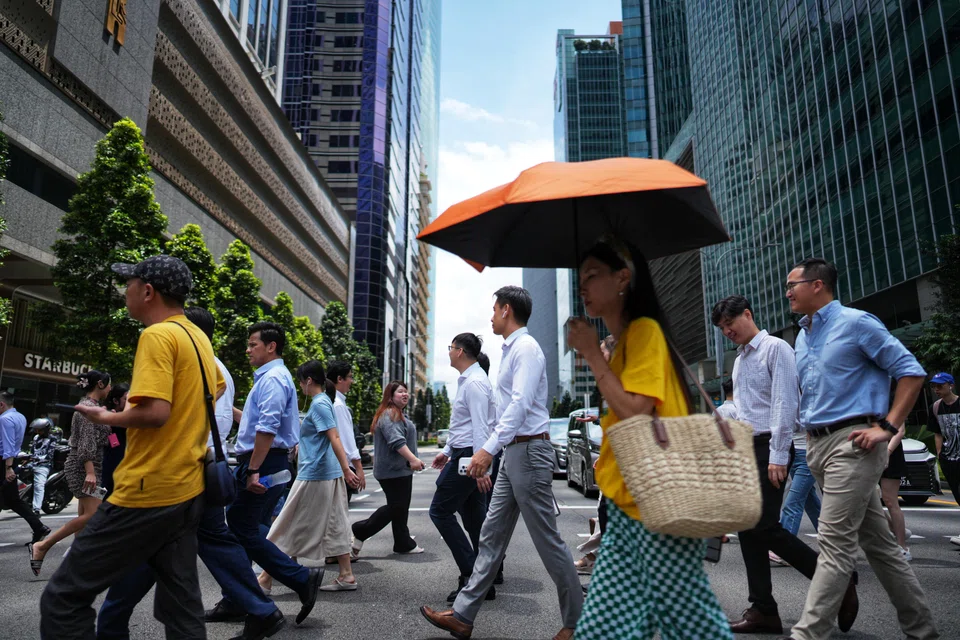
EMPLOYERS across Singapore face a familiar paradox. The job market is tight, yet many young graduates are still searching for better jobs and new roles. Firms compete for talent with the right skills, but fresh entrants are taking longer to find their footing.
What is at stake are hiring costs, retention rates, Singapore’s early-career pipelines and, with them, the resilience of the country’s human-capital base.
Over six years, the Youth Steps panel study – the first of its kind in Singapore – tracked more than 3,000 young Singaporeans from 2017 to 2022, following their pathways from study to work and into early adulthood.
The data shows that while the Covid-19 pandemic disrupted these transitions, the larger story is one of uneven recovery. Those who secured full-time roles maintained their well-being; those moving between short-term or contract work did not.
Graduates cannot gain experience or find purpose if no one gives them a chance to start. Our data shows this: Any decent, contributive work steadies well-being. It is not a cure-all, but it channels restless energy into growth.
Behind these numbers lies a question that matters even more in the age of artificial intelligence (AI) disruption: How can Singapore keep its workforce adaptable without leaving new entrants behind?
Transitions as economic infrastructure
In business, continuity is often a sign of operational health. The same principle applies to labour markets. The smoothness of transitions between school and work affects both youth well-being and also the adaptability of the broader economy.
Our research shows that early-career continuity was the strongest predictor of life satisfaction among young people. Even short-term roles provided structure and confidence, while unemployment or prolonged job searching eroded both.
This points to an under-recognised truth: The stability of early careers functions as an economic variable, not just a social one.
When these transitions falter, the effects extend beyond individuals. Delayed entry into stable work slows human-capital growth and adds churn, adding friction to workforce planning and talent development. Over time, the economy loses some of its capacity to convert skills into productivity. In short, the climb to success takes time and a steady start.
Lives and livelihoods: the hidden economic link
The phrase “lives and livelihoods” became familiar during the pandemic, but it remains relevant today. Employee well-being and productivity reinforce each other in ways that shape business outcomes directly.
When young employees see clear pathways for progress, they stay engaged and invest in their own development. That engagement – the ability to stay connected to purpose even as modes of work evolve – underpins retention and skill accumulation.
Prolonged career uncertainty, by contrast, increases turnover and weakens institutional continuity. For employers, this is an operational cost: the expense of re-hiring, retraining and rebuilding institutional knowledge.
This is not confined to youth. Early-career uncertainty compounds over time, affecting household formation, consumption and investment decisions.
Evidence from long-term economic studies shows that weak entry conditions leave lasting “scars”: lower earnings for a decade or more, and slower movement into higher-productivity firms. When early careers stall, households delay major decisions such as marriage, fertility and home purchase.
The broader economy ultimately relies on confidence in upward mobility – what might be called the social compact of work. At its heart is a simple promise: that effort leads to opportunity. When that promise feels shaky for new entrants, the tremors travel outward to household spending decisions and even social cohesion.
“At its heart of the social compact of work is the promise that effort leads to opportunity. When that promise feels shaky for new entrants, the tremors travel outward to household spending decisions and even social cohesion.”
Renewing that compact is a shared responsibility between state, industry and workers: government cushioning shocks, firms offering structured career routes, and individuals investing in skills. Together, these actions reduce the long-run drag from rocky starts.
GRIT and the case for continuity design
One initiative pointing in the right direction is the Graduate Industry Traineeships (GRIT) programme and GRIT@Gov, which offers graduates – from universities, polytechnics, the Institutes of Technical Education and other institutions – structured traineeships to gain industry-relevant skills and ease their transition into full-time work.
For the economy, the programme serves a strategic purpose of keeping graduates in motion. It prevents skill decay and signals that experience and applied learning – not only qualifications – matter.
Given current economic headwinds, such traineeships may need to be adapted and scaled up across industries to manage entry-level risk. Instead of waiting for “ideal hires”, firms can use six-month to 12-month placements to test-fit young talent, build sector familiarity and reduce onboarding friction.
Expanding programmes like GRIT could turn what began as a pandemic measure (in the form of the SGUnited Jobs and Skills Package) into a standing transition infrastructure that maintains labour agility without leakages in potential.
Renewing the work compact
Singapore’s next phase of growth will continue to hinge on human capital – ensuring that each new cohort remains employable, engaged and matched with industry needs. The Youth Steps findings make this tangible: Even modest job security improved well-being significantly. In an economy competing on adaptability, worker resilience will be an important differentiator.
The traditional sequence from education to work to stability still applies, but careers today are longer and less linear. Ensuring that these pathways remain navigable is what keeps Singapore’s system credible.
This is where business leaders must step in. Renewing the work compact is a direct investment in your future talent pool. It means taking an active hand in shaping whether graduates see their first roles as growth platforms.
For business leaders, renewal means active participation in these non-linear pathways: shaping whether graduates experience their first jobs as growth platforms rather than holding cells, and whether skills training feels like an opportunity or an obligation.
Our data shows that job security sustains well-being, which in turn sustains engagement and retention. Stable new hires are productive ones who stay, reducing the hidden costs of recruitment churn.
Designing for continuity demands more than just good intentions. It calls for structured entry and mobility programmes, mentorship, and clearer progression routes that build confidence early.
When early-career transitions are smooth, employees stay longer, risk-taking rises and productivity gains become sustainable. Disruption is inevitable, but what matters is a mindset of workplace continuity where no transition becomes a dead end, where outcomes are valued over routines, and adaptability over attendance.
The lesson is simple but often overlooked: Youth transitions are entangled. Education, employment and well-being move together. Fix one without the others, and the gap widens. Design for all three and you build not just resilience, but also renewal.
Early careers shape not only individual outcomes, but also the economy’s rhythm of renewal. A compact that links education with employability, and well-being with productivity, is strategic.
Singapore’s next advantage will come from the quiet assurance that every new entrant has a place to begin, a skill to build and a future to claim. That is how stability becomes enduring confidence.
Chew Han Ei is senior research fellow, and head of governance and economy at the Institute of Policy Studies, National University of Singapore (NUS). Vincent Chua is an associate professor at the department of sociology and anthropology, NUS. They are co-principal investigators of the Youth Study on Transitions and Evolving Pathways in Singapore (Youth Steps).
TRENDING NOW

‘My grandfather’s legacy’: Sherman Kwek lays out three-year plan for CDL to drive returns

From Haidilao to Oriental Kopi: How some of Asia’s favourite F&B players are faring in 2026
MAS allocates S$1.45 billion to five asset managers in third EQDP batch: Chee Hong Tat

Built on trust since 1964: How this award-winning finance company has grown with its SME customers

