Ebola science is moving fast; it might not be enough
The tension is worsening between scientific advances and the realities that make it difficult to translate them into lives saved
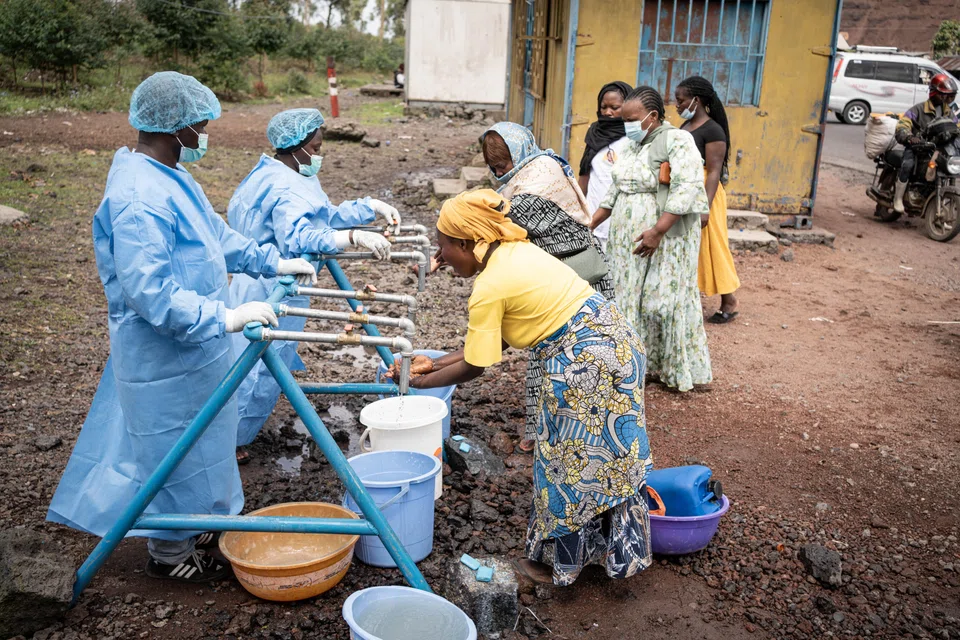
AMID a fast-moving Ebola outbreak in the Democratic Republic of Congo (DRC), the scientific community has mobilised with breakneck speed to find ways to stamp out the virus.
It is an effort grounded in years of knowledge gleaned from previous outbreaks – of Ebola, of course, but also Covid, mpox and other pathogens that have caught the world off guard.
And it is proceeding remarkably quickly: Within little more than a week of the World Health Organization (WHO) declaring an emergency, experts had homed in on the best potential treatments and vaccine candidates, and had a good sense of how to test them.
True, none of what is ready right now is a perfect match for this species of Ebola, known as the Bundibugyo virus. But in a perfect world, even modestly effective interventions would help health workers contain the spread and save lives.
If only the science were enough.
With the number of suspected cases nearing 1,100 and nearly 240 suspected deaths, global health leaders are navigating a complex reality on the ground. This week, Tedros Ghebreyesus, director-general of the WHO, warned that parts of the DRC face “a catastrophic collision of disease and conflict”.
Aid workers and health facilities have been attacked, and misinformation about Ebola and distrust of humanitarian help is rampant. His assessment of the situation was bleak: “It will get worse before it gets better.”
That has complicated efforts to do even the basics, such as isolating people infected with the deadly disease and identifying everyone exposed – let alone running a clinical trial. Still, the desperate need for more tools to slow the spread requires pushing forward.
There are no authorised vaccines or treatments for the Bundibugyo virus, which previously caused just two small outbreaks – the most recent over a decade ago.
Researchers had instead focused their attention on haemorrhagic fever-causing pathogens expected to cause problems in the future – namely, the Zaire and Sudan species of Ebola, and Marburg viruses.
Still, scientists have some reasonable starting points to lessen the toll of Bundibugyo, and know-how to conduct a trial that can quickly determine what works. That is a huge advance over earlier Ebola epidemics, when standing up clinical studies took many months.
Much of what is available to deal with the Zaire variety of Ebola – the source of the prior two large outbreaks – has a chance of working on Bundibugyo, as pieces of the viruses are similar enough.
Promising interventions
Among the already-available treatments that have been studied in the Zaire virus, Gilead Sciences’ remdesivir seems a good fit. The drug works by jamming up the machinery the virus uses to make copies of itself – machinery that looks quite similar across many different types of viruses.
It disappointed in clinical studies in humans infected with the Zaire virus, but lab tests suggest it could be more potent when treating people infected with Bundibugyo.
Meanwhile, there is hope that an oral version of remdesivir, called obeldesivir, could keep people exposed to the virus from developing the disease. In the past two years, several studies have shown the drug can prevent infections in monkeys exposed to other Ebola-causing viruses.
Other promising interventions are focused on the piece of the virus called the glycoprotein, which it uses to glom onto a human cell and pull itself inside.
The glycoproteins made by the Bundibugyo and Zaire viruses are the most similar among the filoviruses – about a 70 per cent match, according to Dr Erica Saphire, a professor at the La Jolla Institute for Immunology.
Studies by Dr Saphire and others have found that people who have been infected with the Zaire virus make some antibodies that react to Bundibugyo.
The most promising antibody therapy for Bundibugyo was discovered by researchers sifting through hundreds of antibodies generated by a survivor of the West Africa outbreak. One worked on its own, while a second was engineered to improve its ability to neutralise multiple strains of the virus.
Together, they form the basis of an antibody cocktail being developed by Mapp Biopharmaceutical that, along with remdesivir, the WHO, DRC and the Africa Centres for Disease Control and Prevention have prioritised for testing amid this outbreak.
The similarity between the Zaire and Bundibugyo glycoproteins initially generated hope that the existing Ebola vaccine, developed for the Zaire virus, could offer at least some protection against Bundibugyo. But the data supporting that theory is very limited.
The Zaire vaccine is available, making it a hard-to-ignore option. Yet, the uncertainty of whether it would offer sufficient – or even any – protection in humans has prompted developers to expedite the development of shots specifically targeting the Bundibugyo glycoprotein.
The question, of course, is whether any of these treatments can be tested and rolled out in time to make a difference. The world has learnt so much about how to respond to a crisis, yet the tension is worsening between scientific advances and the realities that make it difficult to translate them into lives saved.
A sweeping analysis of the state of pandemic readiness following nearly a decade of health emergencies foresaw this moment.
“Preparedness efforts are being outpaced by new and more complex stressors, including pandemic risks, geopolitical instability and rapidly evolving information ecosystems,” concluded a recent report from the Global Preparedness Monitoring Board.
That portends a bleak future. We keep honing the scientific playbook for addressing an emerging threat, but it cannot be put to use when those broader societal stressors go ignored.
The report warns that future crises will be more disruptive and harder to manage. With this outbreak, that future has arrived. BLOOMBERG