EC president sketches out second term vision
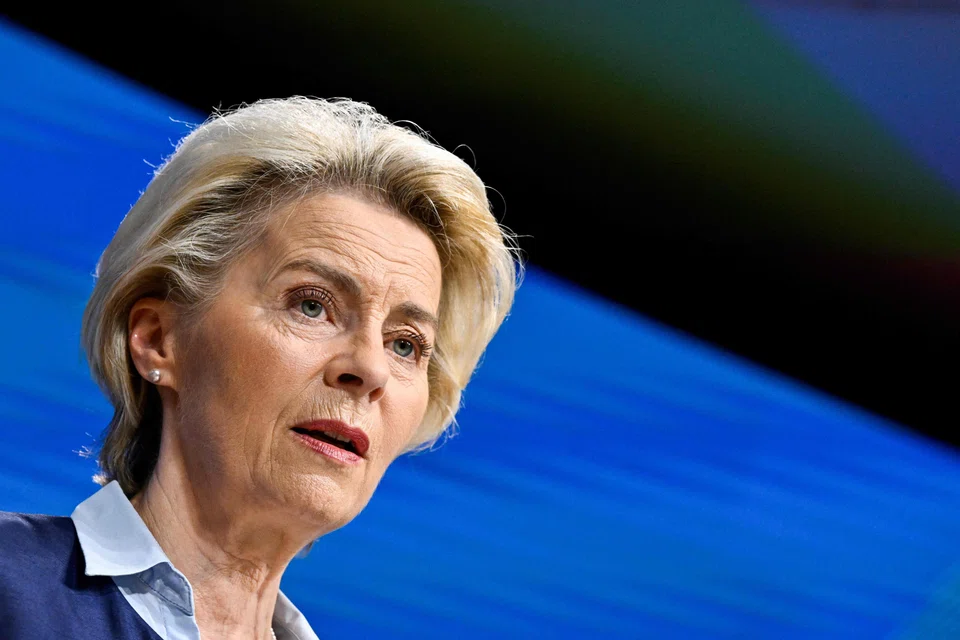
EUROPEAN Commission President Ursula von der Leyen gives the most important speech of her career next week (Sept 13) in what may be her last annual ‘state-of-the-union’ address to the EU.
Almost four years into her presidency, the European Union faces a ‘cross roads’ moment in the aftermath of the pandemic and the wake of the Ukraine war. The array of challenges and opportunities facing the bloc means it is at a potentially historic tipping point between the past and a hopefully brighter, new dawn in the second half of the 2020s.
Von der Leyen hopes to lead that future by serving a second term from late 2024, but that will depend upon the ‘political horse trading’ that follows the result of next June’s European Parliament elections. Even if she does not serve as Commission president again, it is possible she may land in another big job with, for instance, US President Joe Biden reportedly wanting her to serve as the next Nato secretary general.
When von der Leyen took office at the Commission in December 2019, she could not have foreseen that the pandemic and Russia’s invasion would be the decisive challenges of her presidency. Yet they have dominated, and it is sometimes now forgotten, nearly forced her resignation after the bungled, initial EU rollout of vaccines in 2021.
For all of the challenges that the pandemic and Ukraine war have brought, this crisis-type environment is one that the EU has sometimes found congenial, in the past, to enable the pathway to ever closer union. A good example here is the Commission of the sometimes controversial Jacques Delors.
Taking office during a troubled period for the bloc, he is seen by many as giving what is the present-day EU a clear sense of direction, including as the founding father of the euro. In his first term from 1985, he rallied the bloc to the call of the single market, and when appointed to a second term he urged Europeans toward the ambitious goals of economic, monetary, and political union.
While history may not see von der Leyen’s presidency as being – quite – as historically important as that of Delors, she has delivered a wide number of big achievements. For one, von der Leyen played a key role in 2021, alongside then-German Chancellor Angela Merkel and French President Emmanuel Macron, in persuading fellow EU leaders to agree to give the bloc, for the first time in its history, debt-raising powers to finance a 750 billion euros post-pandemic recovery plan to counteract the worst economic shock for decades.
Historically, this could be looked back on as a key moment for the EU. At the time, there was even discussion in Brussels of a ‘Hamilton moment’ in reference to Alexander Hamilton, the Treasury Secretary in 1790 for the newly created United States of America who convinced the Congress of the benefits of common debt.
Earlier in her presidency too, in 2020, von der Leyen was key to the EU-27 and United Kingdom agreeing a Brexit trade and cooperation deal. While tensions still exist with London, this has provided a potentially workable framework between the parties to try to build a new phase of UK-EU partnership in the years to come, especially now that a revised Northern Ireland Protocol is agreed.
Yet another big achievement is the huge scope of her Green Deal mega project. This has seen more than 50 major sustainability initiatives rolled out since 2019 as Europe seeks to become the first continent in the world to be climate-neutral by 2050.
In her big speech on Sept 13, von der Leyen has hinted that she will focus again not only on Ukraine, but also this green vision for the EU post-pandemic. This will include a big section on EU climate action with COP28 on the near horizon.
Hence von der Leyen will therefore emphasise again her belief that it is critical for the more than 400 million population bloc to be ambitious and seize the initiative in coming years. The alternative, in her view, is further drift that has characterised EU affairs for so long.
For there are also risks too. Indeed, recent years has seen a huge growth of domestic and external challenges that may be without precedent in the post-war era.
On the domestic front, there has been a significant rise of anti-EU, nationalist sentiment across the continent which has seen populist arguments coming to the fore as well as the perceived erosion of the fundamental values of liberal democracy. This is personified in Hungarian Prime Minister Victor Orban, who enjoys the closest relationship with Vladimir Putin of any EU leader, and who has in the last 18 months stymied a number of key sanctions-related activities against Russia.
On the international front is a new geopolitical reality not just from an increasingly assertive Russia. There is also massive uncertainty from United States with the 2024 US presidential election offering potentially a stark international relations choice between the strong Atlanticist Joe Biden, and – possibly -- the pro-Brexit, anti-EU Donald Trump.
Taken together, von der Leyen’s speech will seek to make clear that decisions in late 2023 and 2024 will have a huge role in defining the EU’s longer-term political and economic character in the face of multiple opportunities and challenges. With storm clouds potentially gathering again, she is right that there may now be a historic window of opportunity for the continent to forge a stronger, sustainable path into the future.
Andrew Hammond is an associate at LSE IDEAS at the London School of Economics