

Economic imperatives of climate action
MOST people worldwide, in view of all the scientific evidence, now rank climate change as a top global risk. That sentiment, however, is not matched by economic policy shaping climate investments in countries.
This disconnect between scientific knowledge and policy action must be tackled with a great sense of urgency, as studies reveal new alarming projections of rising climate damages, such as dangerous sea-level rises in South-east Asia.
Among the salient considerations, a new book* puts the spotlight on glaring gaps in the thinking of mainstream economics that need to be filled to gain traction in climate policy.
On the one side, over the decades economists have not weighed in on their own, nor have they teamed up with scientists, in studying climate change and finding solutions.
One of the reasons is the lack of methodologies in economics together with the needed frames of mind for the study of climate impacts. This is evident when influential economic journals worldwide have rarely featured environmental and climate implications for economic growth and well-being.
This is a pity, because if scientific investigation were to dovetail with economic analysis, there would be considerable gains in understanding the issue, formulating policy responses, and communicating them effectively.
On the other side, where economics has played a part, it has not done nearly enough to discourage carbon-intensive growth. This outcome has sprung from the obsession of mainstream economics with short-term GDP, which has led to it celebrating any type of growth, even carbon-intensive growth, rather than targeting measures that deduct the spillover damages from the growth process.
Furthermore, macroeconomic models used by governments and their development partners – including the International Monetary Fund, World Bank, and other multilateral lenders – have underestimated or ignored climate effects in forecasting growth, often on account of the inability of these models to capture environmental effects. As a result, many governments continue to provide incentives to boost carbon-intensive growth and underinvest in climate mitigation.
What is needed in the era of climate change is quite the opposite. Economics should lead the charge in attributing climate change squarely to the relentless emissions of greenhouse gases from using fossil fuels. Equally, it is vital to communicate this link to the public and policymakers precisely when climate disasters strike and public attention is focused on them.
Recent work in economics has begun to show how carbon accumulation significantly increases the incidence and intensity of climate disasters, which in turn hurts the rate of economic growth. Recent use of economic analysis has been helpful in laying out the cause and effect of climate change and communicating them to the public.
Urgently needed is also a strong economic policy response to worsening climate change. Countries should refrain from relying exclusively on GDP, which is a gross measure of economic growth, and at least complement it by a measure that nets out damages. Doing so would send a signal on the merits of decarbonising economies.
Countries should also adopt carbon pricing as a way of putting a price on clean air. One way to do so would be via a significant carbon tax that is levied on the source of the pollution as Singapore has initiated and is planning to scale up.
Another approach would be to develop carbon trading and carbon markets as China and the European Union (EU) are doing. The EU plans to also apply a tariff on the carbon content of imports as a way of discouraging high carbon trade.
Economics can be enormously helpful in nudging behaviour and changing mindsets, which at the end of the day is the best means to put economies on a low-carbon growth path. A huge premium is to be had in achieving more regenerative growth (for instance, through the use of renewable energy) than destructive growth (such as resorting to deforestation).
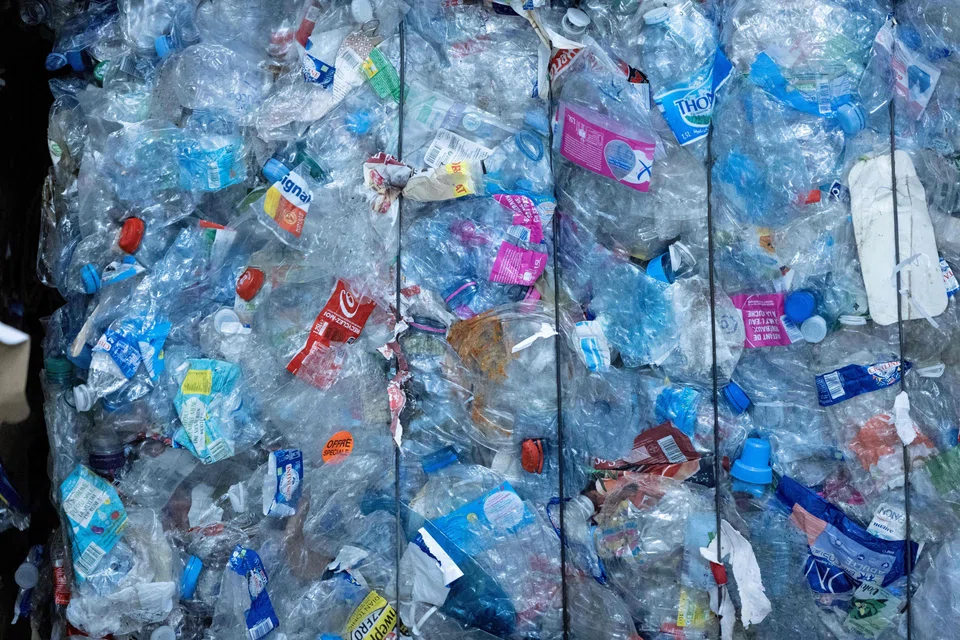
There is great merit in thinking of a circular economy that minimises waste, zero waste being a key feature of the Singapore Green Plan 2030. Green production and distribution of goods and services would be accompanied by collection, reuse and recycling that minimises residual waste. A circular economy would motivate reusing products, rather than wasting them and drawing on new resources. Waste would be returned to the economy providing multiple benefits.
Even as a more sustainable growth path presents net gains to the economy, some interests will still be hurt. Anticipating these concerns and building transition plans, including investments in skills and labour redeployment, and provision of safety nets for poorer segments that could hurt, will be key.
Climate investment is not costless, but economics is clear that the price of inaction far exceeds the price of action.
*Risk and Resilience in the Era of Climate Change, Palgrave Macmillan, Apr 4, 2023.
The writer is a former senior vice-president at the World Bank






