
‘Economic substance’ matters in taxing of foreign asset sales
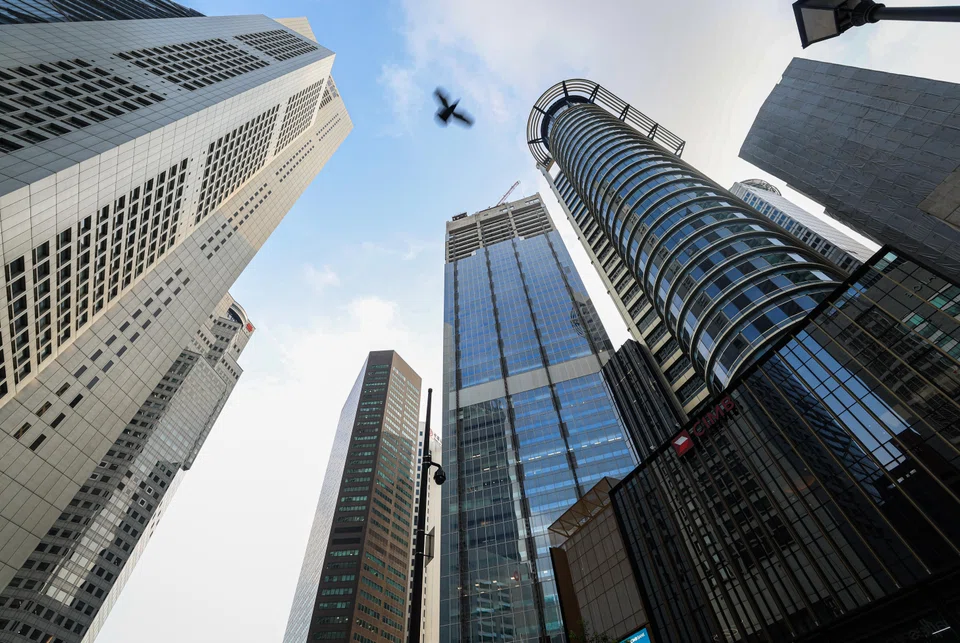
    • Foreign-headquartered MNEs in Singapore would certainly fall within the scope of the proposed tax change, but the impact could vary widely.
    • Foreign-headquartered MNEs in Singapore would certainly fall within the scope of the proposed tax change, but the impact could vary widely. PHOTO: YEN MENG JIIN, BT
    Published Thu, Jul 13, 2023 · 05:00 AM

    “SINGAPORE does not tax capital gains” – while this is often cited as a positive feature of Singapore’s tax regime, soon it may no longer be true in certain instances.

    On Jun 6, the Ministry of Finance (MOF) issued a call for public feedback on the draft Income Tax (Amendment) Bill 2023. It flagged a key proposed amendment: to tax gains from the sale of foreign assets that are received in Singapore by businesses “without economic substance” locally.

    While this proposed revision can result in additional taxes, it is not necessarily an attempt to increase Singapore’s tax base, and should not be conflated with the government’s ongoing study of introducing a global minimum tax.


    In fact, the primary impetus for proposing this milestone development in Singapore’s tax regime was the European Union’s updated guidance on foreign sourced income exemption regimes, issued in late 2022. This requires all types of passive income, including capital gains, to be subject to the “economic substance” requirement as a prerequisite for non-taxation.

    Evidently, MOF’s move is more an attempt to preserve Singapore’s international standing as a responsible and substance-driven hub location.

    Expansive coverage to be expected

    Should the proposal be implemented, the new law would apply to gains from the sale of foreign assets occurring on or after Jan 1, 2024. The approach is expansive – foreign assets that fall within this provision include any movable or immovable property outside Singapore; shares in foreign companies; secured or unsecured debt; and intellectual property rights.

    Given its intended focus on businesses without economic substance, this provision – known as Section 10L – contains certain safe harbours. This means that some types of entities regarded as having substantive business activities here – such as financial institutions and taxpayers enjoying certain tax incentives – would not be hit by the new rules.

    Apart from the above entities, the application can be very broad. Foreign-headquartered multinational enterprises (MNEs) would certainly fall within the scope, but the impact could vary widely.

    For MNEs with a Singapore platform that is used to own regional assets, the impact could be deep if such assets are sold for sizeable gains, and if the Singapore platform is found to be lacking in economic substance. Importantly, the tax may apply even if the sale is part of internal group restructuring and not to an external party.

    In contrast, MNEs whose Singapore presence is centred on having substantial local operations or management may see minimal or no impact.

    Meanwhile, MNEs headquartered in Singapore should not be deeply impacted, unless they somehow lack economic substance locally.

    While there is ongoing international momentum to tax larger MNEs in a differentiated way – for example, the discussion around global minimum tax and related developments – one cannot assume that small and medium-sized enterprises (SMEs) in Singapore will be unaffected by the proposed new taxing section.

    The rules apply as long as the enterprise’s group of entities includes one with an overseas place of business – so size is not a factor. Instead, the focus is on whether there are substantive economic activities locally, whenever the Singapore SME sells foreign assets and the proceeds are received here.

    Substance can be subjective

    Unfortunately, substance may be in the eye of the beholder. With no bright-line tests, it is conceivable that disputes with the tax authorities may arise on the issue of whether there is sufficient economic substance.

    With offshoring discussions dominating many boardroom agendas, managing this new tax rule is not as simple as making broad-brush recommendations for enterprises to increase their economic substance in Singapore, say by increasing their local workforce.

    In determining substance, the authorities will likely consider factors such as the qualifications and experience of employees in Singapore, and the quantum of business expenditure incurred here – so having “one man and his dog” as a token attempt will likely not pass muster.

    When interpretation of the tax law is not straightforward, it may be possible to pursue an advance ruling. Under this taxpayer-initiated process, the tax authorities can provide their written position on how issues arising from a proposed arrangement are to be treated for tax purposes.

    It would be interesting to see if the Inland Revenue Authority of Singapore (Iras) proactively embraces “economic substance” advance rulings for taxpayers keen to seek certainty for future transactions, like their counterparts in Hong Kong.

    If such an avenue (or broad equivalent) is offered by Iras, taxpayers would be well-advised to consider it. This can help minimise future disputes, which tend to be relatively much more costly and time consuming.

    Given the short runway for implementation of the new taxing rule, businesses should not adopt a “wait and see” approach.

    Instead, they should promptly start an impact analysis, taking into account both Singapore and non-Singapore taxation and associated operational consequences of potential pre-2024 restructuring of asset ownership structures. They should also consider steps, if needed, to enhance economic substance in Singapore.

    All this should help position businesses to cope with the impending change and minimise unnecessary tax leakage.

    Daniel Ho is tax and legal leader, and Chua Kong Ping and Loh Eng Kiat are tax partners at Deloitte Singapore.


