Edible insects: Critical to have measures against ‘inadvertent consumption’
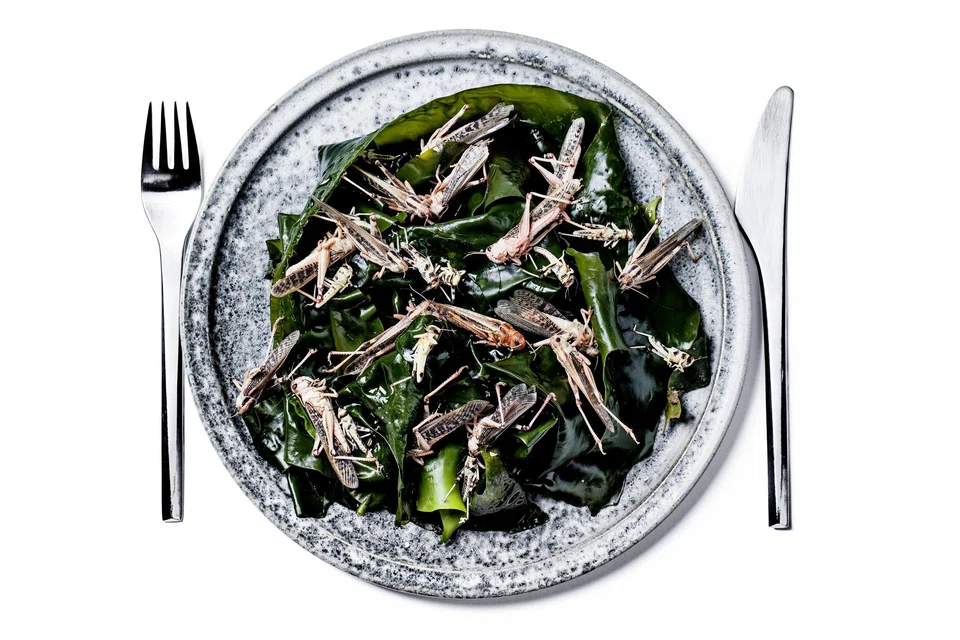
READING the article “Crispy crawlies on the menu” (BT, July 12), I was amazed that insect food technology has made such tremendous advances as to put a new spin to the old adage that one man’s meat is another man’s poison.
I have no doubt the Singapore Food Agency (SFA) is extremely vigilant in regulating this novel class of food. SFA guidelines include requiring documentary proof that the insect products are manufactured in regulated premises with food safety controls and not harvested from the wild. Insects species not on the approved list have to undergo evaluation to ensure they are safe to eat.
Labelling packaging
Companies selling pre-packaged food containing insects will also be required to label their packaging as such. Insect products will be subjected to SFA’s inspection and surveillance, including sampling to ensure compliance with food safety regulations.
Notwithstanding these exacting standards, before insects become an integral part of our food supply and meal menus, it would be comforting to hear SFA’s authoritative assurance regarding specific regulations against inadvertent consumption arising when insect food may be served whole or crushed and added to cooking ingredients and served in restaurants.
There is also the possibility of insect parts being added to non-insect packaged foods and cooking ingredients sold to the public. Has SFA imposed a requirement for food establishments that serve insect food to declare clearly which dishes contain insects? Are separate cooking areas designated to prevent cross contamination? Are producers of packaged insect food required to clearly label insect content especially when mixed with non-insect products?
This is of concern to non-insect eaters as studies suggest that people who are allergic to shellfish or dust mites could also have allergic reactions when eating insects. Allergic reactions vary in severity ranging from the minor itch to rashes to life-threatening episodes requiring an epi-pen intervention.
There are also concerns about insects containing harmful pathogens such as microscopic parasites and viruses on farms that are substandard in hygiene and feedstock management. Given that the insect farms are likely to be in places such as China, Thailand and Vietnam, how does SFA ensure compliance with its stringent standards?
Concerns
These concerns are not overblown. A recent Science of Food research paper identified potential points of food safety and fraud along the edible insect supply chain. Feed substrate was identified as the main area of concern regarding microbiological and chemical food safety.
Food is such a personal choice; some may be totally put off but the young are reported to want to eat the insects whole! But it would be great if SFA can assure the public that there will be no cases of inadvertent consumption, whether of whole insects or in fragments, for those who have no such exotic tastes.
Loh Kin Poh