Edible insects: A viable alternative to alternative proteins

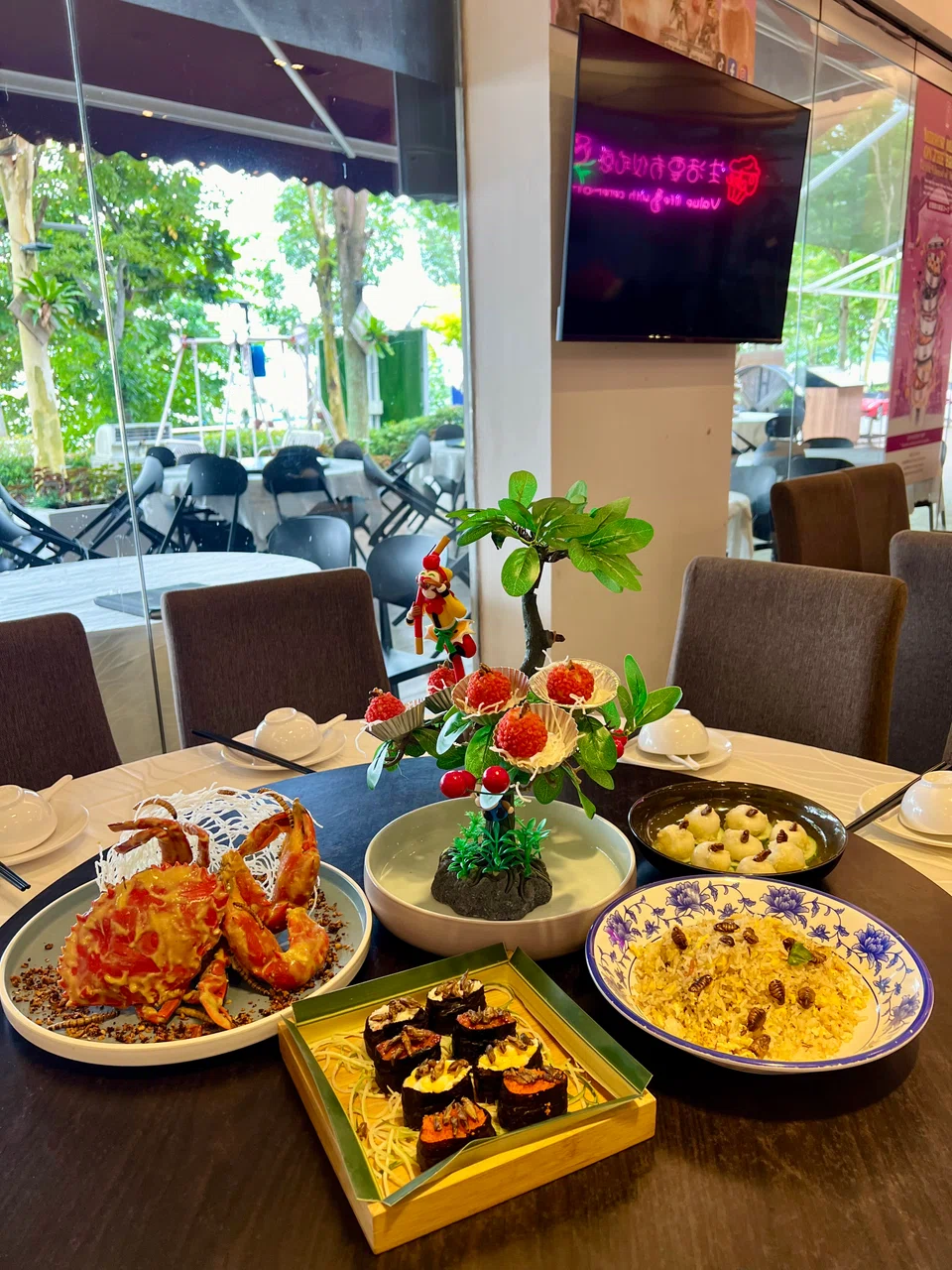
AT FIRST glance, Singapore’s decision to allow insects to be used for food would seem to have little to no impact on those in the “never” camp (me included).
However, having a set of regulations is actually a plus for society, not just in terms of defining the operating perimeters for businesses, but also the thought experiment it would likely force on its denizens; but more on that later.
It is easy to see the benefits of adding insects as a food source, when one considers the looming climate crisis and ecological disaster.
The inconvenient truth is that the meat industry is highly unsustainable and a key contributor to global warming.
Overall, livestock supply chains account for 14.5 per cent of emissions, according to the Food and Agriculture Organization of the United Nations, and the volume is set to grow alongside the world population.
To be sure, whether the climate crisis can be mitigated has to depend first on political will, as well as the actions of large corporates, rather than individuals. But the actions of individuals do add up. And it is also true that individuals who choose to give up meat are doing more than their fair share.
This is why in the context of saving the planet, the prospect of using insects as a protein source is such an attractive solution.
Insect farming requires a fraction of the agricultural land and feed resources needed to yield the same amount of protein from livestock, while emitting far less greenhouse gases.
That’s what the rational part of my brain understands.
The irrational part, however, simply cannot get over the “ick”, even if the insects have been processed until there’s no semblance of their original form.
It got me thinking about what I would do in a doomsday scenario, which, sadly, could materialise in our lifetime if we do not overcome the climate crisis. In such a scenario, meat could be so scarce or costly that it is no longer a tenable food source.
Would I give up meat?
Here’s a personal story to illustrate how much of a meat lover I am. Years ago, at brunch with my friends, the topic of romantic dealbreakers came up for discussion. When it came to my turn, without skipping a beat, I said: “vegetarian”.
My friend was so tickled by my response that she never forgot it, and she took great pleasure in sharing this anecdote at my wedding years later.
While it sounds like I may have an irrational dislike of vegetarians, I should state for the record that this is definitely not the case.
If there were only two types of people in the world, then I would no doubt align myself with those who “live to eat” rather than “eat to live”. It is thus important to me that most of my food preferences overlap with my partner’s, so that we can enjoy our meals together while pretending to be food critics. As a self-professed meat lover, this would be impossible if my partner were vegetarian or vegan.
In recent years, however, the climate crisis is making me contemplate my life choices. In a doomsday scenario, I would, without hesitation, become a vegetarian. (For what it’s worth, my husband agrees.)
Here is where I think the Singapore Food Agency’s decision is actually a win: whether one eats insects or switches to a plant-based diet, both will be more sustainable than meat.
My friend would be so proud of me.