

Efforts to improve stock market should also scrutinise Catalist
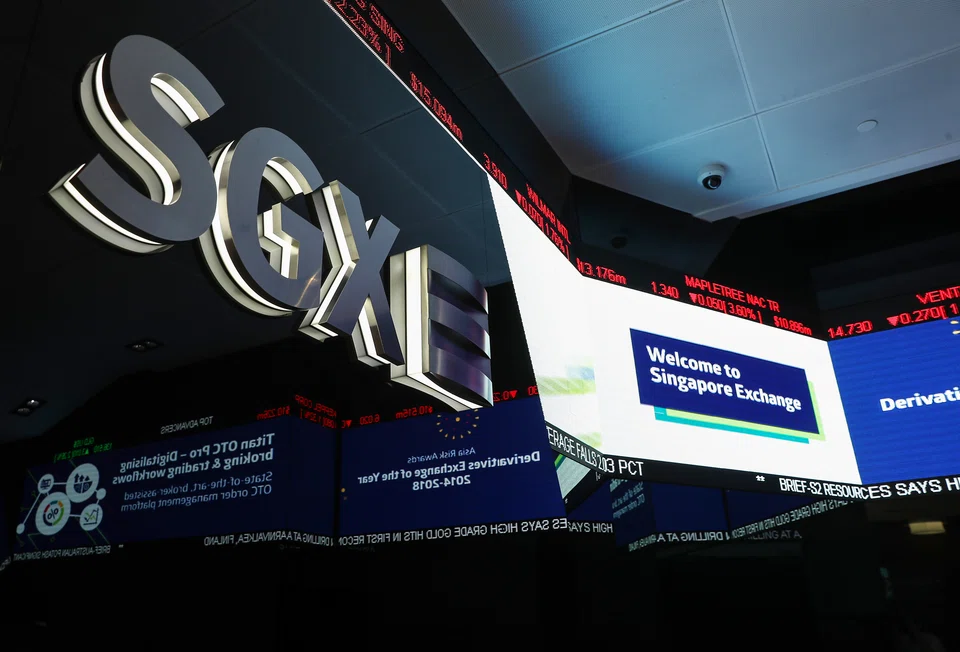
IN A speech to mark Singapore Exchange’s (SGX) 25th anniversary, chairman Koh Boon Hwee said “it will take courage, a willingness to take risks, and a collective commitment to change’’ to improve the local stock market.
One area this could apply to is Catalist.
Set up in 2007 as the successor to the previous second board known as Sesdaq, Catalist was modelled after overseas markets such as London’s AIM, which essentially meant that supposedly promising companies, most of which were loss-making, should still be allowed to list – provided they could find sponsors to back them.
This was in line with an ongoing shift towards relying more on market-based discipline and less on regulation since sponsors, being market participants, would be better placed to perform the necessary due diligence and screening for quality.
The unspoken rationale was that sponsors would then be putting their reputations on the line since their names would appear on subsequent company announcements, and they therefore had a vested interest in ensuring minimum quality standards.
It sounded good in theory, but the reality has been disappointing to say the least.
A good example is Singapore Institute of Advanced Medicine Holdings’ (SIAMH) financial problems which came to light in November, only nine months after listing.
On one hand, SIAMH’s woes illustrate perfectly the caveat emptor market that we live in, since Catalist companies need not have a proven track record of profitability when going public. As such, investing in SIAMH was a risky proposition from day one – as is the case with all Catalist listings.
On the other hand, there’s the view that even given Catalist’s inherent riskiness and the fact that loss-making companies should still be allowed to tap the public for funds, surely the company’s sponsors could arguably have done more to ensure the company was at least resilient enough such that immediate post-listing performance would not have been as dismal as SIAMH’s – a 76 per cent loss in its share price from S$0.23 at initial public offer (IPO) in February 2024 to S$0.055 in nine months.
In fact, the market’s view of SIAMH’s prospects was probably dim right from the start, with the counter ending its listing debut at S$0.19, down 17.4 per cent. Since then, the price has trended inexorably south, never once looking like rewarding those who took up its IPO shares.
Both arguments have merit, especially since SAM is hardly the only Catalist company whose shares tanked soon after listing. So, while it is correct to say that investors have to buy into Catalist with eyes wide open, it is equally valid to say that the more SIAMH-type episodes there are, the greater the damage to investor confidence, which in turn has implications for the market as a whole.
Is there a need to reconsider whether Catalist in its present form still has relevance? Maybe. In a 2020 study of Catalist, researchers Mak Yuen Teen and Chew Yi Hong reported that of 214 companies, 56.5 per cent, or 121 firms, booked losses for 2019, with those listed for more than seven years constituting 71 per cent of these loss-making firms.
The two authors correctly noted: “While not conclusive, this is contrary to expectations, as one would expect growth companies to start as relatively unprofitable, and then become more profitable over time.”
If the Monetary Authority of Singapore’s equities market review group is to leave no stone unturned, it should, as SGX chairman Koh said, have the courage to question all existing aspects of the market, including whether Catalist should be revamped.
TRENDING NOW

Britain’s mansion tax shows the difficulty of targeting wealth

Once staunchly pro-China, Malaysian Chinese businesses are now distancing themselves from Beijing

The only common thing in S-E Asia is that we all eat rice: Cisco’s Asean president

Singapore data centre operator DayOne opts for US IPO at likely US$20 billion valuation

