

Electric vehicles are plugging into the mainstream in China
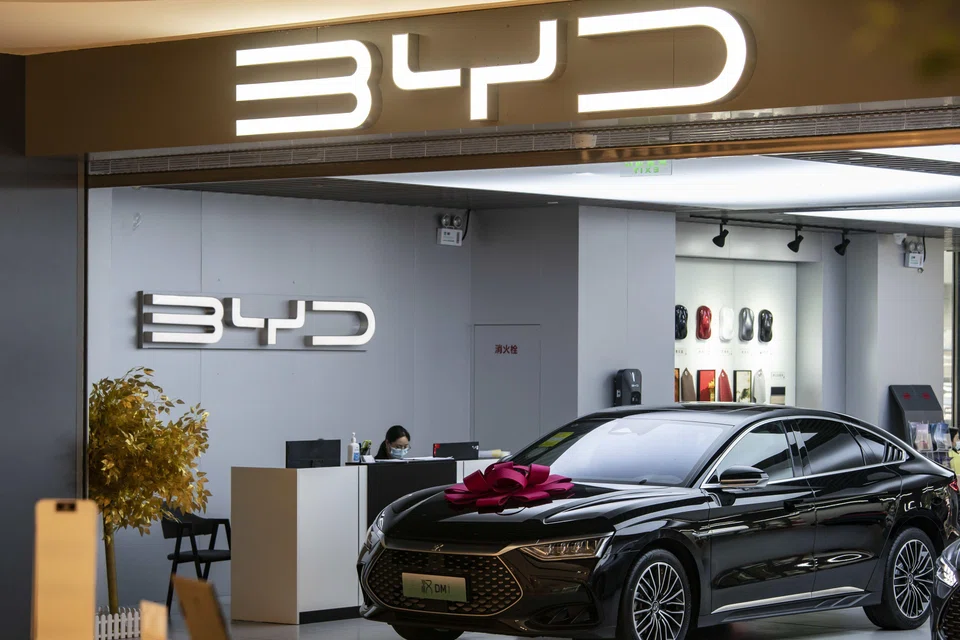
OVER the past decade, electric vehicles (EVs) have been picking up steam and charging a path towards the mainstream. In fact, the world’s top carmakers are said to be planning to spend nearly US$$1.2 trillion through 2030 to develop and produce millions of EVs.
Industry experts expect that EVs will make up about 60 to 80 per cent of all new car sales by 2050. This magnitude means that most carmakers – and countries – will not be able to ignore this fast-growing phenomenon. And for those looking to join this exciting ride, there is much to learn from China.
The nation is already the world’s biggest market for EVs based on annual sales volumes. They are also ahead of the game when it comes to infrastructure. BloombergNEF’s Zero-Emission Vehicles Factbook 2022 calculated that cumulative investment in EV charging hardware and installation would have reached US$62 billion at the end of 2022, of which 61 per cent is attributed to the more than 600,000 public chargers built in China.
And we don’t expect this trajectory to change or even slow down. A recent survey by Fidelity International highlighted that the penetration rate for EVs in the world’s most populous country could be set to further accelerate significantly thanks to technological advances in the field, gaining a much-bigger share of mainstream vehicle sales going forward.
The study revealed that around 60 per cent of current car owners in China and 84 per cent of non-owners would prefer an EV to an internal combustion engine model for their next purchase. This is a significant percentage and highlights the fact that we could potentially be seeing them dominate the roads in China in the near future. It is hard to dispute that the country is ahead of the curve, and there is a lot we can learn from observing their boom in EV adoption.
For one, while environmental benefits are definitely a motivating factor when it comes to EV adoption, car performance and technology are actually the main draws. An improved driving experience brought by technological progress, design and trendiness are all key factors for the rising popularity of EVs.
Brand loyalty also seems to fall behind technology and performance when it comes to EV adoption. What this means is that companies will need to adapt by providing faster iterations of technology and models. Those that cannot keep up with the pace of software development will eventually be outcompeted in the long term.
But this does not necessarily mean that technological companies or pure EV producers will be the ones to succeed in this market over traditional manufacturers. There needs to be the magic combination of the right channels, marketing, production positioning and cost structure to achieve success.
For more premium EVs, tech companies can use their software advantage as a differentiator. However, for the mass market, the focus will be on the fundamentals. Basically, how cheap and reliable you can make your EVs
While there are many draws, there are also significant concerns when it comes to EV adoption. Worries about technological limits affecting battery life, charging, driving range and mileage are all legitimate concerns. Moreover, without the right and proper infrastructure in place, it will be difficult for EVs to move into the mainstream.
China’s position as a front-runner is thanks in large part to the country’s policies. For years, the country has provided tax cuts, subsidies and funding to promote EV adoption. One particularly useful strategy is offering incentives to local industries. We are already seeing the US doing so, which is a step in the right direction and should continue until local companies are self-sustaining.
At the same time, ensuring a smooth supply chain is also key to scaling up production. For this to be successful, collaboration is key. Chinese battery and lithium companies have been buying upstream mining resources globally for some time, laying the groundwork. Countries looking to build their EV industry could look to boost collaboration and continue to build good trade relationships with those that hold key upstream materials.
Last, but definitely not least, is innovation. As we have learnt, EV buyers are more interested in the technology, experience and design on their cars rather than brands. Being innovative and thinking outside the box is the key. Similarly, countries should also encourage local companies and industries to come up with more inventive ways when it comes to manufacturing and production.
For example, Japanese companies have been focusing on making solid-state batteries that would no longer need graphite, a key component of EVs. This would be a game changer and give them a leg up over the competition.
The fact is, the EV race is in no way a done deal. And with the right investments in technology, infrastructure and supply chains, it is truly anyone’s game.
The writer is head of equity research, Asia-Pacific, at Fidelity International.
TRENDING NOW

Malaysian king buys stake in Singapore-listed mining firm expanding into rare earths

Grab CEO’s wife Chloe Tong on life with Anthony Tan and finding her purpose

Once staunchly pro-China, Malaysian Chinese businesses are now distancing themselves from Beijing

Longer wait times expected as S’pore healthcare institutions report system disruptions

