

Elon Musk is right about OpenAI’s hypocrisy
Too many AI startups have seen their noble goals imperilled by Big Tech’s gravitational pull
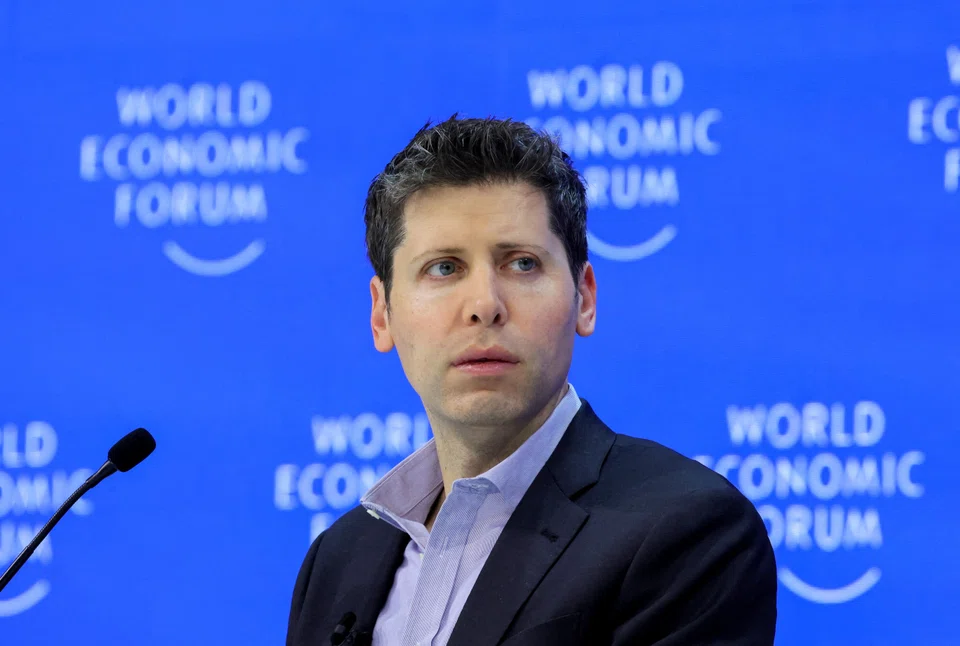
CALL it an epic troll by Elon Musk if you want, but the billionaire’s lawsuit against OpenAI puts a refreshing spotlight on the endless humanitarian posturing by artificial intelligence (AI) businesses.
Musk has sued the world-leading AI company and its chief executive, Sam Altman, for breaking their founding agreement about building powerful AI systems “for the benefit of humanity”.
OpenAI still touts that mission on its website, but Musk is calling it out.
“In reality… OpenAI has been transformed into a closed-source de facto subsidiary of the largest technology company in the world: Microsoft,” his lawsuit, filed in a San Francisco court on Thursday (Feb 29) night, said.
He is right. But first, let’s bear in mind why Musk might be suing. The billionaire is notoriously thin-skinned and known for holding a grudge. In the years after he invested in and then failed to buy a rival AI company called DeepMind, he spoke about its founder Demis Hassabis. After he backed OpenAI, he then tried to buy the company. When he was rejected, he then started his own AI firm – X.ai.
So take his legal quest with a pinch of salt. He is likely not only bitter, but eager to throw a punch at OpenAI.
Even so, Musk’s lawsuit points to an exasperating phenomenon among the world’s leading AI companies of starting life with promises to harness the transformative potential of AI for the public good, only to end up falling under the sway of tech giants.
Just this week, for instance, Mistral, one of the world’s hottest AI startups, looked destined to follow the same pattern. Based in Paris, Mistral has built AI models nearly as capable as ChatGPT for a fraction of the price and, crucially, made them open source, meaning anyone can use them for free if they have the computing resources.
The company, which touts “fierce independence” and “a strong commitment to open, portable” AI on its website, has even put its models on torrent sites that people use to download pirated content.
But the latest AI system it announced on Monday is now closed source, and only available to customers of Microsoft’s Azure cloud service. Microsoft has put US$16 million into Mistral, which is not much amid the US$500 million the startup has raised so far – it is valued at about US$2 billion – but significant enough to catch the attention of antitrust regulators.
If they are worried that a small investment could turn into something bigger, it’s because that is what happened with OpenAI. Microsoft’s original US$1 billion investment in the company eventually turned into a US$13 billion, 49 per cent stake in the firm. And OpenAI’s capitulation to a tech giant is at the heart of Musk’s complaint.
Musk founded OpenAI with Altman in 2015 to distribute AI’s benefits to humanity in a way that was transparent, open and would help the world become “more abundant… every year”, Altman said.
But over the years, OpenAI became more secretive, its corporate structure more convoluted, and Microsoft became the clear recipient of that abundance. AI products were on track to become “the fastest growing US$10 billion business in our history”, Microsoft’s chief financial officer Amy Hood said last year.
Google’s AI division DeepMind took a similar road. It was founded 14 years ago to build powerful AI that would cure cancer and stop climate change, and for years its website said in bold letters that it built AI to “advance science and benefit humanity”. Then it sold itself to Google in 2015 and, in the heat of the recent generative AI arms race, changed its homepage to tout “transformative products” such as Gemini.
Goals of curing disease and making everybody richer appear to have been overshadowed by a focus on enhancing the products of tech giants that could, ironically enough, put many people out of work.
Startups such as Mistral are pulled in this direction because building more capable AI systems requires enormous amounts of computing power, which only the world’s largest tech companies have steady access to. A spokesperson for Mistral said its partnership would “not lead to compromises on openness”.
One could argue this is a rite of passage for startups. They set out to make the world a better place, then go public or get acquired and water down those ideals.
But the stakes are higher with AI systems that are being woven into all facets of life. An example would be British lawmakers using generative AI to summarise feedback they receive from the public. Tools being widely used for critical decisions should not be controlled by an opaque oligopoly. It would be disappointing if Mistral eventually shifted towards this status quo, too.
If Musk’s lawsuit has any effect, it should be in forcing AI companies to be honest about their intentions as they evolve. His suit points out that Altman created a non-profit board at OpenAI that could fire him if he was not trying to benefit humanity anymore. They did. Then Altman returned and removed some of the board members who fired him.
That was a good move for OpenAI’s business but a betrayal of its supposedly benevolent goals. The emperor was wearing no clothes, and Musk was right to call him out. BLOOMBERG
TRENDING NOW

ComfortDelGro appoints two new independent directors

Once staunchly pro-China, Malaysian Chinese businesses are now distancing themselves from Beijing

NoonTalk needs continued financial support from CEO Dasmond Koh, auditors warn

DP Architects sets the benchmark for sustainability disclosure and design

