

Emissions reporting must pay heed to how reductions are achieved
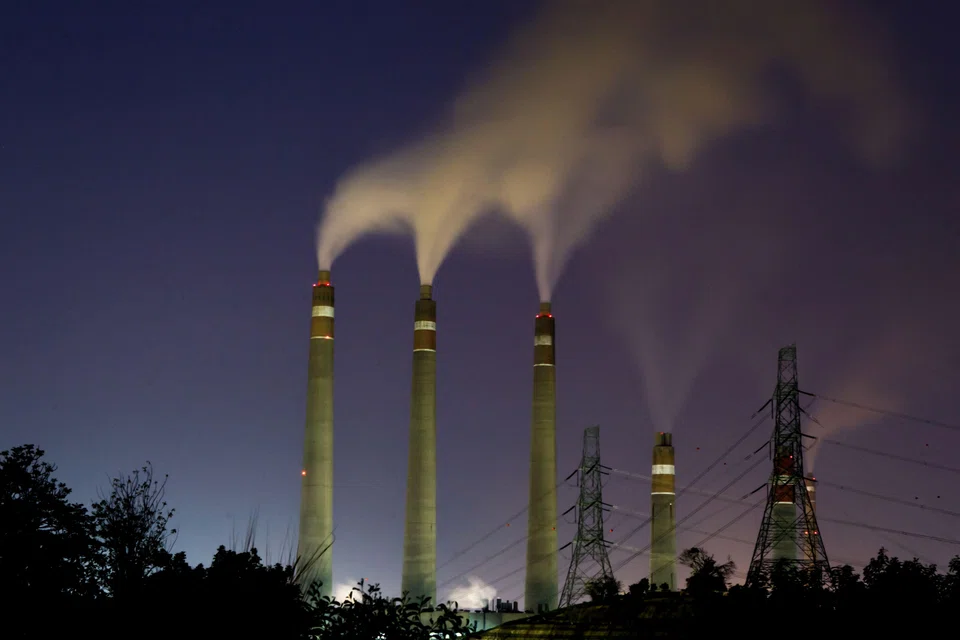
THE banking industry’s plans to change the way it reports financed emissions may help lenders avoid some pitfalls in financing the decarbonisation of high-emissions clients. But the solution does not solve the deeper issue of how those clients reduce their reported emissions.
The Glasgow Financial Alliance for Net Zero (GFanz) has just wrapped up a public consultation on proposals to establish reporting methodologies to support transition finance.
A key suggestion is the reporting of “expected emissions reductions” (EER). This is intended to help overcome the current challenge, in which a bank that finances the early phase-out of a coal-fired power plant has to count the plant’s emissions in its portfolio. This makes it hard for the bank to reduce its financed emissions. The idea is that by reporting and tracking progress on potential emissions reductions in a portfolio instead, lenders can demonstrate their contribution to decarbonisation, so that the increase in the bank’s financed emissions can be taken in the right context.
The hope is that if banks are no longer under pressure to reduce their financed emissions outright, they will be more amenable to financing transition projects. It is widely accepted that it is more impactful to enable the early retirement of an existing coal-fired power plant than to simply finance more solar projects. This is especially true in South-east Asia, where the fleet of coal power plants are among the youngest in the world. Without early retirement, these plants will continue to produce greenhouse gases for decades to come and stymie the development of additional lower-carbon alternatives.
But a crucial limitation with the EER methodology is that it remains narrowly focused on the amount or intensity of emissions, without regard to how the emissions are reduced.
One particularly challenging gap that arises from this approach lies in cases where emissions are moved out of the reporting scope without an actual reduction in emissions. For instance, Golden Energy and Resources (Gear) has implemented its exits from the thermal coal business mainly by divesting assets, with no indication that the divested assets are on a credible decarbonisation path. Merely looking at Gear’s emissions would seem to suggest that emissions have come down, when in reality the emissions have simply been moved out of the reporting scope and are now opaque to external scrutiny.
The fundamental problem is that emissions can leak out of reporting scopes. Whether a bank is reporting on current financed emissions or on future EER in its portfolio, the fact remains that a reduction in reported emissions may not reflect reduction in the real world.
Emissions reporting needs to be supported by stronger rules to address leakage. For instance, banks could agree on standards, when it comes to high-emissions sectors, to distinguish between organic emissions reductions and emissions reductions that are simply moved out of scope. Or banks could simply agree not to accept transition plans in high-emissions sectors that rely merely on divestment.
The GFanz proposal on EER reporting is an important step towards rethinking the way emissions and decarbonisation contributions are measured and reported. But EER does not go far enough to address fundamental flaws in the current system. Emissions reporting needs to move beyond a simplistic focus on where we are, and incorporate a more sophisticated approach to also consider how we got here.
TRENDING NOW

Two Singapore-listed palm oil firms named in Greenpeace report on Indonesian plantation fires

Singapore Airlines flight returns to San Francisco after ‘unruly’ passenger incident

Singapore looking into which companies responsible for haze-causing fires: PM Wong
Deluge IPO 3.86 times subscribed ahead of SGX debut

