

The end might be nigh. Here, have some Anthropic shares
AI’s biggest believers and its most fearful investors may actually be the same people

LATELY, has every dire noise made by someone very smart and very far away made you want to throw up your hands and say: “Well, what am I supposed to do about that?”
You’re not alone.
While people have been wringing hands over where advanced semiconductor chips are headed, some artificial intelligence models – despite or because of their lack of opposable thumbs – are advancing at a freakishly faster rate.
In a report released in early November, METR, an independent research firm, estimated that Anthropic’s models have been improving almost twice as fast on certain benchmark tests compared with their pace from a year ago.
Crucially, this acceleration cannot be explained by more computing power thrown at training models. Rather, the AI itself has been getting better at helping Anthropic improve its models.
The upshot is that the AI development curve could become steeper yet. Now, some experts in the AI community have drawn vivid and unsettling extrapolations from the study’s numbers.
For instance, the AI Futures Project – an outfit that previously forecasted the onset of artificial general intelligence – has pulled forward its own grim timeline by five months, citing METR’s findings as its biggest new piece of evidence.
The AI Futures Project now expects a superhuman AI researcher to emerge by 2027, with a 35 to 65 per cent chance of AI capable of automating all white-collar work before 2028.
“I feel very worried that humanity might no longer be in control of our future within three to 12 months,” wrote Eli Lifland, its co-founder, on X.
And in a talk at The Hinton Lectures 2026 earlier in November, OpenAI Foundation board member Paul Christiano said: “For most people in this room, the most likely reason they will die is because of an AI accident.”
We have a limited set of possibilities here.
Some of the smartest people on this planet, with first-hand knowledge of AI, could be spectacularly wrong.
They could also be exaggerating the technology’s capabilities in service of relevance or funding.
Or they could just be right: modern-day Cassandras shouting into the noisy vortex of initial public offerings and extravagant valuation multiples.
Even if the doomsayers are wrong about the future trajectory of AI, humanity is already struggling with the technology in its present state.
Companies and organisations have been woefully unprepared for the recent surge in agentic AI attacks.
Meanwhile, the US has learnt the hard way that there are limits to how effectively it can keep hardware away from rivals.
And no government has truly confronted the fiscal and social overhaul required if AI causes mass unemployment.
The average person, powerless to influence AI policy or commercial roll-outs, has been valiantly acting as rationally as they can, under the shadow of an abstract catastrophe.
Right now, any rational response looks indistinguishable from sanguineness.
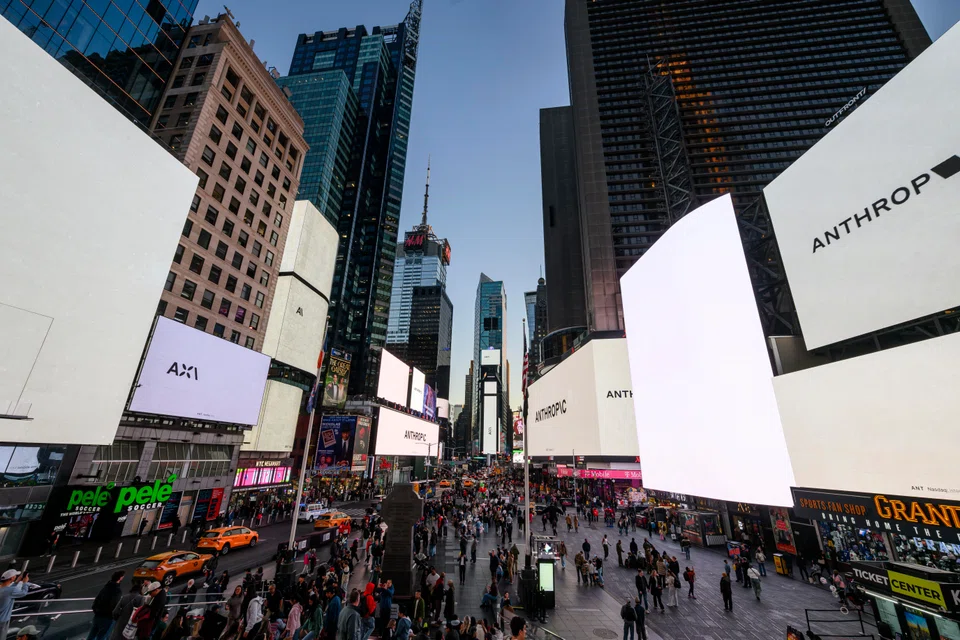
When Anthropic started trading on Nov 19, investors sent its shares 17 per cent above the IPO price, implicitly buying into a technology whose creators have warned could end us all.
This is both perverse and sensible. If fears about AI are overblown, investors will live to reap the fruit of this and future IPOs.
And if the Cassandras are actually right, everything will cease to matter, simply because everything has ceased.
TRENDING NOW

Indonesia’s coal tycoon Low Tuck Kwong replaced as Bayan Resources president-director

Nvidia reinstates Jensen Huang as CEO; Trump says move poses no national security risk

Six workers file employment claims against Crystal Jade Food Manufacturing

AI agents and stablecoins a ‘perfect match’ for payments, says MetaComp’s Tin Pei Ling

