
Energy and climate cooperation still key for China-EU ties
There’s much to gain from a deep partnership on the clean-energy transition
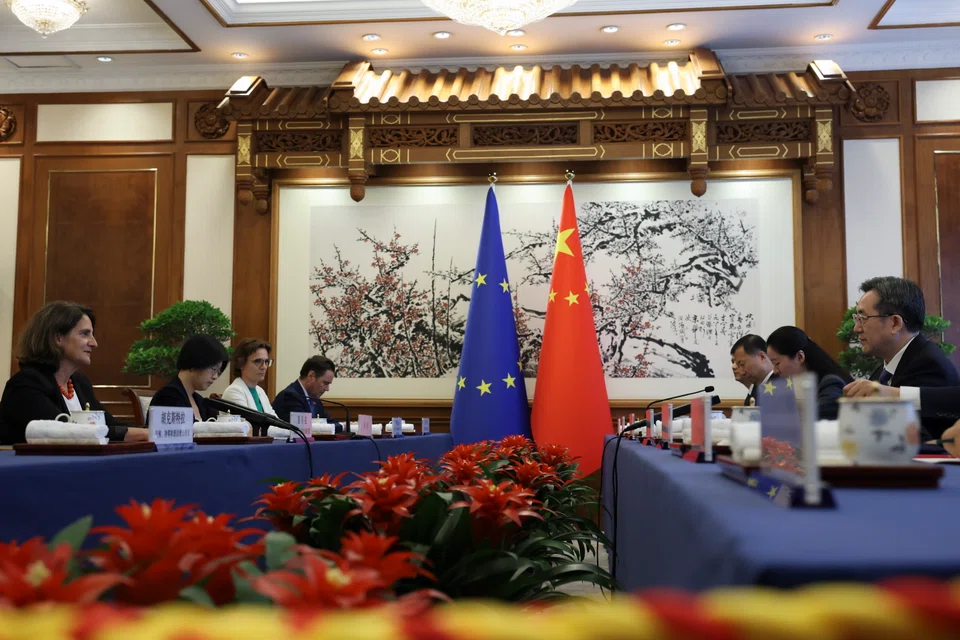
MUCH attention has focused on the chill in ties between Brussels and Beijing in recent years. However, ahead of the EU-China summit in Beijing on Thursday, there are still potential areas of deep bilateral cooperation.
Perhaps the standout example is climate change which has been an issue helping to define bilateral ties in the 21st century. So much so, in fact, that the EU Emissions Trading System was very influential in China’s design of its own carbon markets.
Earlier this month, the two powers held their latest high-level summit on the environment and climate. On the 50th anniversary of bilateral ties, both are hoping to further promote the effective implementation of the 2015 Paris Agreement.
With US President Donald Trump seeking US withdrawal from the Paris treaty, the importance of EU-China climate cooperation has only grown. This is particularly true given that all nations face a mid-September deadline to submit new 2035 climate targets to the UN. These submissions precede the United Nations Climate Change Conference – COP30 – in Brazil, which will set out country-specific greenhouse gas (GHG) emissions reduction targets in the next decade.
Earlier this year, the European Commission proposed a 2040 climate target of reducing net GHG emissions by 90 per cent, compared to 1990 levels. In response, Chinese Vice-Premier Ding Xuexiang told European Commission Executive Vice-President for a Clean, Just and Competitive Transition Teresa Ribera that Beijing will release a new national climate plan in autumn, potentially timed around September’s UN deadlines.
In 2024, the world surpassed 1.5 deg C of annual warming for the first time and is on a trajectory for 2.6 deg C by the end of the century, even under current emission reduction plans. Meeting the Paris Agreement’s 2 deg C target – let alone the 1.5 deg C one – demands far more ambitious cuts.
Yet, since the pandemic, there have been new complications in climate ties between Brussels and Beijing. For instance, China has criticised the EU for what it perceives as the protectionist slant of the Carbon Border Adjustment Mechanism, a European initiative aimed at addressing carbon leakage by imposing a price on carbon emissions for imported goods. The EU has rejected this narrative with Ribera saying that Brussels does not intend “to go down a race towards low incomes, lower labour rights or lower environmental standards”.
Correspondingly, the EU has urged Beijing to stop building new coal power plants. Increased approvals for such plants have added to worries that Beijing may backtrack on ambitions to peak GHG emissions at or before 2030, ahead of carbon neutrality by 2060.
Another source of friction is the alleged dumping of Chinese-made electric vehicles in Europe. Ribera has said that “there is this assumption that counting on cheap equipment could be good to boost the potential of new developments and new decarbonisation pathways in the European market that could be beneficial. And there may be truth on one side, but as you also know, it may be difficult in terms of how it could impact on the capacity to ensure a level playing field”.
EU decision-makers such as Ribera appear to believe that encouragement, not condemnation, is the best way to secure climate cooperation from Beijing. The assumption is that, especially with Trump in office, Beijing needs to be at the table on climate issues rather than left off it. With China being the world’s largest GHG emitter by far, any international climate action during this era would be much weakened without Beijing’s involvement.
Beyond this, however, many EU officials have long believed that Chinese policymakers fundamentally share Europe’s vision for a prosperous, energy-secure future in a stable climate and recognise the need for bilateral collaboration. Indeed, China, too, is vulnerable to the threats of global warming, including intense heat waves and severe flooding.
The heart of EU-Chinese cooperation on this agenda is the 2015 EU-China Joint Statement on Climate Change. Under this, both parties agreed to cooperate on developing a cost-effective low-carbon economy, including intensifying cooperation in domestic mitigation policies, carbon markets, low-carbon cities, greenhouse gas emissions from the aviation and maritime industries, and hydrofluorocarbons.
Even amid the complexities of the climate crisis, both Chinese and EU policymakers still see that accelerating the transition to a low-carbon future holds vast, complementary opportunities. They believe that with the right vision and commitment, this potential can be realised, deepening a collaboration that is poised to grow.
China’s planned investment in the green economy could be a game-changer, a fact that the EU is increasingly recognising. For instance, China is already the world’s biggest and fastest-growing producer of renewable energy.
This investment is buttressed by Beijing’s policy commitments on the climate, clean air and energy agendas. Chinese President Xi Jinping has set a strategic direction for the economy, with determination to deepen the transition of the country’s development model towards a greater emphasis on services and innovation.
Europe has clear strengths in clean technology that are valuable to China. As the latter continues its trajectory to potentially become the world’s largest economy, there are substantial commercial opportunities for EU’s leading science and technology firms.
Crucially, this collaboration is not one-sided. China is already the world’s largest investor in renewable energy, and it is possible that technology and expertise can flow in both directions. This two-way exchange can accelerate the growth of low-carbon industries, and align Europe more closely to the world’s future largest economy.
As a key architect of the Kyoto Protocol and the Paris Agreement, Europe must continue to lead the fight against climate change. This includes the growing need for the EU to accelerate its emissions cuts to meet its goals in coming years, such as the 2040 target of a 90 per cent reduction.
Ultimately, despite a wider chill in ties, the EU and China still have much to gain from a deep partnership on the clean-energy transition. Now is thus the moment to double down on cooperation, and collectively chart the course for the 21st-century clean-energy economy.
The writer is an associate at LSE IDEAS at the London School of Economics



