Engineering Singapore’s green future
COUNTRIES have pledged zero emissions by 2050 but the means to get there are vague. Businesses need specific details on the decarbonisation of economies to align their own strategies, to raise and make investments, and to participate with impact.
There are three main routes to decarbonisation. Energy efficiency is estimated to reduce emissions by 15-20 per cent. Deploying decarbonised technologies across all sectors contributes to a 40-45 per cent cut in discharges. And up to a 40 per cent emissions reduction is envisaged by transitioning from the current linear economy to a more circular one. Moreover, the circular industrial economy reduces dependence on virgin resources and generates resources from the solid waste generated by consumerism. A circular economy emulates the circularity of nature, wherein there is no waste, and dead matter becomes food for other animals or plants.
Singapore and others such as the European Union are pursuing green economic growth amidst global uncertainties and to demonstrate their responsible behaviour to improve the global commons. Green growth includes greening existing industries and creating new green industries.
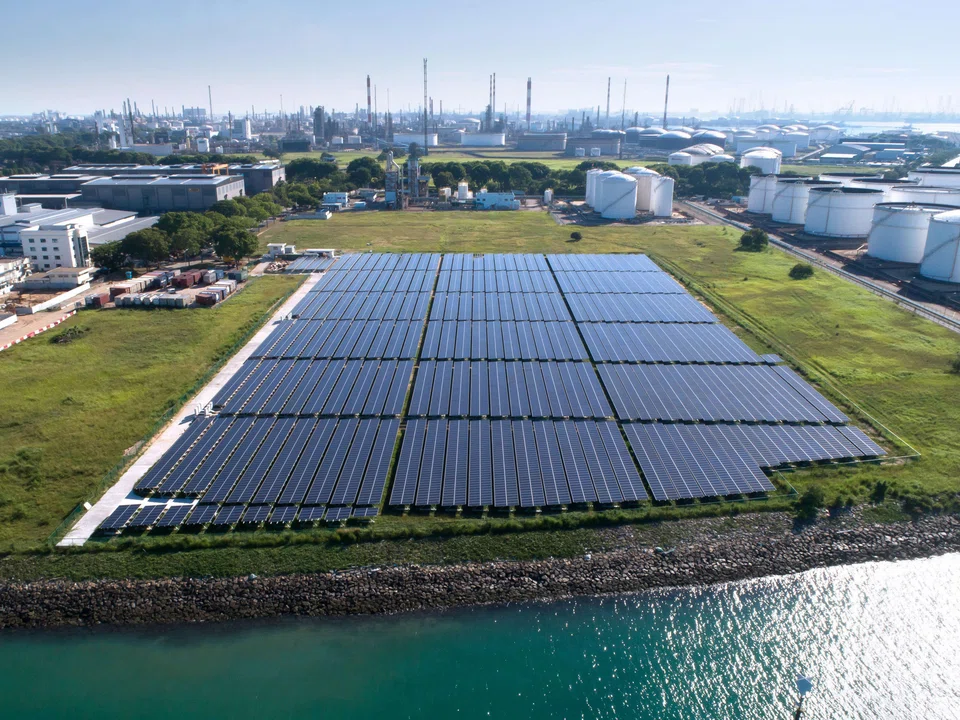
The ways and means depend on the country’s economic structure, industrial strengths, geography, demography, access to resources and technologies, international relationships, investing ability, and politics. For example, the 32 sq km Jurong Island, which houses more than 100 leading chemical and energy companies, stands as a major pillar of Singapore’s economy and sustainability drive.
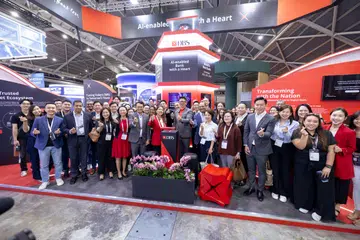
The Institution of Engineers, Singapore (IES), the national society of engineers, formulated the IES Green Plan 2030 in line with Singapore’s green growth interests. At its launch on January 17, Grace Fu, minister for sustainability and the environment, said : “Tackling climate change is a complex engineering problem. It requires innovation in products, productions, and systems. Over the years, from our water and energy infrastructure, housing, and transport systems, engineers have established new frontiers for Singapore with your expertise and innovative solutions.”
Take Singapore’s approach towards water. The Republic employed smart and innovative engineering solutions to collect, treat, recycle, and supply water. Per capita household water consumption was reduced from 165 litres a day in 2000 to 141 litres in 2018. The target by 2030 is around 130 litres. Green, circular, and smart water solutions are growth opportunities as demand for them is growing around the world.
Singapore has also begun to decarbonise energy, which has been dominated by fossil fuels. Adoption of energy efficiency technologies and solar energy is growing steadily. A full transformation requires harnessing smart grid technologies, hydrogen energy, and nuclear energy. Decarbonised energy technologies are poised for mass production as the global market for them will grow to US$1trillion a year in the next two decades.
Longer-life batteries, safer fuel cells, biofuel, and carbon capture and conversion technologies are necessary to decarbonise the energy systems of land, sea, and air transport.
The manufacturing industry is expected to embrace decarbonised materials, processes, and components with enhanced circularity performance. Notable examples include low-carbon footprint steel, aluminium, and concrete.
There will be zero-energy and energy-plus buildings that employ energy efficiency technologies, circular materials, and low-carbon digital technologies. A prime example is sustainable data centres, at the heart of the growing digitalisation drive.
Digital technologies are helpful to monitor carbon offsets and nature-based climate solutions so as to develop investors’ and public confidence. These include engineering solutions using drones and data for real-time and predictive analytics, and for cost-effective management of large-scale physical assets.
Further innovative engineering solutions are needed to mitigate rising sea levels and erosion of land and coastal areas. Singapore engineers are expeditiously building polders at Pulau Tekong. Furthermore, cyber-informed engineering ensures the security of the critical infrastructure.
Scaling up urban farms and biological processes is necessary to satisfy the food nutrition and security needs of the growing world population. Producing valuable materials from food waste and farm waste is yet another green growth opportunity.
In recycling, the extended producers’ responsibility (EPR) scheme for e-waste, and the forthcoming beverage containers return scheme (BCRS), require harnessing digital technologies such as labelling, reverse vending machines, and robots for automatic sorting and segregation. They spell opportunities in circular economy waste businesses and new jobs.
Businesses need to invest in the skills and technologies to pursue green growth. The IES Green Plan 2030 aims to bridge the skills gap among engineers, with SkillsFuture Singapore collaborating with IES as the skills development partner.
Scaled-up engineering solutions, thoughtful delivery of green infrastructure, green investments, upskilled human resources, new business models, and green-conscious behaviour of consumers, will enable Singapore to realise green growth while avoiding falling behind international competitors aided by green trade wars. The green growth pursuit affects everyone in Singapore.
Seeram Ramakrishna is professor of mechanical engineering at the National University of Singapore and adviser to the IES Green Plan 2030. Dalson Chung is president of The Institution of Engineers Singapore (IES)