

Enough of the carrots, it’s time for the sticks
THE gravity of the climate emergency is immense, as evidenced by the frequency and intensity of extreme weather events and their impact. The United Nations’ (UN) Intergovernmental Panel for Climate Change has issued a stark warning with its latest Synthesis Report that the repercussions of inaction are monumental.
A broad consensus has already been established on the urgent practical steps required to limit the rise to 1.5 degrees Celsius above pre-industrial levels by the end of the 21st century. We now only have a headroom of 0.4 deg C, with global warming at 1.1 deg C above pre-industrial levels. To never get past 1.5 deg C above pre-industrial levels down the track, we will need to halve our greenhouse gas emissions by 2030 and get to net-zero CO2 emissions around mid-century.
While few would dispute the moral necessity of climate action today, the practical battle against climate change remains stagnant. A major mindset shift is needed for us to bridge the gap between belief and action. As renegade economist Kate Raworth pointed out in her book Doughnut Economics, economists now need to confront the reality that the environment is not separate from the economy and society. The 21st century economist will now need to think holistically to create a model that meets societal needs, protecting planetary boundaries and supporting human progress.
Think of two concentric rings – an inner ring representing a social foundation that addresses life’s essentials, and an outer ecological ceiling to protect planet Earth’s life-supporting systems. Serving as a compass for human prosperity in the 21st century, the “doughnut” lies in the space between these two sets of boundaries that is both ecologically safe and socially just, where humanity can thrive.
Doughnut economics: Building in circularity in how we consume
Many countries have announced national legislation and action plans to put the circular economy in motion. While there is no dearth of immediate circular value creation opportunities, the true value of a circular economy lies in wider systemic changes.
China announced its five-year action plan in 2021 for reducing plastic pollution and effectively curbing white pollution by 2025 by cutting plastic production and usage, as well as promoting alternatives (such as bamboo, wood, paper and degradable plastics), especially in the retail, e-commerce and express delivery sectors, with the goal of significantly reducing plastic waste in landfills and environmental wastage.
Here in Singapore, we are stepping up the national movement in support of the circular economy with the National Environment Agency’s recent, islandwide initiative of reverse vending machines to recycle drink containers, and new guidelines proposing a charge on plastic bags.
However, given the state of the climate emergency, our current recycling efforts are simply not enough. We need drastic changes in our lifestyles and expectations. It does mean curbing our consumption of “modern conveniences” – afforded by endless choice and a convenience culture – and being intentional when we make a purchase. We need to confront the inconvenient truth. Will there be additional waste generated through the consumption of each new material good? Will it have a long useful life? What happens at its end-of-life?
The retail industry can play a role in supporting consumers to adopt sustainable practices. Retailers can encourage consumers to take bold action by building in the true cost of waste and ensuring a well-thought-through circular strategy for all the things that we use. While it’s now common practice to charge for a disposable container, a better way would be to invest in a reusable container system and eliminate waste altogether.
The industry has the opportunity to remake itself through value creation opportunities in retailers’ interactions with suppliers and customers. How do brand owners circulate their products and materials in the system, and not downcycle them as waste?
The hardest but most impactful part is in the start and end of life – when a product interfaces with nature. Rather than extracting materials and disposing of used products, companies need to move towards a regenerative model and supporting natural processes. Product companies need to rethink innovative ways to incorporate materials that are upcycled and renewable, which in turn encourage best practices across the supply chains.
Climate justice: Rethinking our economy to redistribute value
While several major corporations are starting to pledge to achieve net-zero operations by the end of 2030, many are also looking at carbon credits to offset their greenhouse gas emissions to reduce their tax liabilities. Despite the recent controversy around carbon credits, ensuring greater transparency on carbon offset projects and the benefit on indigenous and local communities can help to redirect financing to areas where real impact can be made.
Higher taxes and stricter regulations may be needed for companies to reduce emissions, and minimise the extent to which companies can propagate vague net-zero pledges, as these may be misleading and could amount to greenwashing. Economists now need to consider how to redesign the flow of economic value to redistribute it for the sustainability of the environment and the community.
To be effective, it is necessary for price signals to be sustained, strengthened and extended to a greater portion of global emissions. However, Asia has been unable to take concrete action owing to soaring inflation, rising energy prices and economic instability.
While the region’s carbon taxation is said to be too low to be punitive for major polluters, Singapore’s increase of its carbon tax, now the highest in Asia, may well throw a curveball for companies that have not taken heed of the call to reduce emissions. Government revenue from the introduction of significantly higher carbon tax across the region could be redirected to adaptation measures, especially for vulnerable communities that are often the hardest hit by climate inaction.
No Planet B
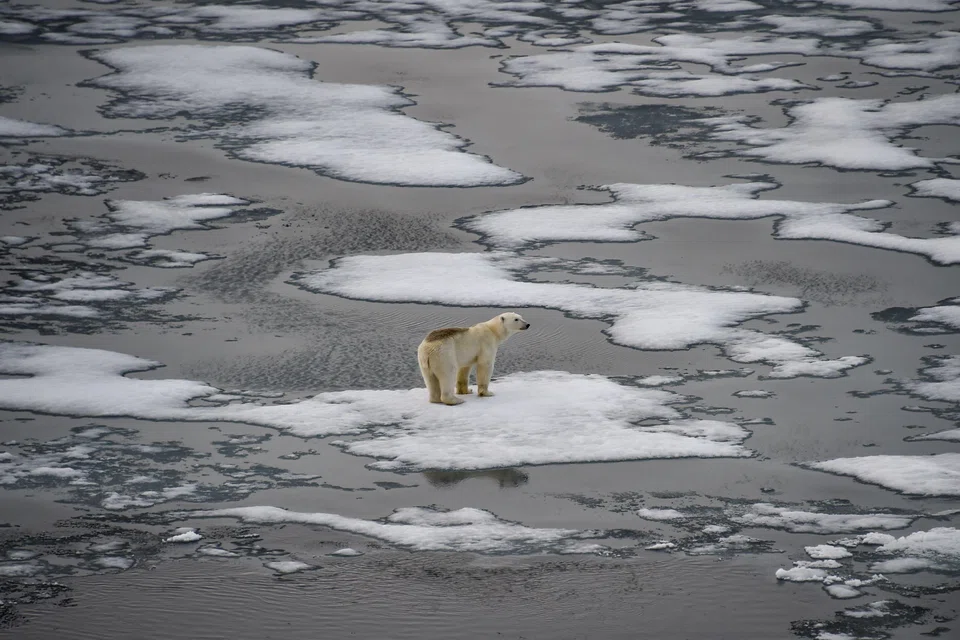
As the UN secretary-general Antonio Guterres pointed out, “the climate emergency is a race we are losing, but it is a race we can win”. As we face rising sea levels, melting ice caps, burning forests and dying coral reefs, inaction is not an option.
To inspire bold action, we need to offer more than just rewards, dangling carrots for carrying out feel-good and do-good initiatives. We will need to make inertia too expensive for everyone with the stick approach.
The most vulnerable among us will be the hardest hit. The most tangible form of charity is not to give our time or money (that helps too), but to slow down and ideally reverse the climate crisis – not to save the Earth, but to save ourselves.
The writer is head of sustainability, Asia, at globally integrated real estate group Lendlease. As part of its sustainability commitments, Lendlease has embarked on Mission Zero to achieve net-zero carbon by 2025 and absolute zero by 2040.
TRENDING NOW
First Resources blames El Nino, outside fires for Kalimantan hotspots amid haze scrutiny
High Court rules against Julius Baer’s Singapore trust arm in US$50 million family trust dispute
Singapore key exports jump by higher-than-expected 68.4% in September, led by non-electronics
MSCI proposes downgrading Indonesia to standalone market status

