

Ensuring AI works for the Global South
WHILE artificial intelligence (AI) has the potential to lower barriers and allow countries to participate in a new strand of the worldwide digital economy, it also creates demarcations between countries, companies and communities. Notably, the Global South – broadly the developing or “less developed” economies – risks being left behind technologically, economically, and politically.
Currently, AI datasets still under-represent the Global South context, while new models of compute are needed to avoid compute “deserts” – where countries end up unable to access essential AI processing power. And AI research, development, and standards-setting are being led by a handful of countries and companies.
Ensuring the participation of the Global South in the AI landscape is crucial to avoid exacerbating global digital, data, and innovation divides.
With the right strategy, the Global South can chart new AI pathways and enable unique AI opportunities to surface. In particular, the early AI explorations of Vietnam, and its broader digital successes, could provide an important road map in ensuring that AI works for all countries and communities.
Accelerating a Global South AI agenda
AI is not new to Vietnam; the country is making continued progress as it aspires to be among the top 50 AI countries globally by 2030. It is strengthening key data, cyber, and other protections; building new partnerships, and balancing its collaborations with China and the United States. Vietnam’s AI positioning, learning and progress highlight three key priorities in charting an AI journey for the Global South.
First, is the importance for Global South countries to ground AI in national priorities and advantage.
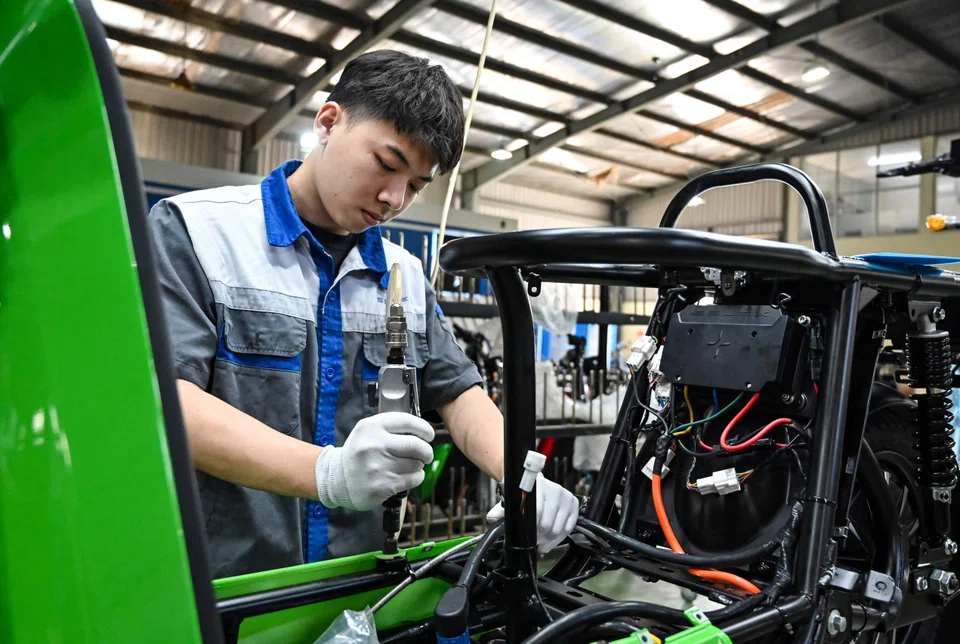
With manufacturing contributing 45 per cent to Vietnam’s gross domestic product, and the business process outsourcing (BPO) sector also a sizeable component, the country is identifying opportunities to explore and embed AI to amplify the impact of these crucial industries. Automation in manufacturing could enhance productivity, streamline operations, and reduce costs, while strategic use of AI in the BPO space could unlock higher-value commercial opportunities.
Second, talent is just as important as technology.
Although Big Tech alone was forecast to spend the equivalent of more than half of Vietnam’s 2023 GDP on AI and other digital investments last year, AI is not solely about GPUs (graphics processing units), TPUs (tensor processing units), or other technologies and acronyms. Understanding how to leverage AI’s potential, and shaping the governance to put this into practice, will be important differentiators.
Vietnam is developing the human capital to grapple with these new areas, and other Global South countries also need to prioritise this area. People, and not solely technology, could be a country’s greatest AI asset.
Third, government remains a crucial actor.
Shaping a dynamic and vibrant local AI ecosystem is essential and the government is a key catalyst in defining and driving direction, investment, and policy around data availability, compute accessibility, national AI priorities, and building a sustainable talent pipeline.
However, governments cannot go at it alone. They need to work with the private sector and civil society to deliver national AI ambitions and to secure critical AI resources – from technology to talent.
Being responsive will be crucial. Recognising that AI is a “general-purpose technology”, Global South countries – and governments – with the agility to respond to the unknown trajectory of AI could be best positioned to benefit from its potential.
Broadening the AI discussion
Importantly, AI needs to work for the interests of the Global South. Lower-value-added tasks in the AI value chain – including data annotation – provide employment, but no guaranteed pathway for individuals or countries to progress to higher-value-added AI opportunities. Meanwhile, the exciting possibilities afforded by Generative AI in particular – including data wrangling, copywriting, and research and analysis tasks – are also the core tenets of the BPO industry that is a crucial economic driver for many Global South countries.
Strengthening domestic AI enablers – as Vietnam is pursuing – could provide countries with greater control of their respective AI journeys.
Although Silicon Valley is prominent in AI discussions, there is an exciting and important opportunity to diversify the AI journeys of Global South (and North) countries. South-South technical, financial, and knowledge collaborations will be key, while South-North learning could see higher-income countries learning from the AI explorations and emerging successes of contexts as diverse as Latin America’s “Chilecon Valley”, Kenya’s “Silicon Savannah”, and the AI expansion in Vietnam.
There is also opportunity for the Global South to play a key role on the global stage. As more European Union AI Act provisions come into force in 2025 – also a year with a new US president, whose previous administration emphasised “AI with American values” – the Asean region has important perspectives, expertise, and learning to share. These include the potential for an “Asean way” of AI governance and perhaps the emergence of an Asean AI “voice”. Other Global South groupings – from the Caribbean Community, or Caricom, to the African Union – could bring further essential nuance and diversity of thinking into the global AI landscape.
The journey begins now
AI offers the Global South a unique opportunity to redefine its development trajectory, enabling economic growth and societal progress tailored to local needs. Global South countries could shape global AI direction and – with rapidly growing digital populations – also drive AI demand. With growing digital literacy, proactive government efforts, and a regional outlook, Vietnam could define this pathway.
The writers are with the Tony Blair Institute for Global Change. Calum Handforth is senior adviser for digital and technology transformation. Ha Bao Tram is an associate based in Vietnam.
TRENDING NOW

First Resources blames El Nino, outside fires for Kalimantan hotspots amid haze scrutiny

High Court rules against Julius Baer’s Singapore trust arm in US$50 million family trust dispute
Singapore key exports jump by higher-than-expected 68.4% in September, led by non-electronics

MSCI proposes downgrading Indonesia to standalone market status

