

Erdogan’s economic reckoning
A decade of erratic economic policymaking has brought Turkey to the brink of disaster
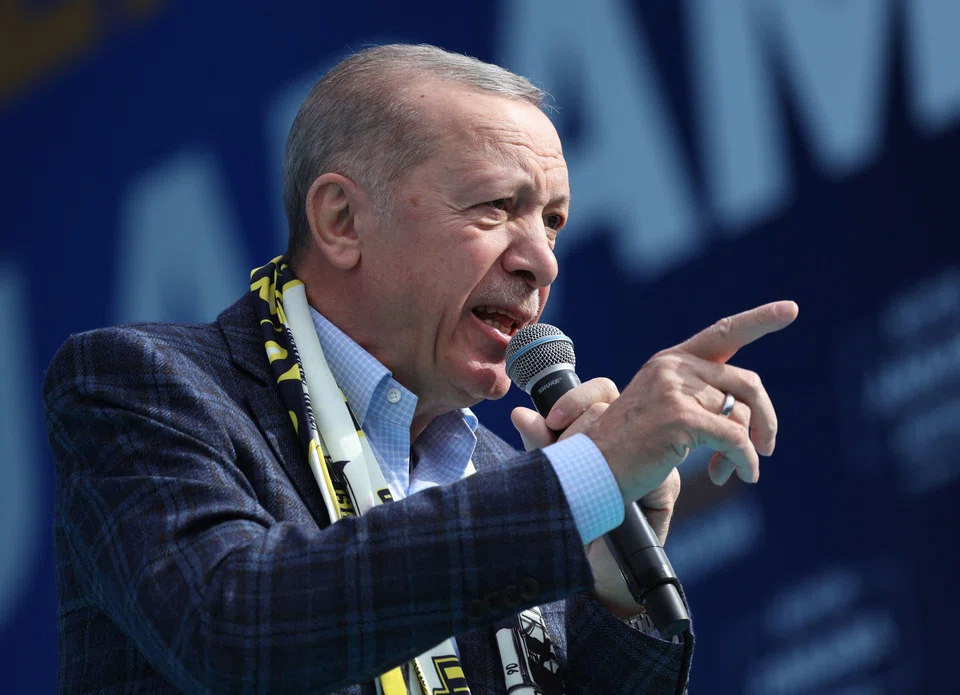
TURKISH President Recep Tayyip Erdogan’s victory lap following his re-election last month will be short, because his country is on the verge of economic meltdown.
Turkey’s economy was also in crisis when Erdogan’s Justice and Development Party (AKP) first came to power in 2002. Back then, Turks overwhelmingly wanted to join the EU, so the AKP government, which Erdogan led from 2003 until 2014, when he became president, implemented economic reforms and applied for membership.
By 2010, those reforms were working as intended. Per capita income had trebled, leading the World Bank to classify Turkey as an upper-middle-income country. The inflation rate had fallen to single digits from a peak of over 100 per cent, even as the economy grew rapidly.
But despite this progress, EU accession negotiations had stalled. With the prospect of membership fading fast, Erdogan began to turn his back on Europe. His new political strategy was to appeal to the religiosity of rural Turks, a move that entailed a shift from technocratic competence to authoritarian populism.
With a population of 85 million and a geopolitical neighbourhood that includes the EU, Russia, and the Middle East, Erdogan was always going to have to play a complicated diplomatic game.
After failing to secure a wish list of fighter planes and other weaponry from the US, he bought arms from Russia instead. Last year, he helped broker a deal with Russia to allow grain shipments from Ukrainian ports, and he continues to block Sweden’s entry into Nato, citing the refuge Sweden is providing to individuals tied to the Kurdistan Workers’ Party.
The turn away from the EU is perhaps most discernible in Erdogan’s economic policies, which have become increasingly unorthodox and erratic.
To finance ambitious infrastructure projects – including a third bridge across the Bosporus, a new canal, a new airport, and a presidential palace with more than a thousand rooms – he relied increasingly on capital inflows to offset Turkey’s growing current-account deficits.
Then, as inflation rose, he insisted that interest rates should be lowered – the exact opposite of central banks’ standard practice (not to mention economic common sense).
Not surprisingly, this caused the lira’s exchange rate to plummet, which Erdogan hoped would encourage export growth. Finally, after five years of lira depreciation, he tried to halt the slide in an unsuccessful effort to offset inflation.
By the beginning of 2022, Turkey’s economic situation was already dire. Inflation had increased toward triple digits, the exchange rate had become seriously overvalued, and the current-account deficit was rising fast – all owing to what The Economist called Erdogan’s “voodoo economics”.
Pressing his belief that inflation could be tamed with interest-rate reductions, he has cycled through four central-bank governors in as many years. At his direction, special measures were implemented to attract foreign capital with which to finance his ambitious spending programmes.
Among these was a public commitment that Turks who held bank deposits in lira would be compensated for any depreciation greater than the rate of interest. By early 2023, such deposits amounted to an estimated US$125 billion – around one-seventh of Turkey’s 2022 GDP.
As if this looming expense was not burdensome enough, the government also rolled out a host of ill-advised policies ahead of May’s presidential election.
Public spending was increased, and the minimum wage was raised by 55 per cent. Turks received a month’s worth of free gas, and much more. Not surprisingly, inflation reached an annualised rate of almost 100 per cent, and basic consumer goods – such as (subsidised) bread – are reportedly in short supply.
Then there was the 7.8-magnitude earthquake in south-eastern Turkey in early February, which killed more than 55,000 people and destroyed housing, roads, and other infrastructure on an enormous scale. The resources needed for recovery and reconstruction would have strained even a government whose finances were in order.
In fact, the only reason the Turkish economy was not already in a full-scale crisis long before the election is that Erdogan managed to secure financial support from other countries, most notably Saudi Arabia.
By leveraging Turkey’s geopolitical position, he was able to sustain his spending spree until Turks cast their ballots. But now that he has won another term, an economic reckoning looms.
Unless other countries are willing to continue financing Turkey’s excessive government spending (and counterproductive interest-rate policies), he will need to undertake serious reforms. Otherwise, Turkey will lose access to international capital markets, and its economic outlook will become catastrophic.
Erdogan has already appointed a new finance minister and central-bank governor, both of whom are highly respected. If the new administration undertakes a series of policy reforms – including raising interest rates sufficiently, allowing for lira depreciation, and adopting a realistic budget – it could still avoid a meltdown and shift to a more sustainable growth path. But success would entail painful adjustments.
Unless the new government addresses the underlying issues or obtains further financing from friendly countries, a crisis will become unavoidable. That would be yet another tragedy for Turkey, and yet another major challenge for Europe and the rest of the world to deal with.
The writer, a former World Bank chief economist and former first deputy managing director of the International Monetary Fund, is senior research professor of international economics at the Johns Hopkins University School of Advanced International Studies and senior fellow at the Centre for International Development at Stanford University
TRENDING NOW
Government to bring forward raising of retirement age, give employers more financial support to create flexi-load jobs

Indonesia stocks suffer worst plunge in nearly 30 years as MSCI proposes standalone status

If Europe goes to war, the fallout will be felt in East Asia
Natural gas to stay for the long haul beyond 2050: Singapore International Energy Week panellists

