EU doubles down on diplomacy with China
IN THE United Kingdom, there is a longstanding saying about buses – that you wait for what sometimes seems like hours for one, and then two or three come all at once.
While the UK public transport sector may seem far removed from the high politics and economics of China-European bilateral relations, there may be some parallels. Top European Union (EU) officials have in recent weeks been travelling from Brussels in significant numbers to Beijing after a hiatus of several years, in part because of the pandemic.
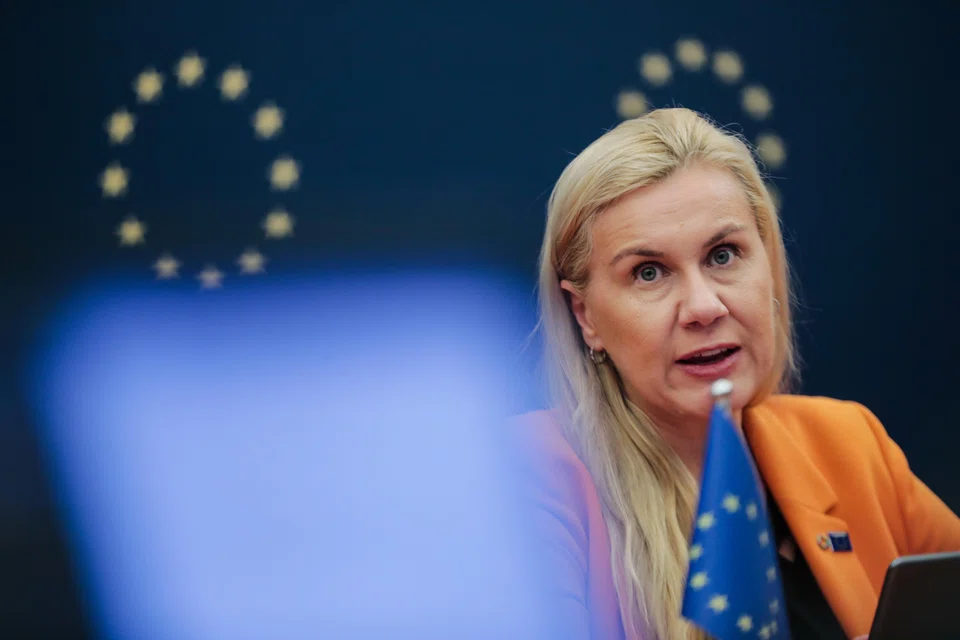
In the last month alone, the EU’s High Representative for Foreign Affairs and Security Policy Josep Borrell, Energy Commissioner Kadri Simson, and Economy and Trade Commissioner Valdis Dombrovskis have all visited the Chinese capital. This builds from the trip earlier this year of European Commission President Ursula von der Leyen.
Amid multiple tensions in bilateral relations, especially since the pandemic, what this intensive travel schedule appears to show is that Brussels is doubling down on diplomacy with Beijing. The goal appears to be to try to seize any remaining window of opportunity that may exist to prevent ties staying, largely, in the deep freeze for years to come.
Last week’s visit of Simson is a good case in point, where the EU energy chief attended a high-level annual bilateral energy dialogue in Beijing, the first in-person version of the yearly event since 2019. She said that “China can play a great part in the climate battle” after signing a new agreement that commits to closer cooperation.
Ahead of the COP28 climate summit in Dubai in coming weeks, she asserted that it is in the mutual best interest of both Brussels and Beijing to stabilise international energy markets. She also urged China to join wider, global pledges to cut methane emissions and triple renewable energy capacity, both by 2030.
On balance, Simson’s visit was therefore an – overall – positive dialogue on an agenda where Beijing and Brussels have generally had fruitful relations for many years. To be sure there are some bilateral disagreements even on this agenda: for instance, the EU has recently launched an anti-subsidy investigation into Chinese electric vehicle imports; the EU has concerns over the major surge in coal power approved this year by Beijing, with the fear that it is prioritising energy supply over reducing greenhouse emissions; and China has also objected to the EU’s new carbon border adjustment mechanism that will set tariffs of 20 per cent to 35 per cent on goods with a high carbon price, such as steel and iron ore.
However, many EU officials have long believed that, fundamentally, Chinese policymakers endorse a vision with Europe of a prosperous, energy-secure future in a stable climate and recognise the need for bilateral collaboration. After all, global warming poses a massive environmental threat to China, from record-setting heat waves to flooding.
The centrepiece of EU-Chinese cooperation on this agenda is the 2015 EU-China climate change declaration, one of the key drivers of the global warming deal agreed in Paris. Under this, both parties agreed to cooperate on developing a cost-effective low carbon economy, including intensifying cooperation in domestic mitigation policies, carbon markets, low-carbon cities, greenhouse gas emissions from the aviation and maritime industries, and hydrofluorocarbons.
So as COP28 approaches, an overriding European assumption on this agenda is that Beijing needs to be “in the global tent” on climate issues rather than left outside. China today is by a long way the largest national emitter of greenhouse gases, and international action to tackle climate change is much weakened, if not paralysed, without Beijing on board.
Yet, for all the warmth in bilateral ties over much of this and the wider green economy agenda, there remain real challenges elsewhere. This was voiced in Borrell’s trip to China last week where he highlighted a decline in bilateral trust and respect.
He said that Brussels takes Beijing seriously, and expects the same in return on geopolitical issues and trade so that we are “considered not through the lens of our relationship with others, but in ourselves… Since the war in Ukraine, Europe has become a geopolitical power. We want to talk to China with this approach”.
His comments reflect a widespread view in Brussels that the 27-member bloc does not receive sufficient attention from Beijing, particularly compared with the United States. Moreover, there is a belief that China does not sufficiently appreciate Europe’s sovereign independence in global affairs.
One of the key issues Borrell raised in Beijing is the huge, roughly 400 billion euro (S$579 billion) trade imbalance between the bloc and China.
He highlighted the major difficulties faced by many European companies in accessing the Chinese economy, saying that “it affects sectors in which we (Europe) enjoy a comparative advantage... we believe that the problem is not rooted in a simple difference in productivity”.
So Borrell urged China last week to address these economic imbalances, or warned that Europe may reduce its dependence on China with “de-risking… accelerating far more than is good, as the (European) public opinion will increase its pressure on political leaders to disengage more”.
In Beijing, Borrell also sought to address two further vexed issues. Firstly, Ukraine, as that war has now lasted more than 600 days since Russia’s invasion in February 2022.
Borrell stressed to his Beijing counterparts that “we are not asking China to adopt the same standpoint as the EU. But we consider it essential that China makes a major effort to convince the people of Ukraine that China is not Russia’s ally in this war”.
While Beijing appears to have significant concerns about the war in Ukraine, the EU’s attempt to prise China from Russia is unlikely to succeed. This is not least given the long, warm relationship between Presidents Vladimir Putin and Xi Jinping who met on Wednesday (Oct 18) in Beijing.
The EU foreign policy chief also stressed, on Taiwan, that the EU opposes the use of coercion, and that the tensions between Taipei and Beijing must be resolved via dialogue, not force.
While the EU does not formally recognise the self-governing island as an independent country, Brussels and multiple member states have economic and wider ties with Taiwan.
Taken together, EU and China bilateral relations are therefore at a key crossroads, and EU officials are seeking to double down on diplomacy.
Amid much tension over security and economic issues, there may yet be a window of opportunity to deepen relations on climate and the green economy to help shape the landscape of the clean energy economy in decades ahead.
The writer is an associate at LSE IDEAS at the London School of Economics