

EU summit showcases focus on the Asia-Pacific
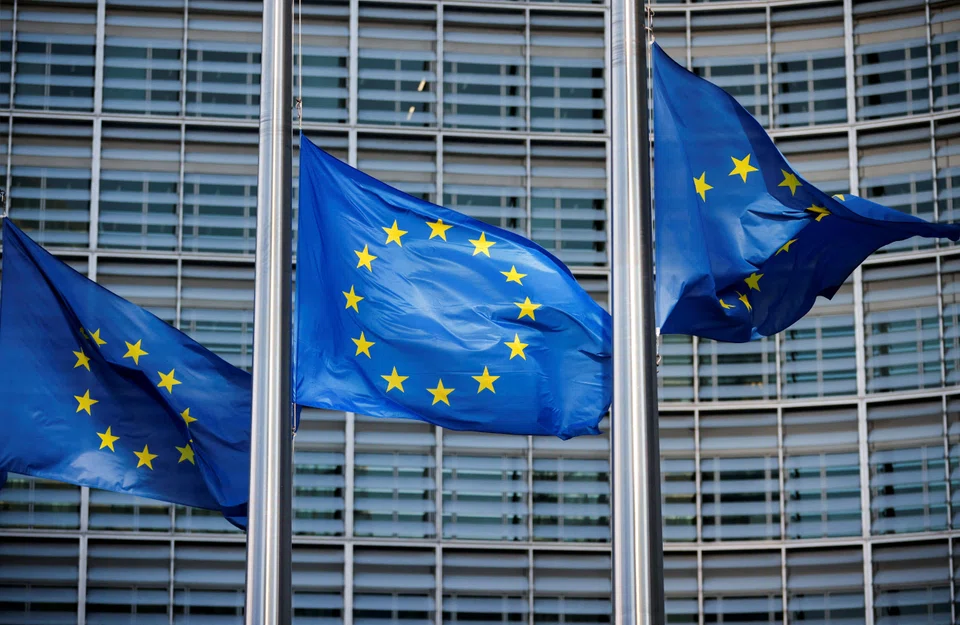
THE “pivot” to the Asia-Pacific is a term first popularised by US policymakers during the Obama administration. However, it also highlights the European Union’s (EU) increasing focus on the world’s fastest-growing economic region, including Singapore, in a way that is often overlooked.
The latest signal of intent from the Brussels-based club toward the Asia-Pacific comes this Saturday (May 13) with the EU’s Foreign Affairs and Security Policy chief Josep Borrell co-chairing the EU Asia-Pacific ministerial forum in Stockholm. With the aim of strengthening the partnership between the EU and the Asia-Pacific region, the summit will bring together around 60 foreign ministers, along with representatives of regional organisations and other partners.
The Asia-Pacific region, which extends from the east coast of Africa to the island nations of the Pacific Ocean, is home to three-fifths of the world’s population. It accounts for 60 per cent of global gross domestic product, two-thirds of global growth, 40 per cent of the EU’s total imports and, together with the EU-27, drives 70 per cent of global trade too.
This week’s summit will further lay down the framework for political and economic cooperation between the two regions based on mutual respect and equality. Discussions will centre on common challenges with respect to security, trade, global value chains, digitalisation, the green transition and energy security.
Europe’s underlying goal of engagement with the Asia-Pacific is to build competitive advantage vis-a-vis other world powers, including the United States. While nations across Europe, including the United Kingdom, have ramped up engagement with Asia-Pacific partners in recent years, it is the 27-member EU that is at the vanguard of this.
Last year, the Brussels-based club agreed on a new Asia-Pacific strategy to reinforce its strategic focus, presence and actions in this region of prime strategic importance. The aim is bolstering regional stability, security, prosperity and sustainable development, at a time of rising challenges and tensions in the region, in a bid to uphold democracy, human rights, the rule of law and respect for international law.
The EU’s approach and engagement has multiple goals. This includes seeking to foster a rules-based world order, an international level playing field, an open and fair environment for trade and investment, reciprocity, the strengthening of resilience, tackling climate change and supporting connectivity with Europe.
On the latter point, one reason that the EU is so keen to engage the Asia-Pacific more deeply is that it is at the vanguard of digitalisation and technology. The EU has announced its intent to launch a regional branch for the Asia-Pacific region within the Digital4Development Hub with a view to fostering digital cooperation to support sustainable, inclusive digital transformation.
This includes the importance of ensuring a high level of protection of personal data as reflected in the declaration between the EU and nine Asia Pacific countries (Australia, Comoros, India, Japan, Mauritius, New Zealand, South Korea, Singapore and Sri Lanka) on privacy and personal data protection, to strengthen confidence in the digital economy and continue cooperation on trusted data flows. The EU has also supported the launch of the negotiation for digital partnerships between the EU and Japan, Singapore and South Korea, based on shared values and a common approach to a human-centric digital transformation.
Outside of economics, free and open maritime supply routes in full compliance with international law are key too. Europe is working increasingly closely with key partners in the Asia-Pacific on security and defence, including malicious cyber activities, terrorism and organised crime.
Moreover, the EU last year announced the extension of the concept of a coordinated maritime presence in the North-West Indian Ocean. This will allow the EU to further support stability and security in the Asia-Pacific, to optimise naval deployments, to promote coherence of European action, and to facilitate the exchange of information and cooperation with partners in the region, including by conducting joint maritime exercises and port calls. Furthermore, the EU reaffirmed its determination to enhance its engagement in security and defence with partners in the region, for example through strengthening its dialogues and bilateral relationships.
As well as the upcoming summit, European intent toward the Asia-Pacific is manifest in the wider, growing number of EU annual conferences, with key emerging market giants such as India, plus major industrialised nations like Japan. This is also already allowing the EU to make headway in the massive region.
One example is India which with the EU-27, as a whole, are the world’s two largest democracies, with both keen to forge stronger ties. The Brussels-based club is already India’s largest single trade and investment partner, hence why a new bilateral trade deal under discussion is a key potential prize for both parties. There are wider reasons behind converging interests, including a growing need to develop shared defence forums such as maritime security in the Indian Ocean, where two-fifths of bilateral trade passes.
Yet, important as Europe’s relations are with emerging markets, industrialised nations are important too. With Japan, for instance, the EU enjoys a growing agenda, with the two powers in recent years stepping up their leadership on international trade and the rules-based economic order.
Japan is one of Europe’s top export markets in the Asia-Pacific. In the EU, it is estimated that some 600,000 jobs are now tied to bilateral trade, with an estimated 74,000 European firms exporting to Japan.
This core economic agenda was given a fillip in 2019 when the EU-Japan free trade agreement entered into force, covering around a third of global GDP and almost 650 million people. The accord took years to agree, with the headlines captured by the scrapping of almost all duties on Japanese and European imports respectively.
However, both sides have stressed that the trade treaty is also important because it rests on values and principles. This relates, in part, to the fact that the agreement is the first to be struck by the EU which includes language to support the 2015 Paris climate change treaty, by making a “positive contribution” to reducing global warming through cutting greenhouse gas emissions.
These examples showcase why Europe sees such a big opportunity in the Asia-Pacific. The massive region is a growing priority for the EU, as it tries to steal a march on others – including the United States which is also pivoting there – to try to drive economic and political advantage in the 2020s and beyond.
Andrew Hammond is an associate at LSE IDEAS at the London School of Economics
TRENDING NOW

Inside Jensen Huang’s last hours as Nvidia CEO

Higher rates, weaker spending: Is the Philippines entering stagflation?

‘I’ll be buying more’: Singapore investors pour into Nvidia shares on Jensen Huang’s exit

Demand, tech capabilities position Apac and AI as Skyscanner’s next growth frontiers: CEO Bryan Batista

