

Europe and the Indo-Pacific: Partners facing similar challenges
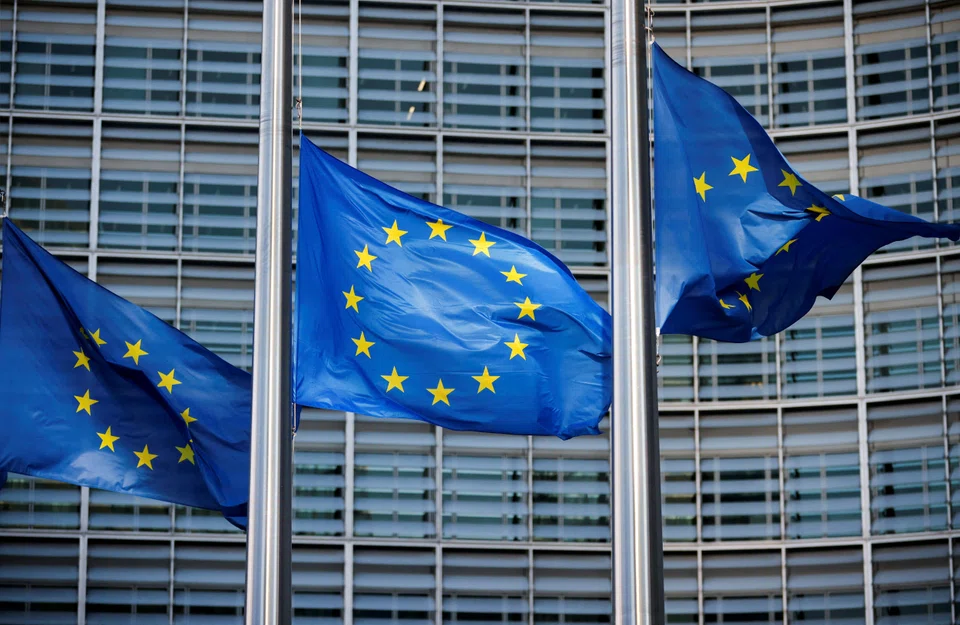
ON SATURDAY (May 13), at our initiative, ministers from the Indo-Pacific and the European Union (EU) and partners will gather in Stockholm. Our meeting is a call for action as much as it is the demonstration of the EU’s continuous commitment to the Indo-Pacific region.
We meet as the world grapples with aggression, geopolitical tensions, economic turbulence, and the climate crisis. In these consequential times our partnerships are essential, and never before has the case for cooperation between our regions been so convincing.
The Indo-Pacific region is of strategic importance. The region holds the larger part of the earth’s population and economy. Through its waters passes the major share of world trade. Stability and freedom of navigation in the Indo-Pacific are vital for our prosperity. The fate of climate change and the health of oceans are largely decided there. When fundamental freedoms and openness are threatened, be it in Europe, the Indo-Pacific or elsewhere, the EU is not indifferent.
We live in a world of shared security. The rise of tensions in parts of Asia has global consequences. Correspondingly, developments in Europe reverberate also in the Indo-Pacific. Russia’s illegal invasion of Ukraine is felt through its flagrant breaches of the principles of the United Nations (UN) Charter and through food and energy price hikes. We have a common interest in addressing these challenges, and upholding the UN Charter and international law. Indeed, the aims of Ukraine – to protect its freedom, sovereignty, and territorial integrity – are of fundamental importance for all.
In the challenges we face, there are many notable parallels between Europe and the Indo-Pacific. Supply chains are stretched, inflation destabilising, energy insecure, technology competitive, disinformation proliferating, and cybersecurity threatened. In short, the futures of Europe and the Indo-Pacific are inextricably linked, and our interests align in many ways.
Together, the EU and the Indo-Pacific are strong enough to make a real difference on free trade and supply chains, technology and climate change, as well as broad security. We account for more than two-thirds of global trade, GDP, and population. Through closer relations we can further influence cooperation on key global challenges.
In the EU’s Strategy for Cooperation in the Indo-Pacific, we pledge a growing engagement and invite our partners to join us in addressing common challenges. We envision deeper partnerships on sustainable prosperity and the environment, digital connectivity, and security, including human security. Our Indo-Pacific Strategy is above all an invitation to our partners in the region to dialogue and to address the issues at stake.
The proposition of the EU is clear. We are ready to act on a broad palette of cooperation reflecting our extensive and long-term commitment to the Indo-Pacific. The latter is exemplified through our free trade agreements, where we have active negotiations with Australia, India, Indonesia, and Kenya; we have also relaunched negotiations with Thailand, and expect to sign an agreement with New Zealand soon. We engage in infrastructure, development cooperation and ocean conservation stretching from the African coast well into the Pacific.
Importantly, the EU’s approach constitutes an open and inclusive partnership model for the Indo-Pacific, where we cooperate based on common interests and the protection of shared values and principles. This design allows us to address the challenges we face more effectively. Our goal is to build strategic trust and promote joint leadership in addressing global challenges.
As we welcome participants to the EU Indo-Pacific ministerial forum in Stockholm on Saturday, our discussions will focus on our common interests, challenges and values, with the goal of supporting closer coordination and integration. It is a clear message of the long-term European commitment to the Indo-Pacific.
Josep Borrell Fontelles is the EU’s high representative for foreign affairs and security policy and vice-president of the European Commission. Tobias Billstrom is Sweden’s minister for foreign affairs.
TRENDING NOW

Once staunchly pro-China, Malaysian Chinese businesses are now distancing themselves from Beijing

Stocks to watch: HPL, Aims Apac Reit, Zico, Advanced Systems Automation, ComfortDelGro
‘How many will survive?’: Bubble fears arise as China’s humanoid robotics face reality check

Smaller board lots can’t fix a market run by three banks

