

Europe can’t rearm its way to security
For the continent, boosting defence spending will crowd out vital investments and sustain Russia’s fossil-fuel revenues
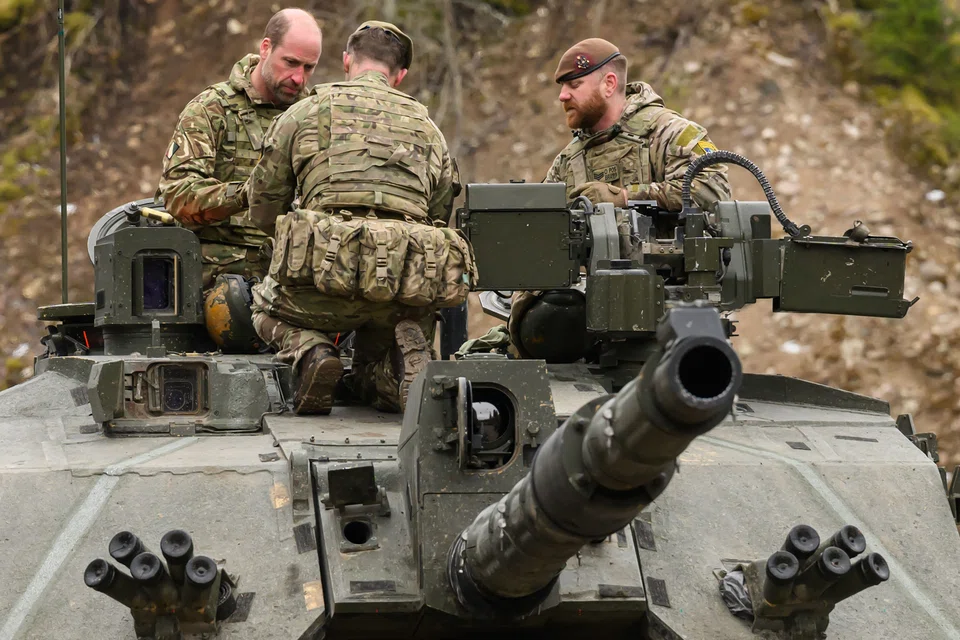
[LONDON] As Russia’s war on Ukraine rages on Europe’s eastern frontier, the continent’s leaders are finally willing to admit they have the power to revive their ailing economies. After decades of austerity, they are ready to spend again – but not to end poverty, accelerate decarbonisation, or reverse the collapse of essential public services. Instead, Europe’s fiscal firepower is being directed towards tanks, missiles and fighter jets.
Reorganising the economy around state-supported defence spending is known as military Keynesianism, though John Maynard Keynes – who rose to prominence by condemning the punitive post-World War I peace treaty that was imposed on Weimar Germany, which ultimately helped set the stage for Hitler’s rise and another war – would probably not have endorsed the term.
The reasoning behind the resurgence of military Keynesianism is not entirely without merit, as the pursuit of austerity policies has left many European economies punching below their weight. European productivity, which has grown at half the pace of the United States over the past decade, declined by 1 per cent in 2023. Real wages fell by 4.3 per cent in 2022 and 0.7 per cent in 2023, following a decade of stagnation. Meanwhile, investment is nowhere near where it needs to be to tackle the twin crises of inequality and climate breakdown.
Europe’s self-defeating commitment to austerity is epitomised by the German doctrine of “schwarze Null” (“black zero”). Even when Germany’s economic miracle was in full swing, politicians refused to invest in long-term growth. As a result, Germany – like most of the continent – has suffered from chronic underinvestment in physical and social infrastructure, constraining productivity.
Against this backdrop, rearmament may look like an easy fix. Unlike social expenditure, defence spending faces little political resistance. It enables politicians to appear tough – a valuable asset in an age of strongman politics – and keeps the arms industry, a powerful lobby with deep ties to political elites, flush with public money.
But military Keynesianism is a dead end – both economically and politically. For starters, it’s a weak engine of long-term growth. Modern weapons production relies on advanced manufacturing processes that use relatively little labour, so the industry has low multipliers compared to investments in health, education or green energy. It creates fewer jobs per euro spent and contributes little to the broader economy’s productive capacity.
Military Keynesianism also deepens Europe’s dependence on fossil fuels, given that modern militaries are among the planet’s largest institutional fossil-fuel consumers. Expanding defence capabilities means locking in demand for carbon-intensive technologies at a time when Europe should be phasing them out.
Worse still, prioritising defence over decarbonisation sustains the very system of petropolitics that gives regimes such as Russian President Vladimir Putin’s the resources to wage war in the first place. As the Guardian reported earlier this year, the European Union has spent more on Russian fossil-fuel imports over the past three years than it has on financial aid to Ukraine.
If the EU is serious about defeating Russia – not just on the battlefield, but geopolitically – then the bloc must confront the real source of the Kremlin’s power: oil and gas exports. Russia, after all, is a petrostate, and its war machine is financed by the revenues that flow from Europe’s addiction to fossil fuels.
Oil and gas revenues have accounted for 30 to 50 per cent of Russia’s federal budget over the past decade and still represent roughly 60 per cent of its export revenues. These industries provide the vital dollars that enable Russia to import military technologies and other critical inputs. Without that income, the Russian economy would quickly collapse under the weight of hyperinflation.
The most effective long-term strategy for countering Russian aggression, then, is not to ramp up military spending but to accelerate the green transition. What Europe needs is a real Green New Deal: a democratic, continent-wide mobilisation to decarbonise the economy, ensure energy security, and create millions of well-paying green jobs.
To be sure, this would require massive investment in renewable energy, public transit, retrofitting, and industrial electrification. It would also mean reshaping supply chains, restoring public ownership of key infrastructure, and breaking the stranglehold of fossil-fuel capital on European politics.
But a Green New Deal would do more to strengthen the EU’s geopolitical standing than any number of new tanks and artillery shells. A Europe that produces its own clean energy, builds resilient green industries, and reduces its dependence on volatile global commodity markets is a Europe that cannot be held hostage by petro-tyrants.
Europe’s political elite faces a stark choice: continue propping up a broken growth model by funnelling public money into the military-industrial complex, or invest in a livable future rooted in solidarity, sustainability and democratic control. In the long run, building an inclusive green economy is the only way to counter the rage and alienation fuelling the rise of far-right forces – the greatest and most immediate threat to Europe’s democracies.
The writer, a former research fellow at the Institute for Public Policy Research, is the author of several books, including Vulture Capitalism: How to Survive in an Age of Corporate Greed (Bloomsbury Publishing, 2024) and The Corona Crash: How the Pandemic Will Change Capitalism (Verso, 2020)






