

Europe launches big ‘Belt and Road-style’ initiative
The launch of the new Global Gateway strategy is only the latest signal of a new, geopolitical EU
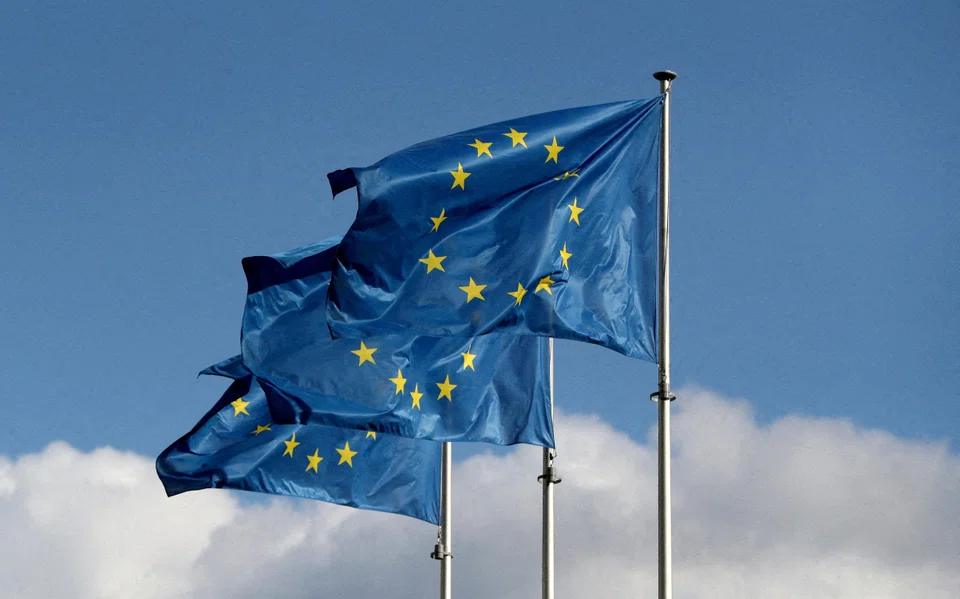
THE last few days have been an unofficial, global “infrastructure week”, with the 10th anniversary of the Belt and Road (BRI) strategy in Beijing, and an official launch on Wednesday (Oct 25) in Brussels of the European Union’s Global Gateway strategy.
Inevitably, much reportage has focused on the geopolitical ramifications of these two developments. Important as these are, however, organisations ranging from McKinsey to the Asian Development Bank (ADB) have highlighted that these massive projects don’t – inevitably – have to be competitive.
The ADB, for instance, sees a regional infrastructure investment gap of some US$26 trillion in that area of the globe alone in the period to 2030.
To put this into perspective, even if China were to double the BRI’s investment total in this period, it would still leave financial capacity for many multiples of the EU’s Global Gateway scheme. The European effort aims to mobilise up to 300 billion euros (S$434.7 billion) in public and private global investments in the period from 2021 to 2027.
Yet, despite these core facts, the primary lens through which the BRI and Global Gateway are often perceived is geopolitical. While the BRI has garnered massive media coverage over the last decade, Global Gateway has operated far more under the global radar screen, despite being widely seen as Europe’s most significant response to BRI to date.
Global Gateway is politically led in Brussels, but it aims to mobilise up to 300 billion euros in public and private funds by 2027 to finance EU infrastructure projects abroad. This total is based on national and EU resources from financial institutions and development banks, in the hope that institutional spending will unlock significant private capital too.
The role of the private sector is cemented in the EU scheme by the business advisory board which includes a wide range of firms, including in the energy, transport and digital sectors.
They are: AEE Power, ANDRITZ Hydro, EDL, Enel Group, Eramet, Getra Group, Iberdrola, Siemens, TotalEnergies, Turbulent, Veolia, Vestas Wind Systems, Aktors, Asseco Data Systems, ESET, Eutelsat, MIM Solutions, Nokia Digital, Orange Digital, PAIX Data Centres, Telecom Italia, Telefonica, Bayer, Merck, Royal Philips, Allianz, Danone, AP Moeller Maersk, Alstom, Deutsche Post, DHL Group, and Volvo Group.
Geographically, the project is focused on Latin America and the Caribbean; the Middle East, the Asia-Pacific; and Africa. These target regions broadly align with the EU’s goal of diversifying its supply chains given the high dependence on several key countries, including China.
At Wednesday’s launch in Brussels, political leaders from more than a dozen developing nations attended, including Armenia, Bangladesh, the Democratic Republic of the Congo (DRC), Egypt and Georgia.
While projects in Africa and Latin America have already been given significant media attention, what are perhaps less known are those in the Middle East and the Asia-Pacific. Given the intensifying geopolitical competition in these regions, the EU is stepping up its strategic engagement there too. The growing economic, demographic and political weight of these areas makes them key collaborators in shaping the rules-based international order and in addressing key global challenges such as climate change.
Projects in Asia include an Asean Team Europe Initiative on Sustainable Connectivity, which would support Asean electric grid interconnections to improve access to renewable energy, invest in digitalisation, including in connectivity via submarine cables, as well as promote environmentally, economically, and socially sustainable value chains.
There is also a Green Team Europe Initiative with Asean, to strengthen the EU’s partnership with the region in areas such as environmental and biodiversity protection, clean energy transition, disaster resilience, prevention of illegal logging, wildlife trafficking, and air pollution.
In the Middle East, meanwhile, possible projects include a water desalination scheme in Jordan for enhancing water security in a nation increasingly hit by the impact of global warming. There is also a potential digital project for businesses and universities in Egypt, plus several neighbouring nations to boost Internet speeds via a submarine optical cable.
Beyond these examples, Global Gateway’s areas of focus include climate and energy with investment in both mitigation and climate resilience, as well as in clean energy, especially in low- and middle-income countries. Key goals with this include helping deliver energy security, alongside global objectives such as the Sustainable Development Goals and Paris Agreement climate goals.
Another Global Gateway area of focus is health, with a goal of strengthening capacity around the world. This will prioritise security of pharmaceutical supply chains and development of local manufacturing. The Covid pandemic revealed weaknesses of healthcare systems and the fragility of pharmaceutical supply chains. It also highlighted the wide discrepancy in medical manufacturing capacities around the world.
Yet another example is transport, with a goal of creating sustainable, smart, resilient, inclusive and safe transport networks, including in Africa. There, the goal is to help enable the economic potential of an African continental trade area.
Creating such strategic, sustainable, and secure transport corridors and supporting value chains, services and jobs will benefit industries in both Africa and Europe. The proposed strategic corridors through reliable networks and services will provide better, greener EU-Africa connectivity. These corridors will facilitate trade and mobility within Africa, as well as between Africa and Europe.
One of these transport networks that the EU, alongside the US, is keen to develop is the Trans-African Corridor. Angola, Zambia and the DRC – all home to major deposits of cobalt, lithium and copper – had in July committed to the project, which will connect the mineral-rich Katanga province in the DRC to the Atlantic port of Lobito in Angola, through the copper belt in Zambia.
At the G20 summit in India in September, European Commission president Ursula von der Leyen said the goal of the Trans-African Corridor is “not only to connect a landlocked region to the sea”. The partnership “will also invest in local value chains, in clean energy and in skills for the local workforce. It is a whole new approach to large infrastructure investment. It is about shared prosperity. It is about real benefits for all partners”, she said.
Taken together, the launch of the new Global Gateway strategy is only the latest signal of a new, geopolitical EU. While the project so far has much fewer resources than BRI, it nonetheless signals a step change in the EU’s approach to try to protect its political, economic and security interests, and project a strong and competitive bloc to the outside world.
The writer is an associate at LSE IDEAS at the London School of Economics
TRENDING NOW

Britain’s mansion tax shows the difficulty of targeting wealth

Once staunchly pro-China, Malaysian Chinese businesses are now distancing themselves from Beijing

The only common thing in S-E Asia is that we all eat rice: Cisco’s Asean president
Singapore data centre operator DayOne opts for US IPO at likely US$20 billion valuation

