Europe needs to put its money where its mouth is to stop deforestation in South-east Asia
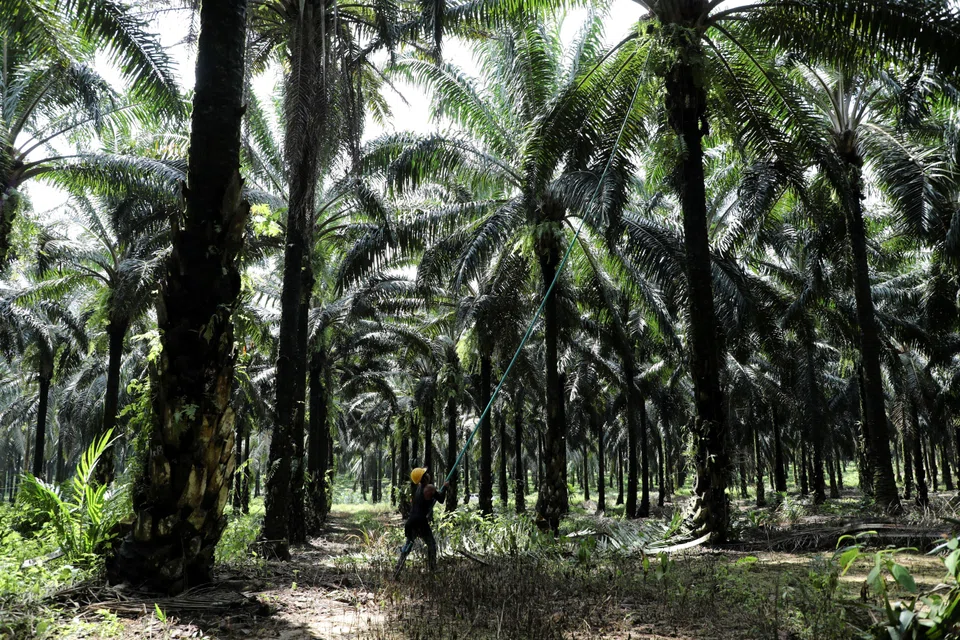
A NEW European Union (EU) regulation will come into force this year that bans the import of products made from agricultural commodities such as palm oil, timber, coffee and rubber grown on recently deforested land.
While there is broad consensus among international environmental groups that this new regulation is a significant step forward in the fight against deforestation and biodiversity loss, it has triggered protests by some palm oil and rubber farmers in Malaysia and Indonesia.
The regulation means that from 2024, the EU will require companies and smallholder farmers working in Indonesia, Malaysia and other parts of the Global South to certify that their agricultural products are not linked to recent deforestation, and to provide data to prove it.
In effect, the EU is placing ultimate responsibility for curbing deforestation linked to demand for agricultural commodities by consumers in Europe on the farmers and workers in Indonesia and Malaysia that produce them and their respective governments.
This raises an important question: Should governments, companies and investors in Europe and other parts of the Global North not do more to support developing countries in the South to transition towards sustainable agricultural commodity production?
In 2021, it was estimated that countries in the Global North, including China, the United States, EU nations and Japan, imported agricultural commodities – palm oil, timber, rubber, cacao and coffee – worth a total of US$215 billion from the Global South.
Growing awareness among consumers that their demand for these commodities may be linked to deforestation and climate change has created a powerful momentum for change.
Standards and regulations have proliferated to try to create “cleaner” and “greener” supply chains for agricultural commodities, and encourage the transition of production to more sustainable practices.
This is welcomed and is driving real improvements. However, there is a need to address the growing perception among stakeholders in producing nations, like Indonesia and Malaysia, that standards and regulations are being imposed that primarily serve the expectations of consumers and companies in the North. Their voices need to be heard.
From the perspective of Southern producers, it can appear hypocritical when countries in the North introduce regulations that expect changes in agricultural practices in the South. Vast swaths of previously forested land in Europe and the US have been converted for agricultural use. In fact, in Europe, the production of olive oil, wine and other agricultural products account for close to 40 per cent of the region’s entire land area. Today, in Indonesia, the comparative figure is closer to 32 per cent.
There also exists a perception that regulations are being developed with limited dialogue or information exchange with the farmers and smaller companies directly involved in production. This can lead to the opinions of local people in producing nations, such as Indonesia and Malaysia, being ignored and therefore to unintended consequences for communities, and the forests the regulations are meant to protect.
For example, the new EU regulation on deforestation-free products is expected to lead to European buyers of agricultural commodities shifting their supply to producers that can provide data to trace the origins of their products.
On the face of it, this is a positive development. However, it is also likely to disproportionately impact small-scale family and smallholder farmers. This is because many will struggle to comply with the new strict requirements for traceability and, as a consequence, be excluded from EU markets. This risk has led to the recent protests by palm oil and rubber farmers in Indonesia and Malaysia and the filing of a petition to the EU calling for changes to the regulation.
Losing access to the European markets could place additional financial pressure on smallholder farmers in South-east Asia and exacerbate the very economic and social conditions that encourage their encroachment into nearby forests – already a major cause of deforestation in the region.
In the absence of additional support measures, the challenges of meeting the requirements of the new EU regulation are likely to pose a direct threat to smallholder livelihoods in South-east Asia, while advantaging larger operators better placed to meet the new expectations.
For the new EU regulation to be effective in its current form, it is vital that governments, companies, investors and financial institutions in Europe, and other parts of the Global North, work together to mobilise resources to support the sustainability transition of agricultural producers in South-east Asia and other areas of the Global South.
Smallholders in particular need finance, training and technology to help them transition to more sustainable practices, increase yields and meet the new EU standards.
It is only if countries in the North do more to support the farmers and workers in the South that we will break the link between agricultural commodity production and deforestation, and preserve the world’s biodiversity for future generations.
The writer is co-founding partner and chief investment officer of ADM Capital.