

Europe’s industrial base under threat
There are growing warnings that the continent’s industrial sector may end up structurally uncompetitive if high energy costs persist.
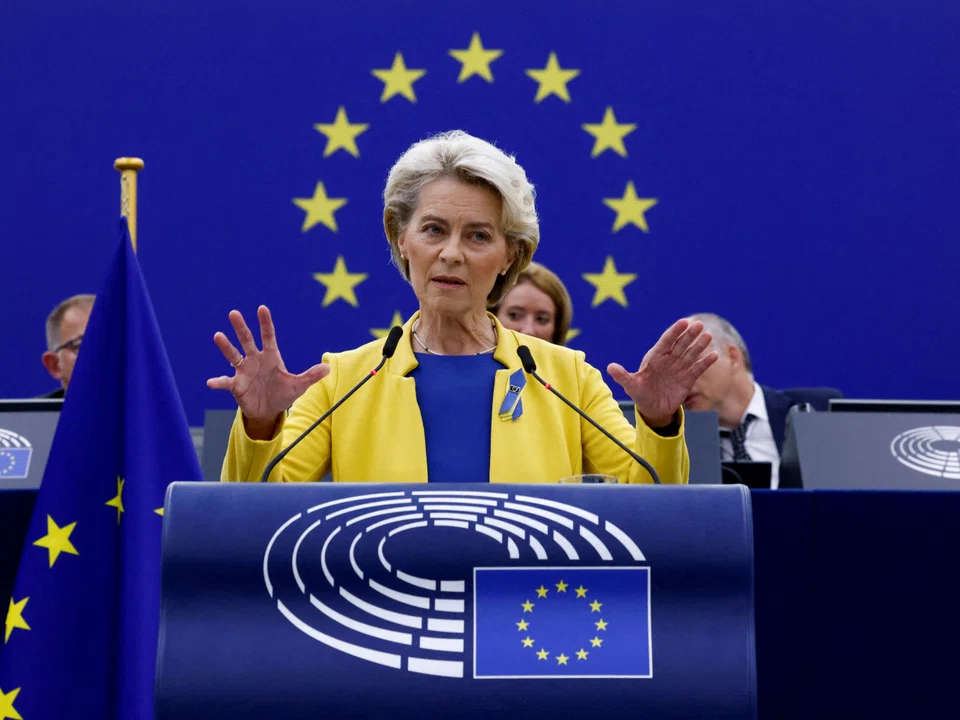
TRANSATLANTIC ties were forecast to improve significantly and sustainably during Joe Biden’s presidency – yet two years into his term of office, relations are deteriorating as a result of the Inflation Protection Act (IRA).
This landmark legislation was initially welcomed by key European Union (EU) stakeholders including European Commission President Ursula von der Leyen. However, it has subsequently triggered a huge political row over the massive amount of green energy subsidies given to US industry, threatening Biden’s overarching goal of reuniting the Western alliance following the divisions of the Trump presidency.
On Dec 1, von der Leyen said that the EU must address “distortions” created by the US$430 billion US plan to incentivise climate-friendly technologies which threaten a potential transatlantic trade war. She said that, unless a compromise is found fast, the EU will “adjust our own rules” to re-create a level playing field.
von der Leyen’s call for changes to EU state aid rules follows a series of emergency moves in recent years aimed at streamlining the regime. This includes easing restrictions on payments to private companies in response to the pandemic and the energy crisis.
Under the IRA, US consumers get incentives to purchase new and second-hand electric cars, to warm their homes with heat pumps and even to cook their food using electric induction. Biden has said there could be “tweaks” made to make it easier for European firms to benefit from the subsidies package.
What Biden appears to be referring to is a provision in the IRA that grants exceptions to countries with a US trade agreement to make it applicable to US “allies”. The challenge here, however, is that the EU does not yet have such a trade deal with the United States.
French President Emmanuel Macron also said the issue was “fixable” after his recent visit to Washington to see Biden. Macron added that weakening Europe’s industry was “not the interest of the US administration and even the US society”.
What Macron refers to here are the growing perceptions of a threat to Europe’s industrial base. This was highlighted last month by the Conference Board which showcased how much the continent’s chief executive officers (CEOs) are concerned by the economic landscape, post-Russia’s invasion of Ukraine. European CEOs’ future expectations about their own industry’s prospects six months ahead, plus those of the wider European economy, are both at the lowest point since records began.
The data from this survey and some other recent ones is alarming decision-makers in Brussels and key European capitals, such as Berlin and Paris. On Nov 20, German Economy Minister Robert Habeck and his French counterpart Bruno Le Maire issued a joint statement echoing these concerns and called for an intensified “EU industrial policy that enables our companies to thrive in global competition especially through technological leadership”. Bloc officials are now very seriously thinking through a number of big subsidy packages to try to retain the continent’s industrial competitiveness.
One of the schemes being considered in Brussels is a European sovereignty fund to help businesses invest and meet ambitious green standards, including an emergency scheme to funnel money into key high-tech industries. The European Commission will discuss the plans with EU countries at the European Council of 27 presidents and prime ministers this week (Dec 15-16).
Commission officials stressed that the aim is first to try to tap and expand existing sources of funding, such as RePowerEU which aims to end reliance on Russian fossil fuels before 2030 in response to the invasion of Ukraine, before having discussions with member countries about the European sovereignty fund. This is because some countries are adamantly opposed to issuing new EU money.
The Conference Board report makes clear that CEOs are not just concerned about the fact that Europe’s energy prices will be larger than those in much of the rest of the world for some time to come. In addition, key parts of the new US industrial subsidy scheme to support green industries under the US IRA kick in next year, including subsidies to “Buy American” provisions that mean only cars, batteries and solar cells manufactured in the United States can (so far) benefit.
In this landscape, there are growing warnings that the European continent’s industrial base may end up structurally uncompetitive if high energy costs persist. These warnings come from executives and industry groups that the economy may end up severely weakened. As context here, eurozone manufacturing activity has recently hit its weakest level since peak-pandemic in May 2020.
European industrial gas demand also fell by 25 per cent in the third quarter of 2022 from a year earlier. Widespread shutdowns are behind much of the drop because efficiency gains alone would not produce such savings.
Energy-intensive industries such as aluminium, fertilisers, and chemicals are at particular risk of permanently shifting production to where cheap energy abounds (for instance, natural gas in the United States costs about a fifth what firms pay in Europe). Of course, European industry has been shifting production to locations with cheaper labour and lower other costs for decades, but the energy crisis appears to be accelerating this exodus.
Europe became a net importer of chemicals for the first time ever this year. More than half of European ammonia production, a key ingredient in fertilisers, has been replaced by imports.
All nine zinc smelters in continental Europe have cut or stopped production, replaced by imports from China, Kazakhstan, Turkey, and Russia. Moreover, primary aluminium output in the EU has halved, cut by nearly one million tonnes, over the past year. Trade group Eurometaux says that historically, when these temporary closures happen, permanent ones come as a consequence. This is because reopening an aluminium smelter costs up to 400 million euros (S$570 million) and is a big decision given Europe’s economic outlook.
Europe’s efforts to secure supplies not just for energy but also key minerals used in electric vehicles and renewable infrastructure are also at risk from high energy prices. Brussels is expected to propose new legislation early next year – the European Critical Raw Materials Act – to build up reserves of minerals indispensable in the transition to a green economy, such as lithium, bauxite, nickel, and rare earths. Yet without more renewable power and lower costs, companies may be significantly less likely to invest in Europe.
Taken together, this data highlights the growing political imperative for Europe to act. In the absence of a compromise with the United States, expect the EU subsidy regime to be revamped by Brussels sooner rather than later.
The writer is an associate at LSE IDEAS at the London School of Economics.
TRENDING NOW

South-east Asia has lost Nvidia’s best salesman

Higher rates, weaker spending: Is the Philippines entering stagflation?

Who is Leo KoGuan, the Singapore-based billionaire backing Nvidia’s Jensen Huang?

Demand, tech capabilities position Apac and AI as Skyscanner’s next growth frontiers: CEO Bryan Batista

