Europe’s ‘limited responsibility’ model must go
ECB’s Christine Lagarde explained what Europe must do to secure its prosperity and sovereignty. But will European leaders heed the call?
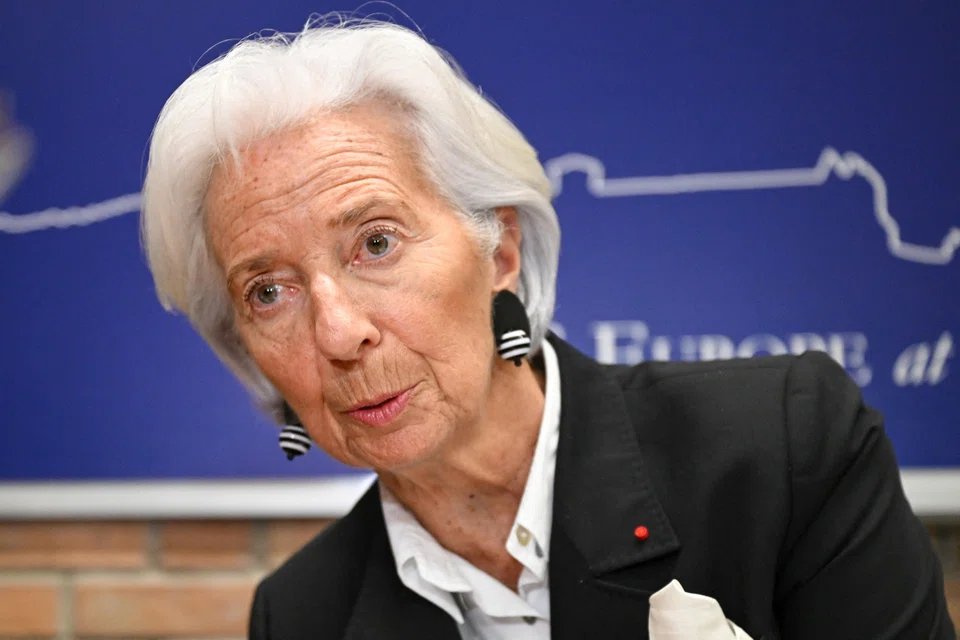
[FLORENCE] The Financial Times recently reported that European Central Bank (ECB) president Christine Lagarde may step down before her term expires in 2027.
Although she has since said that her “baseline” intention is to stay on, that has not ended the speculation. Should she decide to leave, a politically fraught process to appoint a new ECB president would begin.
It is both ironic and telling that rumours of Lagarde’s early departure emerged just after she had offered her own strategic vision for the European Union as it confronts a rapidly changing global order.
Through her interventions at an informal European Council meeting in Alden Biesen and at the Munich Security Conference, she explained exactly what Europe must do to secure its prosperity and sovereignty in the years ahead.
Not for the first time, she issued a stark warning about the economic and geopolitical challenges facing the EU, stressing that restructuring the bloc’s “business model” would require robust financial support to mobilise investments in innovation and strategically important industries.
Crucially, such support cannot come only from an accommodative monetary policy. Rather, it must also come from financial integration and greater provision of innovation-enhancing public goods.
Should those overseeing fiscal and industrial policies abdicate their duties, the ECB would once again become the “only game in town”. But this scenario would not only hinder a shift in the EU production model; it would also jeopardise the ECB’s independence and the international role of the euro.
Lagarde reiterated these points in her recent speeches, outlining initiatives the EU must pursue to manage broader structural shifts in the global order.
At the European Council, where she enumerated the essential components of the EU’s internal agenda, she went straight to the heart of the matter by calling for a more robust regulatory framework for the single market and greater financial support for investments in innovation.
Market fragmentation
Moreover, for Lagarde, success requires addressing the problem of market fragmentation along national lines, and launching a European safe asset to establish a permanent central fiscal capacity.
That stance distances herself from leaders who – either out of political opportunism or inconsistency – want to cherry-pick convenient initiatives that serve their short-term national interest, while ignoring the bigger problems that have been holding Europe back.
In Munich, Lagarde argued that in a world increasingly governed by “naked power”, the EU must strengthen its own value chains by satisfying three criteria. First, value chains that underpin strategic autonomy should be treated as essential assets under European control.
Second, Europe must identify strategic nodes of essential value chains that can be brought back within EU borders. And third, Europe must not let itself become dependent on a single monopolistic provider for strategically important components in production.
Strengthening the euro
Lagarde then concluded by pointing out that these goals require an increase in the euro’s weight as an international currency. Thus, the EU’s internal and external agendas are intertwined: the latter crucially depends on the former. To strengthen the euro and reduce its international vulnerability, the EU must complete its capital markets union, bolster its joint budget and launch a European safe asset.
But if that is what is required, one cannot overlook Germany’s current position. In Alden Biesen, German Chancellor Friedrich Merz cited German Constitutional Court jurisprudence to reject a proposed eurobond launch (a position that was at odds with Bundesbank president Joachim Nagel’s own recent statements about the need for more joint EU debt).
But soon thereafter, in Munich, Merz presented himself as the quintessential European statesman and denounced Maga (Make America Great Again) for the damage it has done to the post-war international order.
Lagarde is implicitly challenging what we may call the “limited responsibility” model upon which the EU and the eurozone were built.
This framework allowed Europe to underinvest in common defence by relying on the US for protection; drain demand from the global economy through persistently positive net exports; and confine the ECB to a “regional” role, on the assumption that the US Federal Reserve would ensure global stability through its swap lines to other central banks.
As Lagarde understands, the limited responsibility model is no longer fit for purpose. That is why she recently announced that the ECB will offer euro liquidity to third-party monetary authorities, thus transforming itself into a full-fledged central bank capable of shouldering global responsibilities.
Moreover, the EU must not only close its innovation gap vis-a-vis the US and China, but it must also do so in ways that strike a balance between efficiency, equity and sustainability. That is no small feat, and it cannot be accomplished with the typical catch-up model. But nor is it impossible. Europeans must not succumb to the belief that their status as a digital and artificial intelligence laggard is so entrenched as to be irreversible.
Ultimately, Lagarde’s strategic vision is about institutional self-preservation. She is telling European leaders that they must shoulder their responsibilities now or risk seeing the ECB with its back against the wall when the next big shock inevitably occurs. PROJECT SYNDICATE
All three writers are from the European University Institute. Marco Buti, chair of the institute's Robert Schuman Center, is also an external fellow at Bruegel. Giancarlo Corsetti is professor of economics. Marcello Messori is a part-time professor.