
Europe’s naivety about the China export shock is tragic
Abandoning the 2035 combustion engine ban will not secure the European car industry’s future
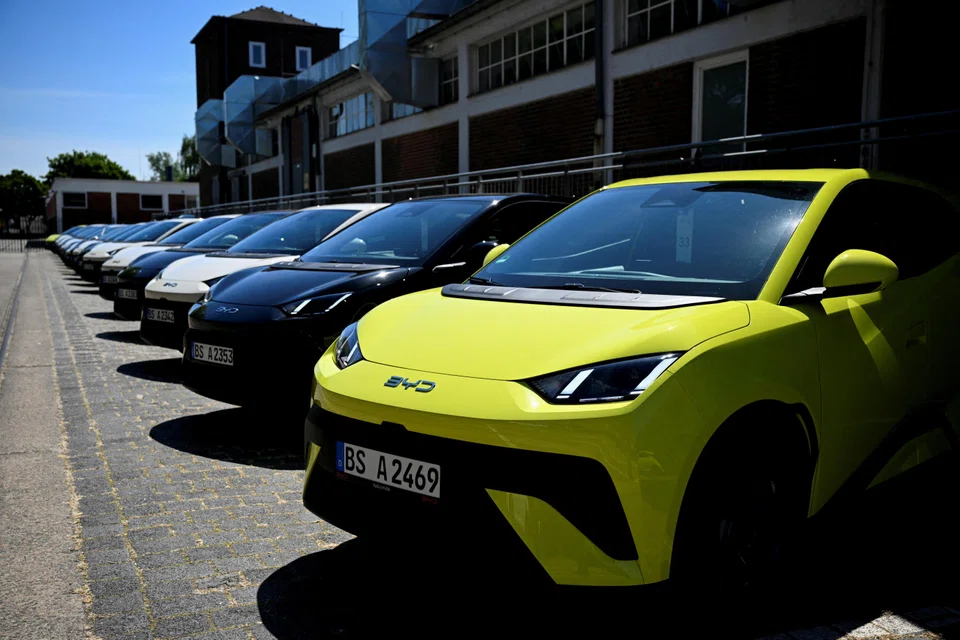
EUROPEAN Union carmakers such as Volkswagen got their wish this week when a combustion engine ban for 2035 onwards was effectively abandoned. It was seen as too ambitious, too costly and a dream for Chinese rivals, whose electric vehicle (EV) head start – powered by subsidies – has given them a 7 per cent share of the continent’s auto market. Faced with a choice between climate leadership and protecting jobs, the EU chose the latter.
While it is true that the ban failed to spark a true European EV boom, dumping it is nowhere near enough to secure the industry’s future. It will not solve Chinese competition. Worse, ditching it sends a signal that carmakers can comfortably take their foot off the investment accelerator. That is the wrong message.
The tragedy here is Europe’s industrial and geopolitical naivety in the face of China’s export engine and high-tech ambitions, rather than clumsy bureaucratic overreach. Beijing’s trade surplus with the EU has widened to close to US$300 billion this year.
While once it was Germany flooding China with cars and machines, the direction reversed after Covid-19, with German car exports to China slumping 70 per cent between 2022 and 2024. Automakers’ profits are sinking, and they are cutting jobs. Volkswagen has shut a plant in its home market for the first time.
Addressing this means being clear-eyed about what is driving the imbalance. There is genuine innovation at the core of China’s BYD, which took Tesla’s crown as the world’s biggest electric car company and which sells EVs such as the Dolphin Surf for less than 23,000 euros (S$34,830) in Europe.
But the country’s European success is also wrapped in subsidies, overcapacity and a weakening renminbi. The fact that China exports more petrol cars than EVs is also proof that this is about more than fiddly EU rules. “China makes more than the world can take,” as the Asia Society Policy Institute’s Lizzi Lee put it recently.
The flip side of Chinese oversupply is weak European demand. As the tariff drawbridge gets raised in the US and China squeezes out EU imports, the lack of a strong European market is becoming obvious. Sluggish economies, high sticker prices and alternative transport options have weighed on the EV transition, as have uneven charging infrastructure and expensive energy.
In the first half of this year, European car production fell by 2.6 per cent; China’s soared by 12.3 per cent. Howls of protest at the 2035 ban have ultimately been a distraction.
European policymakers need more than regulatory U-turns, or public laments, to address the industry’s deep-rooted problems. They must weigh other means to limit Chinese supply. EV tariffs have so far been too little too late, failing to cover other cars such as hybrids. They may have to be expanded.
The EU should also seek out allies to put pressure on China about its weak currency, described by hedge fund boss Stephen Jen as an unsustainable disadvantage. Economist Nicolas Goetzmann estimated that overall euro area imports from China have increased by almost 5 per cent between October 2022 and 2025 in volume terms.
At the same time, the EU should also put a rocket under demand at home. A recent paper by the Centre for European Reform proposes expanding subsidies to steer demand towards Europe-made EVs and filtering out Chinese production by favouring low-emission supply chains.
And given the gloomy state of private sector activity in the bloc, with Germany’s industrial sector unexpectedly deteriorating this month, the European Central Bank should signal openness to cutting interest rates further rather than mooting more hikes.
EVs are not going anywhere. BloombergNEF still forecasts global sales of electric cars will increase by 16 per cent in 2026 to 25.4 million units.
If there has been a misdiagnosis, it is about Europe’s capacity to transform its industry while playing by rules that neither the Chinese nor the Americans follow. Until that mindset changes, tweaking 2035 bans will not mean much. BLOOMBERG
TRENDING NOW
Three ex-employees of Envy group join Ng Yu Zhi in bankruptcy
He built the Vingroup empire. Now South-east Asia’s richest man is handing some key roles to his sons
Grab CEO’s wife Chloe Tong on life with Anthony Tan and finding her purpose
Incidence of civil servants buying property near unannounced MRT stations ‘a concern’, but may not establish misconduct: PSD



