

EU’s era-defining Clean Industrial Deal for business
Its success will depend on how well it is adapted to political and economic constraints
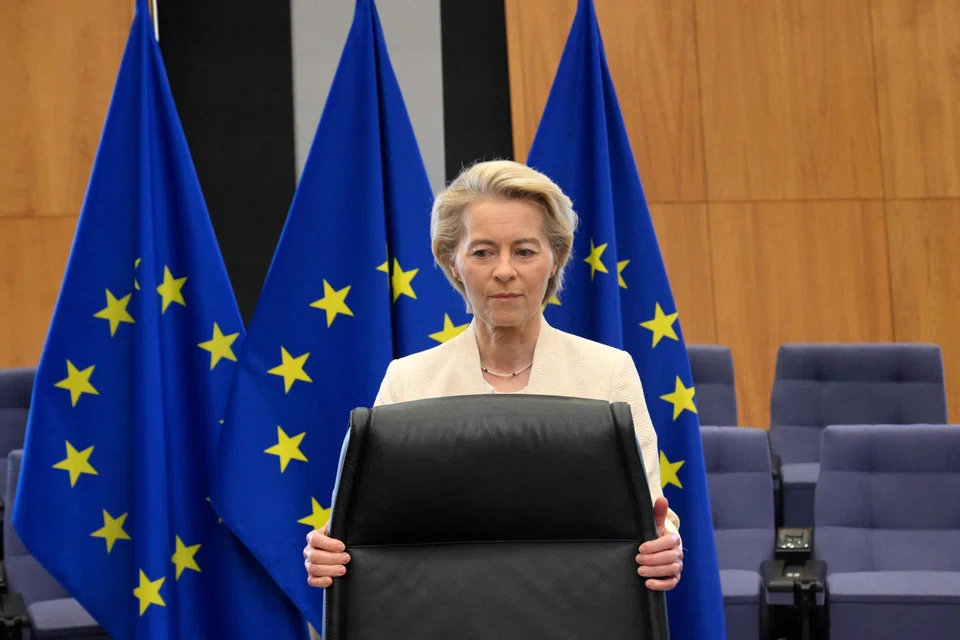
THE European Union’s landmark new Clean Industrial Deal (CID) has received a mixed reaction so far from business trade groups. However, European Commission President Ursula von der Leyen is also looking to the history books with her new plan which she wants to become an era-defining initiative.
Just as re-elected US presidents in their second term of offices often intensify their focus on political legacy, this is also true of European Commission presidents. Von der Leyen’s European Green Deal helped define her first Commission from 2019 to 2024, and she now wants the CID to be not just the top business issue but the signature overall initiative of her second Commission from 2024 to 2029.
The new package is positioned as the industrial counterpart to the earlier green deal, and it aims to try to reconcile Europe’s ambitious decarbonisation goals with the realities of global competition. For business, the new package represents a shift towards incentives over restrictions, plus an evolving regulatory environment that will demand strategic flexibility.
Only a starting point
As with every big EU initiative, the CID will be shaped by political realities, economic constraints, and globalisation. The big announcement is only a starting point of what are likely to be periodic updates in coming months and years.
Since the release last Wednesday (Feb 26) of not only the CID but also a Simplifications Package, and Action Plan of Affordable Energy, there has been mixed reaction from industry groups. Business Europe, for instance, which comprises around 40 national industry and employer organisations, has welcomed the energy measures, but called for more and faster, including speeding up the actions in the Industrial Decarbonisation Act.
This mixed sentiment is also reflected in specialist industry groups. HydrogenEurope, for instance, welcomes positives, including adopting the low-carbon fuel Delegated Act in the first quarter of 2025, which it asserts is holding back investment in the sector. However, the group is disappointed by failure to bring forward the revision of the delegated act for Renewable Fuels of Non-Biological Origin, which it claims is keeping renewable hydrogen unnecessarily expensive, with a risk of jeopardising the sector’s scaling up going forward.
Meanwhile, the steel trade group Eurofer believes that the Commission has made the right diagnosis of challenges facing the sector, and welcomed the Commission’s new Strategic Dialogue on Steel. However, it asserts that even more “radical change” is urgently needed for the European industry to become more competitive, including closing loopholes in the Carbon Border Adjustment Mechanism (CBAM).
More business reaction will no doubt be forthcoming. This will be a key source of insight for the Commission in reshaping its proposals in the future.
However, von der Leyen’s eyes are also not just on the now and next of business reactions, but also the history books of the future. Each European Commission president has sought to leave a mark on the bloc’s economic and political trajectory with era-defining initiatives.
Jacques Delors, in the late 1980s and early 1990s, oversaw the creation of the Single Market in 1992, and laid the foundations for the euro single currency too. Romano Prodi’s Lisbon Strategy in 2000 sought to make Europe the world’s most competitive knowledge-based economy. Jose Manuel Barroso led the Europe 2020 Growth Plan. Jean-Claude Juncker spearheaded the Investment Plan for Europe, using the European Fund for Strategic Investments to mobilise private capital.
Most recently, von der Leyen’s European Green Deal placed climate policy at the heart of the EU’s agenda, making Europe the first major power to legislate for climate neutrality by 2050. Yet, all these initiatives evolved over time in response to events, including the Covid pandemic and Russia’s invasion of Ukraine.
Some initiatives were diluted, others rebranded, and many were fundamentally reshaped by economic and political forces. No EU flagship initiative survives its first few years without modification. So, the new CID will evolve over time, including potentially in response to major new initiatives in the United States and China.
The European Green Deal has been, above all, a big regulatory project. The Fit for 55 package mandated stricter emission cuts, while the CBAM put global competitors on notice. Yet, while these policies reinforced Europe’s climate leadership, they also sparked backlash from industries facing rising costs and competitive pressures from the other world powers, including the United States when Congress passed the Inflation Reduction Act (IRA).
The new CID recognises the EU cannot afford to lose its industrial base, and economic prosperity, in the pursuit of bold climate goals. It signals a new phase in EU economic policymaking, one that acknowledges industrial realities without fully abandoning the Green New Deal’s ambitions.
For businesses, the new Clean Industrial Deal represents a shift towards incentives over restrictions, plus an evolving regulatory environment that will demand strategic flexibility.
The announced 100 billion euro (S$143 billion) package pools existing funds to try to revitalise the EU’s clean manufacturing sector, This includes money from the EU Innovation Fund, from InvestEU revisions, from carbon market revenues, and voluntary member state contributions.
EU climate chief Wopke Hoekstra has hinted the initiative could align with broader net-zero goals. This 100 billion euro initial sum aims to leverage 400 billion euros with private funds, though such projections hinge on market response and lack a firm deadline.
Modest investment
With some uncertainty remaining about the full details of the plan, what is already clear is that the scale and ambition of the 100 billion euros of committed public funds are modest when compared to investments from the United States and China. For instance, the IRA commits about 350 billion euros over 10 years to energy and climate programmes, using tax credits, grants, and loans to drive private investment. Subject to any big IRA changes under the new Trump administration, this is a sharper, more immediate push than the EU plans.
China, meanwhile, is believed to direct many hundreds of billions of euros – yearly – into clean energy and industrial growth. This is bolstered by state-led coordination and supply chain dominance.
Former European Central Bank president Mario Draghi’s 2024 competitiveness report warned that the EU needs to invest around 750 billion to 800 billion euros annually to close the innovation gap and stay competitive. The CID’s committed 100 billion euros is a fraction of this.
So the EU’s strategy still risks falling short. Whether this happens, or the initiative ends up as an ambitious, underfunded plan will depend on how well it is now adapted to political and economic constraints. Without an even bolder, faster commitment, Europe’s clean tech ambitions may struggle to fundamentally shift the global balance, especially vis-a-vis the United States and China.
The writer is an associate at LSE IDEAS at the London School of Economics
TRENDING NOW

Two Singapore-listed palm oil firms named in Greenpeace report on Indonesian plantation fires

Singapore Airlines flight returns to San Francisco after ‘unruly’ passenger incident

Singapore looking into which companies responsible for haze-causing fires: PM Wong
Deluge IPO 3.86 times subscribed ahead of SGX debut

