

Everything Everywhere All At Once (for almost Everyone)
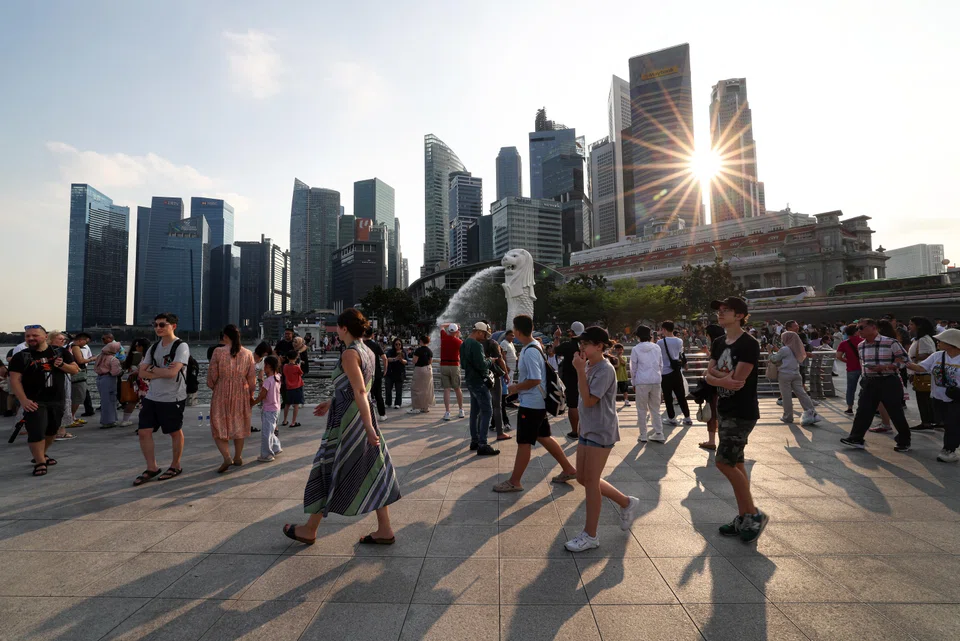
THE 2024 Singapore Budget can be best described with the title of a recent award-winning movie called Everything Everywhere All At Once, but certainly without the chaos.
Deputy Prime Minister Lawrence Wong’s present on “Ren Ri” or “Everybody’s Birthday” (which falls on the seventh day of the Chinese New Year) unveiled a milestone Budget that helps to address everything about the numerous challenges ahead brought about by cost-of-living increases, threats to jobs, wars and global uncertainty, international tax challenges and climate change, among others. The list is long and reaches everywhere. The matching breadth of the 2024 Singapore Budget deserves our salute.
We see targeted tax rebates that are capped and focused on those in greater need. We see help extended to property owners through the adjustments to the Annual Value bands. Even those who are cash-poor but asset-rich received some respite as they can avail themselves to a longer instalment term over 24 months. It was made clear that property tax is a wealth tax that is now focused on high-end residential properties. But, the net was cast a bit too wide; so I’m sure many are grateful for the adjustment.
Young families with urgent needs will receive more help to get temporary accommodation. Pre-schools will become more affordable and this also benefits lower-income families with non-working mothers. This should encourage those considering the family way. Families with special needs children will be pleased with reduced fees at special education schools.
At the upper end of the age bracket, we saw more help offered to those preparing for retirement through further assistance to beef up the Central Provident Fund (CPF) savings of seniors, especially those who need more help. The Enhanced Retirement Sum will also be raised so that those who want to save more can enjoy higher CPF payouts. There’s indeed something for everyone.
A close parallel to this is the need for greater spending on Singapore’s healthcare in the face of changing demographics – the silver phenomenon. While the Republic should be honoured to be a Blue Zone, increasing our healthspan, and not just our lifespan, comes with a parallel increase in healthcare costs.
The new S$4,000 SkillsFuture Credit is the proverbial good seed that DPM Wong is planting to enhance Singapore’s workforce ecosystem. Change (in our jobs) is the new constant. This upgraded scheme encourages more senior workers to upskill and stay ahead of the job curve. So the oft-quoted saying goes: “Give a man a fish and you feed him for a day. Teach him how to fish and you feed him for a lifetime”. Singaporeans must learn not only how to fish, but also how to “farm” to increase production and bring the fish to market.
In the face of a tumultuous world with ongoing conflicts, DPM Wong did not leave out the need to focus on total defence. This is not just investment in cyberdefence infrastructure but also the acknowledgement of the over 1.2 million citizens and permanent residents who have served, and are serving, to defend Singapore.
The key message around sustainability was clear – we need clean energy and Singapore must continue to consider its options. It is fundamental, given its limited resources and land mass.
All this increased spending is an important preface for the need for more taxes to fund Singapore’s future. We were reminded of Base Erosion and Profit Shifting (BEPS) and international tax competition along with the need for transformation – in the guise of Pillars One and Two.
We will see new laws coming to bring about the Income Inclusion Rule and Domestic Top-up Tax at 15 per cent. While there may be short-term tax revenue gains, there is no clear sustained expectation for such collections as Singapore will need to continually compete for foreign direct investments with both developed and emerging economies alike. In addition, the likely proliferation of new taxes will be a definite counterbalance to shift tax collections to where there are large markets (a proxy for large populations), which Singapore certainly is not.
In light of the above, the move to introduce a Refundable Investment Credit (RIC) regime is very wise. Singapore needs to remain competitive to continue to attract foreign direct investment. An RIC that is aligned with global standards will enable the nation to continue attracting high-value economic activities, which will in turn bring more jobs and talent to Singapore. At PwC, we are happy that the government has decided to add the RIC to its fiscal toolkit to enhance the city-state’s international competitiveness.
This Singapore Budget was put together with the long game in mind. DPM Wong is correctly focusing on developing the country’s research and development, upgrading the Nationwide Broadband Network and further investing in its AI capabilities. Singapore must exceed global expectations and stay ahead as one of the world’s leading smart nations.
The DPM took nearly two hours to deliver the Budget, but like any captivating movie, the time flew by with each exciting change in scene. Perhaps this Budget deserves an Oscar-equivalent in tax befitting our Shiny Red Dot.
The writer is Asia-Pacific and Singapore tax leader at PwC Singapore
TRENDING NOW

OCBC Q3 profit rises 3% to S$2.04 billion, slightly above expectations
Stocks to watch: OCBC, IHH Healthcare, FLCT, SingPost, Koh Brothers Eco Engineering

From legacy to launch: Francis Yeoh and Yeoh Pei Xien on family unity and YTL’s next‑gen ventures
Wealthy Indonesians snap up government bonds as yields near 8%: OCBC

