

The F&B sector’s woes could undermine the resilience of suburban malls
Growing contribution from F&B to retail rentals under threat

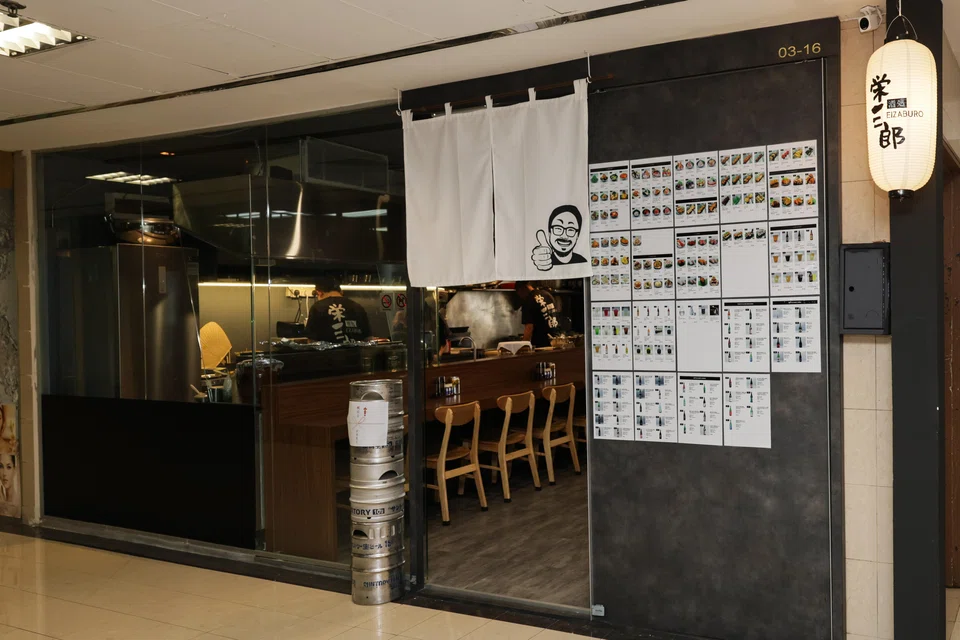
MANY Singapore residents shop online and overseas, including across the Causeway in Johor Bahru, Malaysia.
Still, Singapore malls, especially suburban malls, have been highly resilient. Excluding the impact due to divestment of Changi City Point and asset enhancement works at Tampines 1, suburban mall-focused Frasers Centrepoint Trust (FCT) posted year-on-year (yoy) rises in gross revenue and net property income of 3.5 per cent and 3.4 per cent, respectively, for the financial year ended Sep 30. Growth contributors included higher rental income from renewed and new leases signed, as well as turnover rent.
Appraised values of major suburban malls such as Causeway Point in Woodlands, Nex in Serangoon and Waterway Point in Punggol rose from a year ago to S$1.34 billion, S$2.13 billion and S$1.32 billion as at end-September, respectively. FCT’s retail portfolio occupancy was 99.7 per cent as at end-September. Rental reversion for the retail portfolio in FY2024 was superior to that of the previous financial year.
Meanwhile, CapitaLand Integrated Commercial Trust saw shopper traffic and tenant sales per square foot at its Singapore suburban malls rise yoy in the first nine months.
Suburban mall landlords should thank the food and beverage (F&B) segment most for their good fortune.
Broken down by trade category, F&B was the top contributor to FCT’s retail portfolio, accounting for 37.5 per cent of total gross rental income and 30.2 per cent of total net lettable area (NLA) as at end-September.
Amid segments such as department stores and fashion generally shrinking their physical footprints, expansion by F&B players has filled the void. For perspective, contributions by fashion and F&B to FCT’s gross rent as at end-2005 from its initial portfolio of malls were 24.8 per cent and 21.6 per cent respectively. F&B’s share of NLA then was 18.8 per cent.
Today, many residents living near suburban malls visit them frequently to dine out. Capturing patrons who come to satisfy their food cravings in turn generates spillover visits to other shops in the mall and incremental business for non-F&B retailers.
Woes in F&B world
Will F&B be a reliable and growing contributor to suburban malls going forward? Perhaps not, should the woes of F&B players persist.
In the first nine months, 2,465 F&B businesses ceased operations, translating to an average of 274 closures per month, property consultancy Knight Frank said. This figure represents a nearly 20 per cent jump from an average of 229 F&B business closures per month in 2023. Knight Frank noted that in 2020, when movement restrictions crippled dining out amid the Covid-pandemic, the average monthly F&B closures was 170.
Underscoring the challenges facing restaurant operators, Catalist-listed Tung Lok Restaurants and Japan Foods Holding posted losses for their six months ended Sep 30. Listed F&B group Sakae Holdings recorded lower revenue and a loss for its financial year ended Jun 30.
Tung Lok, which was profitable in the year-ago period, attributed the net loss in its most recent financial half year to the ongoing uncertain economic outlook affecting consumer sentiment and intensified competition from the entry of new F&B competitors. The group posted lower revenue and higher administrative expenses, mainly manpower-related expenses, due to salary adjustments to improve staff retention, in the six months ended Sep 30 compared to a year ago.
Japan Foods, which was profitable in the year-ago period but loss-making in the half-year ended March, posted a loss of S$1.6 million in the six months ended Sep 30. The group, which operated 84 restaurants in Singapore as at end-Sep, saw selling and distribution expenses for the latest period climb 10 per cent yoy mainly due to higher depreciation charges of plant and equipment and right-of-use assets, manpower cost and utilities expenses.
Certainly, a myriad of factors make the going tough for F&B players. Operating costs can be high, including rental and manpower costs. And getting adequate and suitable manpower is challenging in a tight labour market. Also, competition is intense as existing players scale up and introduce new concepts while new entrants try to make inroads.
Meanwhile, customers can be fickle and price-sensitive. Facing cost of living pressure, many customers are closely watching discretionary spending and highly selective on where to splurge.
Lower space demand
Perhaps the F&B scene will see a shake-out, with even more closures and some players merging to achieve economies of scale. Scale can help F&B players strengthen bargaining power in rental negotiations, as well as attract and retain talent.
Confronting a tough outlook, numerous F&B players may curb expanding their physical footprints and possibly emphasise deliveries and takeaways.
In short, mall landlords might see falling demand for physical spaces and rising resistance to high rentals from an under-pressure F&B sector.
The demand to dine out will not disappear. People will continue to visit restaurants for great food, interesting experiences, and meeting family and friends.
Furthermore, the prospect of coming up with a hot eatery or drinking hole that draws the crowds will continue to stir the animal spirits of entrepreneurs. After all, F&B’s pay back is fast when revenue is strong.
In the near term, mall owners may also be able to count on further expansion in Singapore by Chinese F&B groups.
Nonetheless, mall landlords should not have too high hopes that the F&B segment can make an ever rising contribution to rental revenue. Might F&B’s contribution to rental revenue of malls plateau and possibly decline?
Many suburban malls have ready catchments to serve from among residents living in public and private housing nearby. Rising income of residents will buoy suburban mall landlords.
Still, savvy mall operators need to counter the growing threat posed by online shopping channels, constantly refresh their offerings and provide conducive spaces for rising numbers of elderly patrons amid a rapidly ageing population.
To add to that, mall operators may need to find trade categories to take up the slack, should woes in the F&B sector persist and demand from F&B players for space falter.
TRENDING NOW
DBS, OCBC, UOB rout lops billions off STI as inflation, rate concerns spook investors

Grab CEO’s wife Chloe Tong on life with Anthony Tan and finding her purpose

OCBC sheds S$8 billion in value as shares close nearly 6% down; analysts cautious on banks
Deal between tycoon friends sparks scrutiny of Philippine power sector

