
Alliance maker
Amid a pandemic, biotech companies raised record sums of capital in 2020. Marianne De Backer, head of business development & licensing at Bayer, gives a glimpse into dealmaking, having closed 25 deals with biopharma firms last year.
 Add BT as a preferred source
Claudia Tan HS
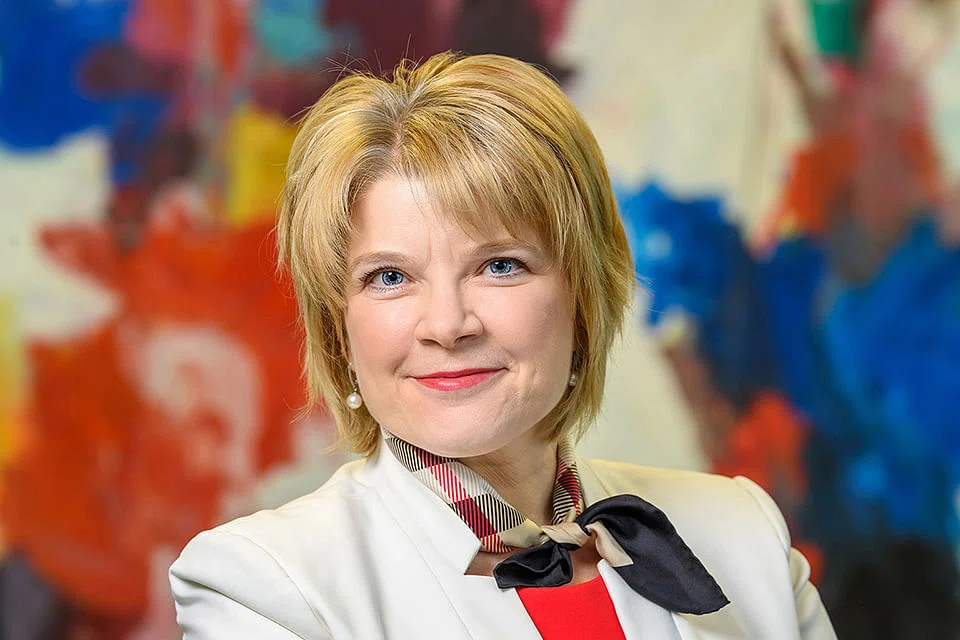
SCIENTIST and deal-maker Marianne De Backer has spent over two decades driving change in the healthcare industry, defying stereotypical notions that there is no place for female leaders in the field of science.
Hailing from a small town in Belgium, pursuing an education in the sciences was not high on the priorities for women when she was growing up. The head of business development & licensing of Bayer's pharmaceuticals division says she was initially unable to get her parents' blessings to further her studies. Despite that, she pressed on, because she could not ignore her "calling to help patients and better understand the fabric of life".
"It was in high school when I heard for the first time about DNA, the code of life," Dr De Backer says, speaking to The Business Times (BT) from Berlin, Germany. "I was totally transfixed and I knew what I wanted to do with my life. I really wanted to go into the field of molecular biology and biotechnology."
She fought for an opportunity to go to college and went on to obtain a Master in Engineering and a Master in Molecular Biology. She subsequently earned her PhD in biotechnology while holding down a full-time job as a scientist at Janssen Pharmaceuticals, the drug development arm of Johnson & Johnson.
From academia to corporate
While she started out as a scientist, Dr De Backer now wears many other hats. She is also a business leader, strategist, deal-maker and corporate investor.
Navigate Asia in
a new global order
Get the insights delivered to your inbox.
During Dr De Backer's years in academia and research, she caught a glimpse of the level of innovation that was unfolding beyond the organisation she was working at: "Innovation was happening everywhere and it was going to be important to (be able to) tap that."
She knew then that partnerships and collaborations were going to have a much bigger role to play in the healthcare industry in the years to come.
Biotech and sciences are now much more complex than before given that "all the easy things had been done", she says, adding that no single company can tackle all the big healthcare challenges on its own.
When a new position for a director of technology licensing opened up at Janssen, it was the perfect segue into the corporate world for her, in order to push for greater collaboration in the healthcare space. She took up a global role of leading external technology and research alliances and, at the same time, pursued a Master of Business Administration (MBA).
"I think it was a very natural transition from what could we do inside an organisation to what it is that you need to access on the outside to truly drive solutions for patients," she says.
Driving change
This was also among the key reasons Dr De Backer took on the role at Bayer over a year ago to lead its external pharmaceutical growth strategy and alliance management.
"The reason I joined (Bayer) was to help drive the transformation of the pharmaceuticals group, by shaping a growth strategy and replenishing the pipeline through inorganic growth and accessing external innovation," she says.
The first thing the team at the German pharma company did when Dr De Backer came on board was to clearly define an area of focus: cell and gene therapy. This is an area that would really help tackle diseases, she says, and will pave the way to address various health conditions with high unmet needs.
There are limitations to what traditional medicine can do to combat genetic diseases. Treatment often entails alleviating the symptoms that come with conditions, rather than targeting the root cause of diseases. Cell and gene therapies, on the other hand, offer new possibilities and provide options for conditions that currently see gaps in the standards of care.
But Bayer was not simply looking to become a player in cell and gene therapy, says Dr De Backer. It was really about making a move big enough to become a leader in the space almost overnight. Thus began the process of screening for potential partnerships and companies to acquire.
"We were looking for a company that had a very innovative gene therapy solution, a working platform, and had drugs on the market or in clinical development," she says.
Deal-making spree
Last year, Bayer bagged 25 partnerships and acquisitions, relentlessly strengthening its cell and gene therapy portfolio and technologies.
Among these was the acquisition of Asklepios BioPharmaceutical (AskBio) for US$4 billion in December last year. The US-headquartered AskBio is a biopharmaceutical company specialised in the research, development and manufacturing of gene therapies across different therapeutic areas.
It had everything that Bayer was looking out for, says Dr De Backer. Its development portfolio includes investigational pre-clinical and clinical stage candidates for the treatment of neuromuscular, central nervous system, cardiovascular and metabolic diseases.
And with the level of innovation that is coming out of Asia, Bayer is also focusing on ways to leverage these new technologies and develop novel strategies to build alliances with Asian companies, says Dr De Backer.
In April 2020, Bayer formed a partnership with Chinese medical science and technology company OrigiMed to develop a next-generation sequencing-based companion diagnostic product in China for Larotrectinib, a cancer treatment medicine.
Another key partnership which has anchored Bayer's cell and gene therapy pillar is with BlueRock Therapeutics in 2019, an engineered cell therapy company which works to develop regenerative medicines for intractable diseases. Its technology seeks to restore tissue function in diseases with significant cell loss and diminished self-repair potential, with particular focus on conditions such as neurological and cardiovascular issues, among others.
Currently, Bayer's development portfolio of cell and gene therapies already includes eight advanced assets in various stages of clinical development. They address multiple therapeutic areas with high unmet medical needs, such as neurodegenerative, neuromuscular and cardiovascular indications - with leading programmes in Pompe disease, Parkinson's disease, hemophilia A and congestive heart failure.
Winning formula
Even in the face of the Covid-19 pandemic that had sent the global economy into one of its deepest recessions, biotech companies raised record sums of capital in 2020 to bring new innovation on board and launch new medicines while pouring in resources to tackle the coronavirus crisis.
"Our biotech partners have never had more choices. It's a seller's market - there's an incredible level of financing available in the world," says Dr De Backer. "It's a little bit of a paradox. Last year we were living through a pandemic, but at the same time, it was a record year in biotech financing. So it's a very competitive space, and we need to be agile and flexible and come up with new business models that are really enticing."
One way Bayer appealed to biotech companies was to grant them independence and autonomy, which has been critical in helping it secure several deals. "They are governed the same way they would have been outside of Bayer," she explains. "It's the same chief executive officers (CEOs) that are driving the organisation, giving them the independence to drive their science and programmes.
"And I can tell you especially for AskBio, that was really what won us that deal," she shares. "AskBio also had a lot of players that wanted to acquire them. But it's through thinking about different models that we were able to secure this company as an acquisition."
Ambitious but focused
"We are working on some of the world's leading innovations where the risk is extremely high," says Dr De Backer. Yet the huge impact such innovation and programmes can have on the currently still unmet medical needs makes them worth pursuing, she adds.
That said, Dr De Backer points out that Bayer approaches its deal-making in a "very thoughtful and disciplined way".
"There is an incredible amount of capital available in the market, and that bodes well for the future because that means a lot of innovation is going to get funded, which we all applaud. But it also means that for Big Pharma players, the opportunities for biotech are multiple and valuations are high," she says. "We have looked at other acquisitions last year where we felt that valuations were going beyond where we thought was reasonable and said that we wouldn't want to pursue it."
Double-edged sword
The Covid-19 pandemic has threatened lives and livelihoods across the world. But it has also put science, biotechnology and pharmaceuticals front and centre every single day, says Dr De Backer. With the unmet needs that have to be tackled on a global basis, the public health crisis has spurred an "incredible level" of collaboration across various stakeholders including those in the fields of biotech and Big Pharma, academics, regulators.
"Everyone was really rallying around that goal of driving that difference, and that has allowed us to move faster than ever," she says. "Bringing a vaccine to market in less than a year and that level of transformation has shown us to do things hopefully differently in the future."
The pharma industry also got a boost in digital transformation, driving change for an industry that is known to be slow to adapt.
"Our industry is really being transformed at every single level - both on a functional level as well as in terms of business models," Dr De Backer notes.
Over at Bayer, the onset of the pandemic brought on a complete overhaul of its governance system. "Deal-making, oncology and gene therapy are fiercely competitive spaces, so it's really important that you can be agile and flexible," she says. "We changed our decision-making (process). We went from more than 36 approvals and decision-making bodies to just three at the top level of the organisation. So you can really come to decisions fast when needed. And that was a very important change."
"I strongly believe in focused teams and by that I mean, I now have someone in my team who I hold accountable for everything that is happening in a given area of strategic focus - be it in an early-stage alliance, in the late stage, in mergers and acquisitions (M&A) or managing the alliances post-closing."
Like in other sectors, digitalisation has also come into focus in medical services, and digital healthcare offerings have today become an important pillar. As such, Bayer is developing integrated care concepts, which offer personalised support to patients.
Bayer had, together with US-based digital health company Informed Data Systems Inc (One Drop), entered into an agreement to jointly develop digital health products for multiple therapeutic areas. The aim of the collaboration is to provide integrated services empowering patients to manage certain conditions.
"We also look at digital transformation from the perspective of transforming our business model. So one important partnership that we entered into last year was with One Drop where we tried to come up with integrated care models to help patients manage chronic disease in a digital way," says Dr De Backer.
MARIANNE DE BACKER
EVP, Head of Strategy, Business Development & Licensing, and Executive Committee Member Bayer AG, Pharmaceuticals
Born in Flanders, Belgium
EDUCATION
1987-1991: Master's in Engineering, Engineering/Biochemistry, Ghent University
1992-1994: Master's in Molecular Biology and Biotechnology, Vrije Universiteit Brussel
1998-2001: PhD in Biotechnology, Ghent University
2002-2004: MBA, Rotterdam School of Management, Erasmus University
CAREER HIGHLIGHTS
1991-2003: Senior associate scientist, biochemical pharmacology; Scientist, experimental molecular biology; Senior scientist, advanced biotechnologies; R&D group leader; Director of technology licensing at Janssen, Pharmaceutical Companies of Johnson & Johnson - Beerse, Belgium and San Diego, USA
2004-2006: Executive director, scientific and business licensing, Tibotec - Mechelen, Belgium
2006-2010: VP of licensing and new business development, R&D internal medicine/neurosciences at Janssen, Johnson & Johnson - Beerse
2011-2013: Commercial business unit leader at Janssen, Johnson & Johnson - Vienna, Austria
2013-2016: VP of innovation at Janssen, Johnson & Johnson - Beerse
2017-2018: VP of Venture Investments, JJDC, Johnson & Johnson - San Francisco, USA
2018-2019: Global VP, M&A ops, divestitures and IDV BD, Johnson & Johnson - San Francisco, USA
Since 2019: Executive VP, Head of Strategy, Business Development & Licensing, and Member of the Executive Committee of the Pharmaceuticals division, Bayer - Berlin, Germany
Decoding Asia newsletter: your guide to navigating Asia in a new global order. Sign up here to get Decoding Asia newsletter. Delivered to your inbox. Free.
Copyright SPH Media. All rights reserved.

