Asia's ESG talent crunch

Staggering demand for ESG expertise amid scarce candidates has led to an acute mismatch

Published Fri, Oct 29, 2021 · 09:23 AM

    A TALENT war is brewing for environmental, social and governance (ESG) experts in the financial world, as firms scramble to build new teams to navigate a shift towards climate-friendly finance.

    Net-zero targets - coupled with stricter regulation and growing demand from customers and investors for sustainable economic models - are driving banks, insurers and asset managers to rejig their lending practices, investments, and underwriting of climate-sensitive sectors.

    The staggering pace of demand for ESG expertise amid scarce candidates has led to a demand-supply mismatch globally. This is perhaps nowhere more acute than in Asia, where sustainability issues are most recently concentrated and companies lag behind their Western peers.

    "There is a significant gap in demand and supply for ESG expertise, and pressure to plug this gap has intensified because of the time criticality and scale of sustainability plans," says Cherine Fok, director of sustainability services at KPMG Singapore.

    The region's talent crunch is putting a sharp dent in its sustainable finance push. Over 40 per cent of Asian institutional investors said the lack of expertise is holding their firm back from more ESG-based investing, up from 26 per cent in 2020, a recent HSBC survey showed.

    Only 39 per cent of these investors have a firm-wide policy on responsible investing or ESG issues, compared to 91 per cent and 72 per cent in Europe and the US respectively. It doesn't help that Covid-induced travel restrictions hinder the movement of global ESG talent into Asia, Fok tells The Business Times (BT).

    In Singapore, no educational institute has traditionally offered degrees that produce graduates with expertise in all aspects of ESG. Some business programmes address social and governance issues to some extent, but not much emphasis has been placed on the environmental aspect, says Vijay Yadav, associate professor of finance at ESSEC Business School.

    The best way, then, to quickly address the current hiring challenge is to develop in-house talent through training, he adds.

    More companies are developing their own programmes, collaborating with educational institutes to develop training courses, or sending their employees for external classes.

    But are recent efforts too little too late, given the fast-looming impact of carbon transition? And will a month-long, self-study course really cover all there is to know about ESG financing strategies?

    Some industry watchers question the quality of ESG training courses and the credentials of finance professionals turned "ESG experts", given that most do not hail from science-based backgrounds. The urgency to fill senior roles may lead to cases of "talent greenwashing" which, if left unchecked, could drive a damaging trust rift between firms and their stakeholders.

    Boom in ESG courses

    According to recruitment specialist Principle Partners, businesses are looking for candidates with experience applying ESG considerations into investment strategies, as well as those who understand ESG frameworks and the United Nations' guidelines to help investment funds develop their own frameworks.

    In Singapore, there has been a recent surge in ESG courses to develop a suitable pipeline of talent here. For example, the new Singapore Green Finance Centre, backed by the Monetary Authority of Singapore, offers courses across various levels - undergraduate, post-graduate, continuing and professional education.

    In September, the World Wide Fund for Nature (WWF) and its Asia Sustainable Finance Initiative partners launched a series of self-study digital courses for Asia-based finance professionals. A WWF Singapore spokesperson told BT that nearly 3,000 people have enrolled in at least one of the courses as at early October, with the number expected to grow substantially.

    Meanwhile, the Singapore Management University's Advanced Certificate in Sustainability and Sustainable Businesses course - which costs up to S$10,272 for international participants - has been fully subscribed till March 2022, BT found.

    KPMG too recently announced plans to provide ESG training for all 227,000 employees, in collaboration with the University of Cambridge Judge Business School and NYU Stern Executive Education.

    On an international scale, the CFA Institute in March launched the first global certificate in ESG investing to equip investment professionals with the skills to integrate ESG factors into the investment process. This comes as 76 per cent of institutional investors and 69 per cent of retail investors expressed interest in ESG, a CFA survey showed.

    "Right now, we have round holes but a lot of square pegs," says Johan Sulaeman, associate professor at the National University of Singapore (NUS) Business School. "We have to start somewhere."

    He adds: "There is a need for awareness and a lot of these ESG modules are focused on that . . . to ensure participants understand the scope of the problem, (and) solutions available in the market and frameworks that have been developed."

    Talent greenwashing?

    But awareness may not necessarily translate to expertise. While short courses may be sufficient qualification for basic ESG roles, these may prove inadequate when companies must make critical decisions with significant impact on their businesses, ESSEC's Yadav tells BT.

    Given the complexity of climate science, access to subject-matter experts is vital for long-term value, adds Graeme Riddell, climate and sustainability consulting leader at Marsh Asia.

    But of 1,500 ESG jobs in the world's largest banks, only 15 per cent have worked in ESG roles previously, a recent study by Capital Monitor showed. Few have a background in natural sciences; most are trained in traditional finance. "Many ESG experts have never received rigorous training in ESG issues," Yadav notes.

    This points to a growing risk of "competence greenwashing" pertaining to ESG credentials and expertise among finance professionals, warns Kim Schumacher, a lecturer in sustainable finance and ESG at the Tokyo Institute of Technology.

    In an online post seen by BT, he notes that many ESG practitioners like to highlight their recently acquired credentials, such as certificates in sustainable finance or ESG from online or short-term courses.

    "While these courses play a crucial role in generating awareness for climate and ESG issues across the financial sector, it is crucial to note that awareness does not necessarily equate expertise. Otherwise, the risks stemming from climate change and other ESG issues will be difficult to manage in a competent manner," says Dr Schumacher.

    Marsh's Riddell flags that the biggest cause for concern of not having the right skills is the ability to understand the complexity of sustainability and rely on simple metrics to represent the full challenges.

    "This can lead to short-sighted decision making and create incentives for the wrong type of behaviour, like shifting problems further down the supply chain so they don't appear in a company's own reporting," he says.

    Companies racing to be industry leaders in sustainable finance should note that talent greenwashing can expose them to regulatory investigations, valuation threats and reputational damage. Failure to manage these risks can affect its ability to attract talent, appeal to their consumers, and lose market position, warns Riddell.

    At the broader ecosystem level, it can lead to a loss of trust between financial institutions and policymakers and consumers.

    All hands on deck

    Though the competence of fresh ESG talent remains debatable, some form of expertise is still better than none, given the urgent need for firms to pivot their financing strategies.

    Having a science background would be ideal, but the industry has no time to wait for perfect candidates. As sustainability consultant and author John Grant puts it: "It's probably easier to teach a banker about ESG than teaching an environmental science professional about asset management or compliance."

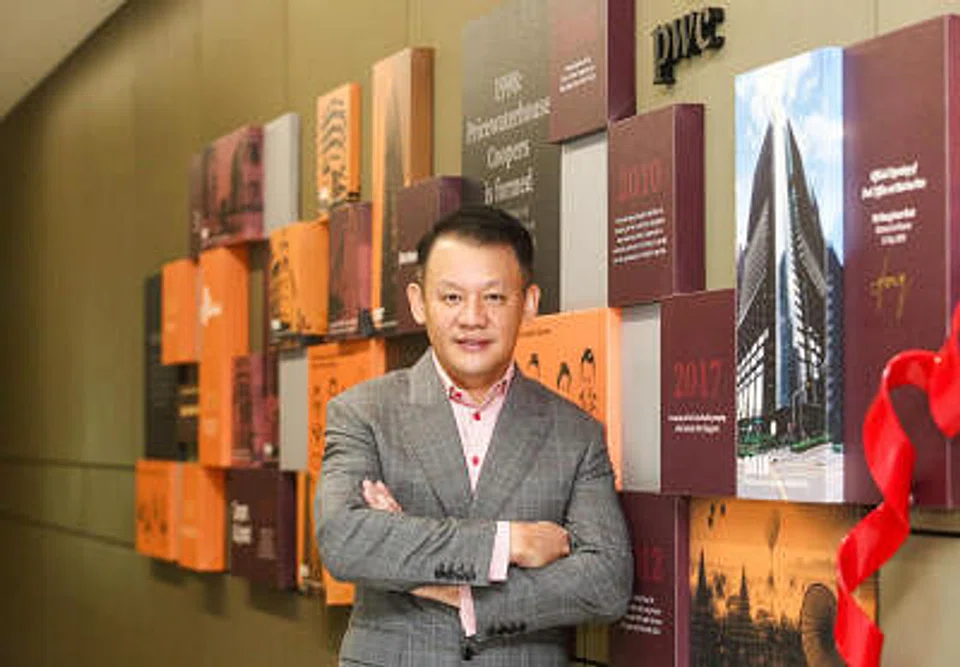
    Ultimately, ESG is a multi-faceted topic. While science-based talent is useful, there is a need for a mix of talent coming together to address a wide range of needs and issues, says PwC Singapore executive chairman Marcus Lam. These talents could come in the forms of accountants, auditors, engineers, valuers, bankers, lawyers and so on, where each brings a unique skill set that contributes to part of the solution, he notes.

    ESG is not rocket science; it is feasible to acquire the necessary perspectives at the mid-career points where some structured developmental training will be useful, NUS professor Lawrence Loh adds. He reckons it is more important for candidates to have strong business backgrounds coupled with institutional foundations such as accounting, law or engineering.

    "The need for green talent now literally comes out of the blue - it's probably code red for ESG professionals," he says. "Being ESG is not a black-or-white binary; there are probably many shades of grey in determining the talent."

    Agile and adaptable

    While it remains challenging to define the exact skills an ESG expert should have beyond educational qualifications, NUS' Sulaeman outlines three key traits that hiring managers should look out for:

    Awareness of existing solutions: Financial experts are not experts at everything and therefore cannot be the ones developing solutions to their problem. Instead, they need to be able to identify solutions that are already in the market and fit them into the problem-solving process.

    Ability to implement the available solutions in a financially viable manner: How should these solutions be financed and deployed efficiently in the market? The ESG professional must be willing to learn from non-financial experts in fields such as engineering and science, for example.

    Measuring success: The ability to communicate success stories to the market and justify that the solutions being financed do work and should be further deployed. To do so, there needs to be a framework in place to measure the impact of solutions being implemented.

    The hiring process should therefore involve more personal interaction to assess the candidate's abilities and motivation.

    When looking to fill ESG roles, the hiring mentality should shift from looking to boost earnings and reduce costs, to staying agile and adaptable for the right competencies in a workforce, says Karen Clarke, managing director of Anaplan in Asia-Pacific.

    At the industry level, it might be helpful to take a more "surgical approach", such as by updating the SkillsFuture framework to include sustainability career skills and pathways, as ESG in the past has not been a common inclusion in typical curricula, adds PwC's Lam.

    Businesses here can also look to hire globally to ease the local talent crunch. ESG professionals from countries where sustainability considerations have been a norm often bring with them valuable implementation experience. They also offer a direct connection with the rest of the world as Singapore embarks on a complex journey that requires working other countries to achieve larger environmental and social goals, says KPMG's Fok.

    But border closures amid Covid-19 mean that getting global talent into Singapore has been challenging. Fok notes that some of these restrictions have been mitigated with tech, where sustainability conversations are facilitated virtually with the help of satellite images, automation, robotics and artificial intelligence.

    As climate-friendly business models evolve into a work norm, it will not be enough to have just two or three persons in the company as designated ESG experts over the long term. The credit impact of carbon transition will begin to hit home in the second half of this decade, when scrutiny of firms' interim climate goals is likely to intensify, said a recent Moody's report.

    Though demand for senior ESG roles are higher for now, the need for fresh blood will catch up in time. Knowledge has to run through the entire organisation, says NUS' Sulaeman, stressing the need to produce more graduates with ESG expertise.

    NUS' newly-established Sustainable and Green Finance Institute, for example, plans to roll out undergraduate degrees and graduate modules some time next year. "It's still work in progress but we are pushing towards capacity-building, where we can build a pipeline of talent as well as help with the conversion of financial experts into more ESG-aware experts," he says.