

Back to the future
As Garrett Ilg, president of Oracle Corporation for Japan and Asia Pacific, re-acquaints himself with a region he grew up in, he finds a different Asia that is ready for a boom once the pandemic is beaten.
 Add BT as a preferred source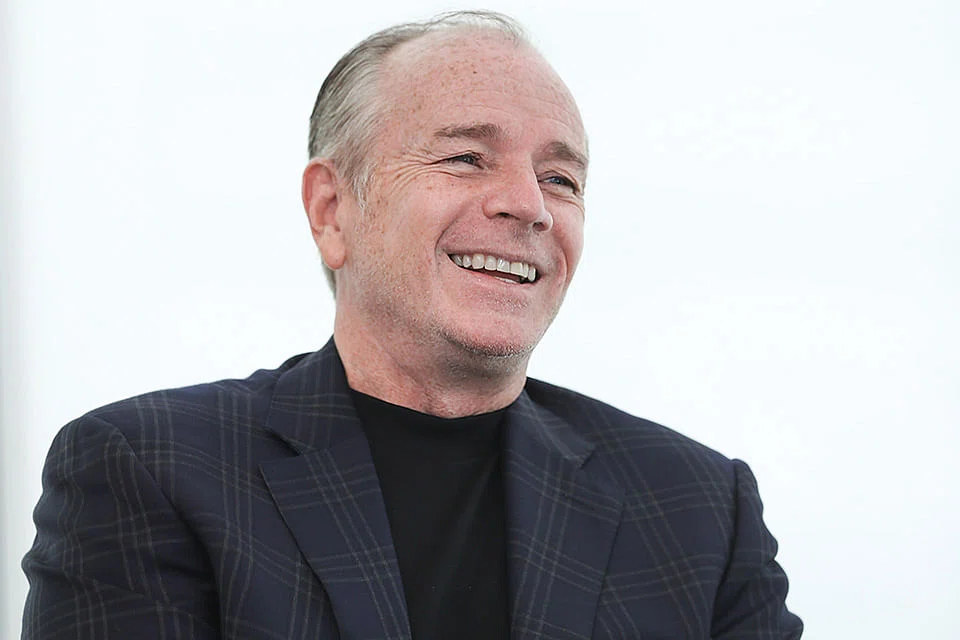
THE crisis foisted on the world by the Covid-19 pandemic has plunged the global economy into a period of deep uncertainty, affecting companies across the board. The response to the catastrophe will shape the future of organisations, says Garrett Ilg, president of Oracle's Japan and Asia-Pacific region.
The problems caused by supply chain disruptions, lockdowns, and work from home (WFH) requirements have "changed the way we work, the way we engage, and the way that we will progress", he says. More importantly, the challenges have installed an element of urgency and the need to change rapidly within organisations, he adds.
From a technology point of view, this has resulted in companies rushing to get new tools, such as human capital management systems, new supply chain capability, and better software to improve the way finances are calculated, among other things.
"I see two types of transformation happening in the market. There are companies that are under duress due to the crisis and are seeing this as an opportunity to innovate. They're executing on this by shifting to the use of digital tools.
"Then there are other organisations who feel the pressure of the markets and the change in the environment; they feel they have to do something but in some ways they are just kind of going through the motions, literally checking ticks in the boxes without really innovating," says Mr Ilg.
In the latter bracket would be organisations that typically say, "I have talked to a service provider and I've signed up for cloud services and we do everything on Zoom", he notes, asking: "But have they really changed their organisation? Have they changed the business, their culture? This is important because only a part of the transformation is about technology."
Digital shift
The Oracle executive adds that he is not sure when the world will enter a post-pandemic era "but at some point, as we get to the new norm, we're going to see that the companies that are today spending time to utilise the current situation to make a digital shift are going to be ready to scale up, execute on new business plans, and capture new markets".
Those that are not doing this digital shift will likely be left behind as they're not going to move fast enough to face the "changes that are going to be coming to all of us", he says.
The past year-and-a-half has been quite momentous for the 60-year-old. In April last year, just when the pandemic was flaring up across the world, Mr Ilg took up his current job.
"From a personal perspective, I had a lot of change in the past 14 months. I joined Oracle, which is an incredibly monumental event in my life. I moved with my family from the East Coast of the United States to Singapore, we arrived here in August of last year," he says.
Mr Ilg describes his move to Singapore as "an elongated journey because of the approvals that we needed to get".
"Some things which were supposed to be very simple became very hard, like, you know, the moving company couldn't put people into the apartment to remove my belongings.
"The shipping companies had problems with certain regulations and responsibilities and capabilities and everything kind of happened in slow motion.
"Having said that, every aspect, whether it's the Singaporean government and the approval from the relevant government agencies; the moving company in the collection and the disbursement of my goods; Oracle and the people within the organisation that were supporting this transition; of course my family and my friends and everything from the cable company and everything else. People just worked with it," Mr Ilg notes.
In his view, one of the positive sides of Covid is that people have just decided that "things got to get done". Mr Ilg says that these "small things" are "set up for a cultural shift that will go on long past Covid, where people realise that, while there would be speed bumps, life isn't about 'can't be'.
"Everything is not in your control. And if your natural reaction is to sit and wait till things get perfect again, you're not going to go very far forward. The situation arising from the current Covid pandemic exemplified this to me, my family; we did this huge transition moving from the eastern part of the United States to pretty much as far away as you could go - Singapore is on the other side of the planet".
Could he have waited till things were back to normal before shifting to Asia with his family? "Any move is difficult, and a move around the world is more difficult, and to move between cultures and countries is even more difficult," says Mr Ilg.
"But I think when you look and you listen to what was happening, particularly in August of last year, when case numbers were spiking and the vaccines were still not yet in sight, it's hard to feel sorry for yourself.
"You have to recognise that everyone out there is struggling. I think the best thing people have learned is that we're all in this together and whether it's in a business, in your employees, whether you're in a family, or you're in a community, or you're just part of an ecosystem, you've got to recognise the fact that there are ways that we need to work together and this is a good lesson - I think for everyone, regardless of the pandemic."
Since arriving in Singapore, Mr Ilg has mostly been working from home. During this conversation, which was held in his office at Oracle's regional headquarters at Fusionopolis, he jokes that thanks to the interview, he gets a chance to see his office for the first time. Oracle has only recently shifted to its new premises at Fusionopolis.
Even though Mr Ilg moved from the US to Singapore to head the Asia-Pacific and Japan business of the enterprise software giant, he is no stranger to the region. He spent much of his childhood - and also a good part of his work life, including the start of his career - in Japan.
Childhood adventures
Reminiscing about his childhood, Mr Ilg recalls that his father was a very adventurous person. "In 1973, in his mid-career, he was offered the opportunity to move to Japan. At that time, we were living in New Hampshire and my father was working in Raytheon and they offered him the opportunity to go and lead the company's business in Japan.
"In those days in the US, not a lot of people knew where Japan was and certainly not much about it as there wasn't any big expatriate community there.
"But my father looked at the family, and he looked at my brother and me and said, 'This could be a game-changer for these two, it's probably the best thing I can do for my kids, beyond all the obvious things like getting them to college, taking care of them and everything else'," Mr Ilg says.
He adds: "I remember my brother and I cried the whole way across the world and we continued to cry after we landed. I was 10 years old, turning 11 and my brother had just turned 10. But once we got over the shock from going from what was, in the early 70s, a mono-cultural environment with some rigidity, to something totally new, it was interesting.
"The first school I went to followed the British schooling system and there were seven kids in the class - two (other) Americans, and four others from Canada, Taiwan, Japan, and Britain. What that meant, for me, was not just going from an American public schooling system to a British system in Japan, but a whole new environment.
"What is really crazy is one of my classmates from seventh grade, today lives down the street from me in Singapore, and I've caught up with her and had dinner together. Talk of a small world! She is a good friend," he adds.
After graduation from college in the US, Mr Ilg's first job in 1984 was with Mitsubishi Electric Corporation's semiconductor division in Tokyo.
World's first
As the industry veteran sees it, Asia is a very interesting market. "I've had two cycles through the continent. My first business cycle, when I was young. I was coming up through Japan and I worked for an array of technology companies. I then moved to Hong Kong and ran BEA System's Asia Pacific business for a time, and then went back to Japan and had a great couple of years there.
"Then I moved to the US and spent a decade there and in Europe. Now I'm back to a very different Asia, an Asia that is not looking for the two-year lag (in technology deployment). Now they want to be on parallel or even ahead of where the technology is and how they're being utilised in Europe and the Americas.
"I have also seen the Asia which is the world's first in the Internet, mobile, and virtual technologies, and I can just keep using 'world's first' for a lot of things. They're not caught with legacy and the velocity (of progress) is exceptionally fast."
Mr Ilg says Oracle is well positioned to help its customers in the region on their digital transformation journey as the company itself is Customer Zero for many of the innovative products that it builds.
"One of the things that I saw when I came into Oracle was that we were in the midst of our own transformation and this has been going on for some time. We've rebuilt our technology platforms to be cloud-native; we've rebuilt our cloud technology to the requirements that are not just for the present needs of the market and the industry, but also for what the future needs.
"We've thought about security, we thought about the scalability, we thought about governance, and more importantly we've thought about the economic considerations that surround a cloud.
"The momentum, the speed, and the urgency was well on its way, and the pandemic, if I may, came into the sails and just blew it that much faster, with that much more urgency," he adds.
"I am fortunate to have lived in the US, Europe, and Asia, and today I'm running the Asia business for Oracle," he says, adding that this gives him a unique perspective.
"One of the things I tell the customers is - get ready for a boom. I don't have a clear answer on when and how but once we get a release from this pandemic, the elation of that is going to create a massive movement towards consumerism, travel, and other activities," he says.
Appetite for consumption
There is an immense appetite to consume in the region, he notes. "A decade ago due to the lack of maturity, there used to be an enormously long decision-making process but now you have better-educated customers and many of the technologies that have been deployed have been created in this region; it is no longer an import cycle. Many of the things happening in areas like artificial intelligence and machine learning are actually happening first in this region," he points out.
"One of the more amazing things is - we are having similar conversations whether we are talking with an agricultural company or a big city bank from Japan or India, all the way down in Australia, New Zealand. This shows that across all verticals there is a sense of urgency and amazing levels of understanding.
"Who would have thought you can sit and talk about cloud architecture, and ERP (enterprise resource planning), with an agricultural cooperative from a remote area of India, or you could be doing a transfer and a payment system for a bank that is working with mom-and-pop families living out in the middle of the agricultural zones in Thailand? And at the same time, you're rebuilding the entire financial and general ledger system for a major Japanese bank." .
What is happening in Asia right now "is pretty mind-boggling when you think about it", he says.
"I do see urgency and acceleration, and a thirst for the knowledge to drive this change, because to these people it's not because of the threat or the business impact of Covid that they're doing this; this is a modernisation.
"This is the great lift, if I may say, of the middle class that you're seeing in many parts of Asia Pacific and Japan, and the expectation that the economies here are going to uplift, you know, once we get through the current challenges."
And from Oracle's perspective, it is "our job to provide the tools to make this stuff happen", he adds.
"We don't compete with our customers as some other technology companies do, but we are definitely focused on where our customers are going than where they are now, and then helping them by giving them the infrastructure to innovate. I hope we do that for the governments, I hope we do it for the financial institutions, and I hope we do it for people and businesses that we don't even know about yet, that are coming out of the mud, so to speak, starting up, and then becoming very high-impact environments, for their communities and in the ecosystem that they provide for," says Mr Ilg.
As he re-acquaints himself with a very different Asia from the one he grew up and spent the early part of his career in, the Oracle leader is out to ensure that his company plays its role in the great transformation of the continent.
GARRETT ILG
President,Japan and Asia Pacific (JAPAC) Oracle Corporation
1961: Born in Massachusetts, USA
EDUCATION
1979-1983 Whittemore School of Business and Economics, University of New Hampshire, BA Business
CAREER
1984-1987: Started career with Mitsubishi Electric Corporation, Semiconductor Division, Tokyo, Japan
1987-1988: Joined Walt Disney Pictures, Marketing, Tokyo, Japan
1988-1992: President and MD, V Band Corporation, Japan, Tokyo, Japan
1992-1994: Deputy GM & Manager, Information Management Systems, Dow Jones Telerate, Tokyo, Japan
1994-1995: Account Manager, Foreign Accounts, Reuters Japan K K, Tokyo, Japan
1995-1997: Reuters Japan K K, Sales Manager, Tokyo, Japan
1997-1999: Reuters America, VP, Global Accounts, New York NY
1999-2002: President & Representative Director, BEA Systems Japan, Tokyo, Japan
2002-2005: SVP & Head of Asia Pacific, BEA Systems, Hong Kong
2006-2008: President (Corporate VP) , Adobe Systems Japan, Tokyo, Japan
2008-2011: President & Representative Director, SAP Japan
2011-2014: VP, Head of America's & LATAM Enterprise Sales & Field Operations, Adobe Systems
2014-2015: SVP, World Wide Enterprise Sales & Field Operations, Adobe Systems
2015-2019: President (Corporate SVP), Adobe Systems Europe, Middle East & Africa
2019-April 2020: SVP, Adobe Experience Platform Global GTM
Since April 2020: Corporate Executive VP, Head of Japan and Asia Pacific, Oracle Corporation
Decoding Asia newsletter: your guide to navigating Asia in a new global order. Sign up here to get Decoding Asia newsletter. Delivered to your inbox. Free.
Share with us your feedback on BT's products and services
TRENDING NOW
Tiger Brokers, Moomoo, Longbridge Singapore units ‘financially independent’ amid China crackdown: MAS

Yeo’s, Tiger Beer and now Gardenia – flight of food manufacturing from Singapore might be just as planned

Johor property old hand KSL readies family handover amid market boom
As India and China surge ahead with nuclear energy, all eyes on Asean’s next move

