

Bearer of medicine
Zuellig Pharma CEO John Graham's priority is to ensure the well-being of his employees as they deliver life-saving drugs and vaccines to hospitals and pharmacies while the pandemic rages on.
 Add BT as a preferred source
Claudia Tan HS
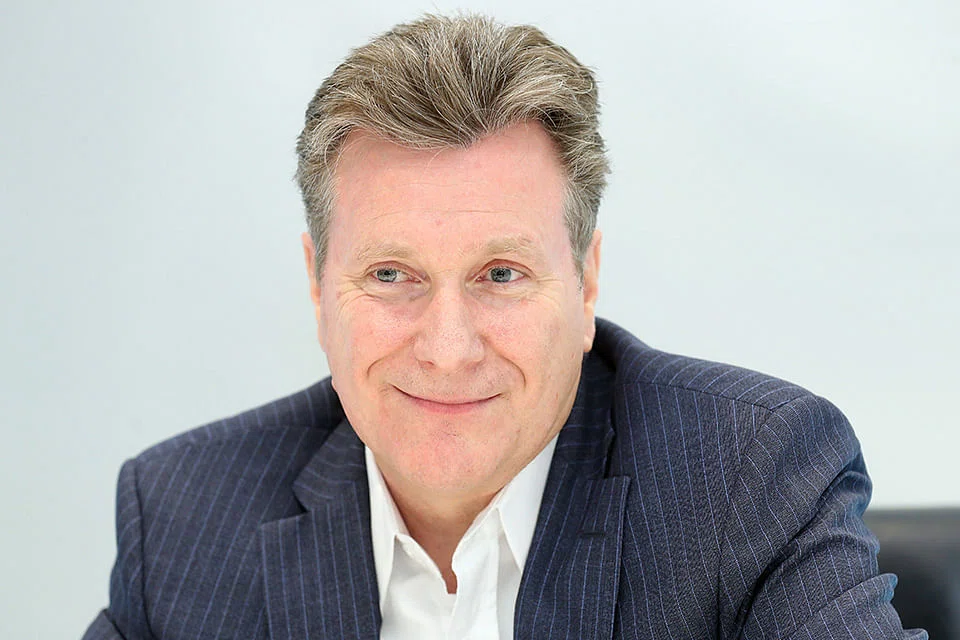
AS the largest vaccine and cold chain pharmaceutical distributor in Asia (excluding China and Japan), Zuellig Pharma has huge responsibilities to shoulder, especially in these times. But what keeps chief executive officer John Graham awake at night is the safety and well-being of his employees, as they are frontliners who ensure life-saving drugs and vaccines reach hospitals and pharmacies as the pandemic rages on.
The biggest concern remains the pandemic and that employees can return safely to their families, he says. "I think that's on our minds every day."
The Briton - who has more than three decades of industry experience in biotech, pharmaceuticals, strategy consulting and healthcare investment banking - took on the role of Zuellig Pharma CEO in July last year, when there was still much uncertainty surrounding the pandemic.
People first
The priority was to ensure the well-being of his employees but measures such as safe distancing and wearing masks that are part of the norm today were not quite as obvious back then, Mr Graham recalls.
Very early on, Zuellig set up ZPUnited, a volunteer programme to form a reserve task force in order to support staff in critical roles. It involved training close to 2,000 employees to step up for roles in the warehouse.
"It's those small gestures - people volunteering their time and taking big risks - that really energise us but also keep us up at night hoping that they stay safe," says Mr Graham.
"It's especially important for us during the pandemic because a lot of people are relying on our services to actually get medicines out to hospitals and pharmacies."
The cold chain
Headquartered in Singapore, Zuellig has over 80 distribution centres in 13 markets across Asia and has been in the middle of expanding its cold storage warehouse capacity in key regional markets, as it readies itself for the anticipated storage and distribution demands of Covid-19 vaccines.
Most vaccines distributed for normal immunisation programmes are stored between two and eight degrees Celsius but Covid-19 vaccines are kept at temperatures as low as -70 degrees Celsius (deg C).
In the Philippines, for instance, Zuellig already has the capability to store products at -20 deg C. It will be adding 10 medical grade freezers to boost its storage capacity, allowing storage at -80 deg C. It has also ramped up facilities in other markets including Cambodia Taiwan, Thailand and South Korea.
Zuellig's cold chain capabilities include eZCooler, which extends the storage time of temperature-sensitive products in transit from two days, with a traditional system, to five days.
Having a cold chain is not just about having a warehouse with a freezer or fridge, Mr Graham points out.
"The cold chain is actually how you handle the product. And the most critical point in the cold chain are the handoffs between different providers," he says.
"Each vaccine has a different set of requirements and so getting good understanding of the product profile is a key part of the process," he adds.
It therefore involves working closely with governments, non-government organisations and manufacturers across the region to understand the necessary logistical requirements for vaccines, as well as how they are being distributed in each country.
Mr Graham highlights that Zuellig's cold chain system boils down to technology.
"It's the entire process of innovating along the cold chain to make sure new products can actually go from the factory to patients across the world," he says.
Teamwork
Taking on a new leadership role at the height of the pandemic was no easy feat, but Mr Graham attributes much of the firm's success in handling the crisis to having a strong team of talented people with rich experiences.
"I really believe that you get better results by working in teams and having robust discussions and debates before coming up with a path forward, as opposed to one person making a decision," he says.
This meant not being the sole decision maker despite being a veteran with over 35 years of experience in the industry.
"It really helps to bring together people with broad experiences to tackle a problem because problem-solving isn't necessarily a matter of having deep expertise in a specific area," he adds.
It is instead about "creating new ways of working" - as most businesses have had to do to cope with Covid-19 fallout.
Indeed, it required all hands on deck to overcome challenges posed by the pandemic. One of the biggest setbacks Zuellig faced last year was when lockdowns were imposed across the region - an unprecedented situation with no playbook to refer to.
In response, the company set up a "command and control centre" in Singapore to be able to effectively communicate with teams across the region and help each other be prepared for scenarios that may be new to some, but which others have encountered before.
"It became a kind of a 'best practice sharing' across the region that helped us to really manage the entire problem in a really effective way," says Mr Graham.
For instance, distribution efforts were impeded when state borders in the Philippines were shut in a bid to contain the virus. Thanks to the experience there, Zuellig was fully prepared when the movement control order was imposed in Malaysia and a local team was quickly in touch with the government to get the necessary permits to operate.
Big, bold moves
Almost every business has been pushed to make some sort of transformation to cope with the effects of the pandemic and Mr Graham is embracing the opportunities that come with change.
"I feel very comfortable with change and it's not something that frightens me. It's something that actually stimulates me more than anything else," he says.
"When the environment changes, you can leverage it for your own benefit as a company."
And Mr Graham is not referring to incremental changes, but rather, big bold moves that could potentially be a game changer.
"I find that a lot of companies spend too much time focusing on small details when the big strategic moves are out there for the taking," he says.
Having the foresight and confidence to generate change, of course, come with experience.
One of Mr Graham's biggest milestones in his career was being part of the development and launch of Lantus, a long-acting insulin that is now among leading insulin brands.
"It was one of these undiscovered rough diamonds in the portfolio and myself, with a team of other people, kind of rethought this product and it ended up being developed and becoming a multi-billion dollar product," he says.
Such experiences have given him the confidence to know that he is capable of making a difference, says Mr Graham.
In 2008, he also spearheaded the transformation of Invida Holdings - a joint venture among Interpharma Asia-Pacific, Temasek Holdings and pharmaceutical services organisation Quintiles Transnational Corp - from a service-oriented company to a specialty pharma company focussed on commercialising drugs from Europe and the United States.
Business of science
Mr Graham had always been fascinated by the process of commercialising science and innovation. He was trained as a biochemist, having completed a degree in biochemistry and molecular biology at Imperial College London, but it was never his intent to be confined in a lab.
"I was always interested in the business side of science so I never wanted to work in a lab," he says.
"I always liked to bring the science and the commercial side together, to understand what is new about a product and then translating that into terms and opportunities that the commercial side of the organisation can understand."
To be sure, this often means tapping new and highly-specialised technologies, which could come with a hefty price tag.
The lack of economies of scale comes as specialised drugs, such as orphan drugs (which target rare diseases) are typically produced for perhaps hundreds, instead of millions, of patients.
"So it's a very different way of doing business. And innovation is required not only in terms of science, but also in terms of how people are going to pay for it," says Mr Graham.
Therefore, a holistic approach to treatment is necessary to ensure a patient can stay on medication. This may include working with health insurance to make sure that the treatment is affordable over a longer period of time.
Mr Graham also foresees the possibility of greater personalisation of medication, which takes into account the fact that a product does not necessarily work the same way for all patients.
Genetic screening, for instance, may be used to understand where a specific patient's cancer originates from and then using specific products to target the cancer at a personal level.
"These are all things that are futuristic but could happen in the next five to 10 years," he says.
In the near term, however, Mr Graham is anticipating a shift away from traditional pharmaceuticals such as primary care products for common ailments.
There will be a greater impetus to cater to niche healthcare needs in areas such as oncology, immunology and rare diseases.
Many big pharma companies have already moved from large volume primary care products to specialty products and that is the direction Mr Graham sees Zuellig taking as it continues to grow.
"We want to configure the business to be able to manage that evolution and work closely with our clients in doing so," he says.
John Graham
Chief executive officer Zuellig Pharma
1961: Born in New York, USA
EDUCATION
1979 - 1983: BSc in Biochemistry (Hons), Imperial College London
CAREER HIGHLIGHTS
1996 - 2001: VP, global marketing & business transformation, Aventis Pharmaceuticals
2002 - 2003: MD, Genzyme Germany
2003 - 2005: Principal, Life Sciences Leader, Economics & Business Analytics Advisory, Ernst & Young
2005 - 2008: President, Paramount corporate development, Paramount Bio Capital
2008 - 2011: CEO, Invida Pharmaceutical Holdings
2011 - 2015: CEO and director, Menarini Asia-Pacific Chairman, Menarini Biomarkers Singapore
2016 - 2018: Senior advisor, Torreya Partners
2017 - 2018: Chairman and CEO, Integrity Applications
2018 - 2020: Executive VP, ZP Therapeutics, Zuellig Pharma
Since 2020: Group CEO, Zuellig Pharma
Decoding Asia newsletter: your guide to navigating Asia in a new global order. Sign up here to get Decoding Asia newsletter. Delivered to your inbox. Free.
Share with us your feedback on BT's products and services
TRENDING NOW
Orchard plot, Jurong East EC, Raffles Town Club site among 10 new housing parcels in H2 GLS plan
TikTok billionaire overtakes Mukesh Ambani as Asia’s second-richest person

Uber cuts 23% of people division as new president takes charge
Meta launches enterprise-focused AI ‘business agent’ to automate daily operations

