

Business families’ secret to succession is when boss/dad/mum learns to let go
To build a dynasty, heads of family businesses need to get over egos, insecurities and a ‘stupid’ fear of death
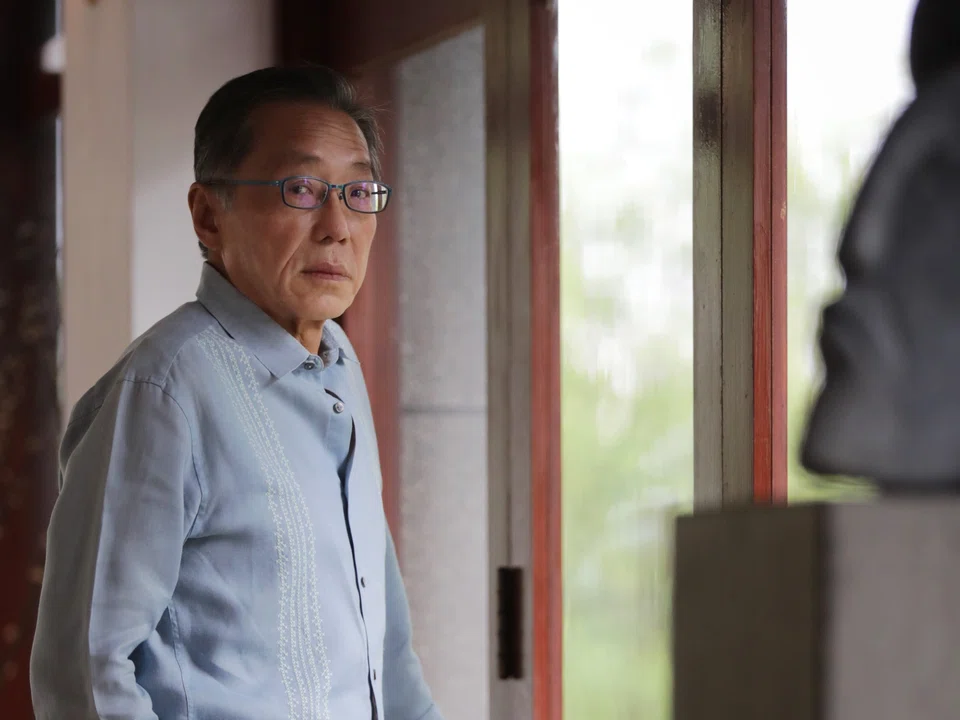
NICHOLAS Jacob was once approached by a 94-year-old Hong Kong client to plan for succession as the client’s sons – 69 and 71 at the time – could not agree on how the business should be run.
Jacob has few equals in Asia when it comes to succession planning. Specialising in catering to the lofty circles of ultra-high-net-worth families in Singapore and the region, London-based Jacob is described by his firm, Forsters, as “the godfather of Asian family governance work”. Yet even Jacob’s expertise was no match for the inevitability of time.
The client died before an external chief executive officer could be found to run the business for the antagonistic siblings. The business eventually split, and is now “worth a fraction”, Jacob says. The case boiled down to a man who toiled six days a week and built a successful business, which collapsed after he died.
“If he had bitten the bullet 10 years earlier, it is quite possible that the business could have been saved,” he adds.
When it comes to family businesses in Asia, ageing bosses who can’t let go and who put off tough conversations about the future with their children have long been a major difference between a one or two-generation success story and a lasting dynasty. But a number of families and professional advisers are now determined to do long-term legacy right.
Marleen Dieleman, associate professor of strategy at the National University of Singapore Business School, says it is not a coincidence that a slew of privatisation offers have come for Singapore’s family businesses.
Citing the Ong family members’ battle for control at the 1952-established property group Hwa Hong as one example, she says many listcos founded in the 1950s or 1960s are handing over the reins to second or third-generation owners. These are critical junctures where succession often goes wrong.
But some families are starting to wise up.
Jacob describes a “definite shift” from a decade ago. In a video call with The Business Times (BT), he says the succession clients that he acts for are now in their 70s on average, from being in their 80s previously.
Clients are also now planning for a “gradual changing of the guard”, he says. While more than half of his clients used to reject the idea of passing on elements of control, including their voting shares in the company, only one in four still take such a stand today, he adds.
What holds the remaining patriarchs back?
“You know better than I do that losing face is a serious concern in the Asian context,” says Jacob, who reckons that the heads of families should have succession plans by the time they are 70 at the latest.
“The patriarch will be seen to have enough influence, that he will not allow himself to lose face, or will not allow himself to be demoted to second division, and the family respects that.”
Thrashing things out
Banyan Tree Group founder and executive chairman Ho Kwon Ping, who turns 71 in August, takes the approach of “leaving nothing unresolved by the time you die”.
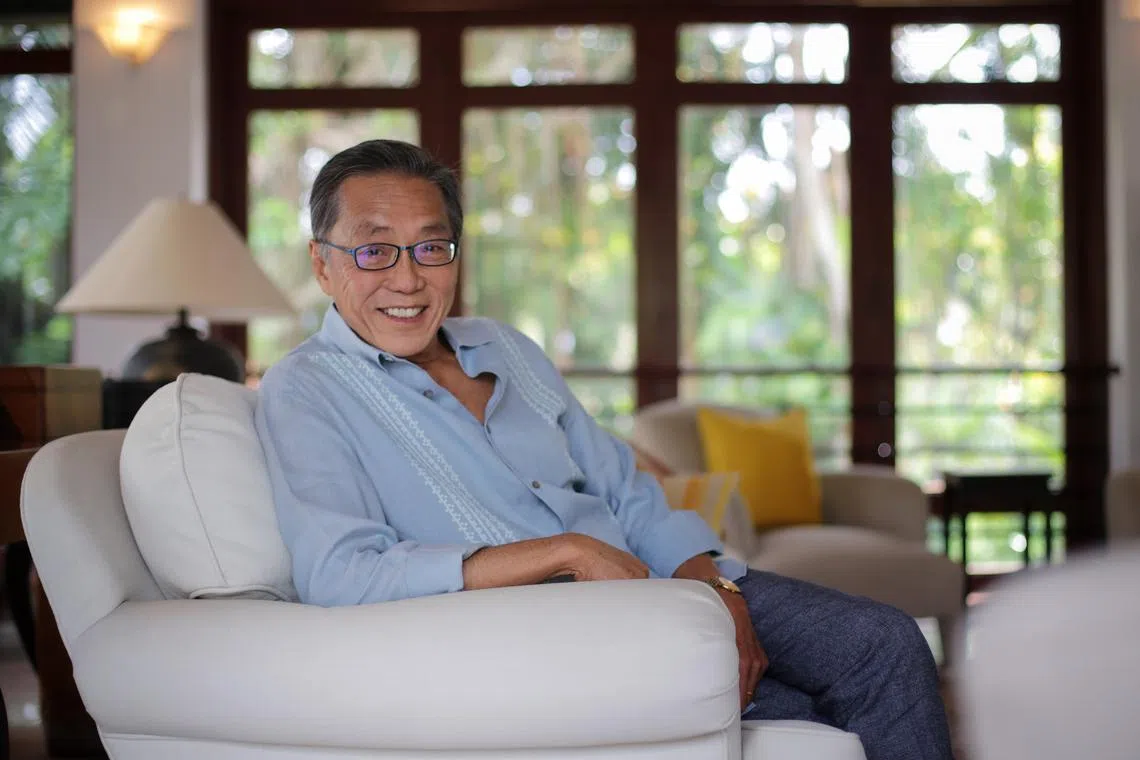
Honest conversations flow through three types of meetings in the Ho family – monthly meetings involving family office managers; huddles among Ho, his spouse and the three children, who are now 41, 38, and 29; and one-on-one meetings that Ho maintains with each child.
The point is for such meetings to become a “matter of habit” that the children can continue to use to surface issues when he is no longer around, Ho tells BT at his King Albert Park home.
“I do not expect everything to be a bed of roses after I’m dead,” he adds. “My job is to look into the future with sufficient realism, that if I want my legacy to go on, I have to try to create a situation by which my children can be cohesive among themselves. That can probably forestall any big problems.”
Ho, who is mentoring a number of next-generation owners, says he is surprised that many children are clueless about what their families are worth and do not openly confront long-simmering family tensions. One problem is that many heads of families cannot resist staying in charge, even after their children are told to step up, he notes. This is a highly sensitive area touching on a person’s insecurities, ego, and, for some, a superstitious fear of death, Ho says. Some think it is “bad luck” to start thinking about death.
“It’s just hiding one’s head in the sand,” he remarks.
There is also competition between parent and child, Ho adds.
“I thought I am enlightened, but I see it certain times when my son is doing really well. I’m both proud and yet also fearful that my useful days have passed. All parents love their children, and genuinely hope they will surpass them one day, but when that really happens, it can also make parents a bit insecure,” Ho says.
Many founders take a top-down approach even when they mean to pass the baton to their children, he adds.
“I know some business owners who basically tell the children, ‘You’re working for me, and when I die, I will let you know how much you’re going to get out of the business’. Other than that, it is ‘me, me, me’,” Ho says.
Ethan Chue, the former head of JPMorgan Trust Company (Singapore) who started Family Succession Advisors in 2022, sees many of these insecurities at play in his line of work as well. Some founders view retaining control as a “savvy” move to ensure that they don’t get thrown in the old folks’ home, with no one to visit them. Some worry that if their children know how much they would inherit, the young ones would “hasten the process” of their death.
Ho’s role as counsellor attempts to find a way to bridge this gap. He says: “The younger people opened up to me because they love their fathers, and their fathers love them, but the misunderstandings are huge on both sides. So I have to tell the son too, that you have to assure, you got to constantly massage the ego of your father.”
Ho suggests that parents have open discussions with their children about their aspirations, and how they can support the realisation of these dreams. Parents should also welcome the child’s evaluation of parental performance, asking questions like: “Am I doing anything you do not want me to?”, or “Am I crowding you too much?”
Fair and just
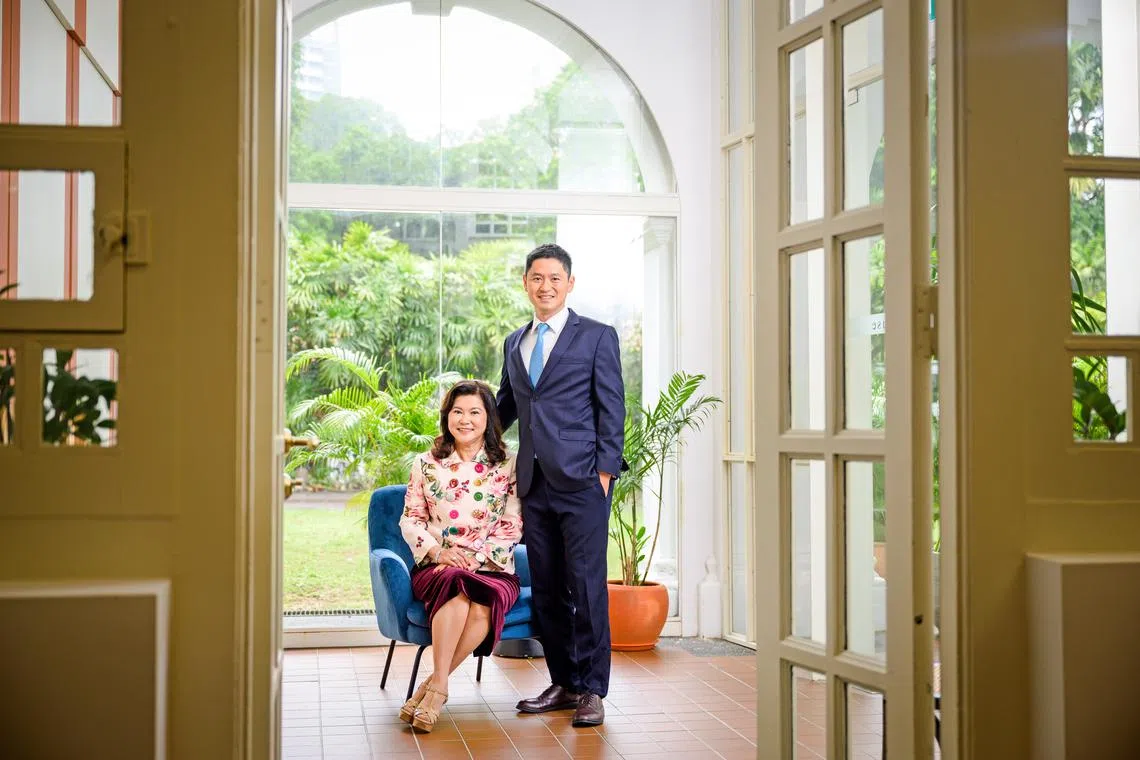
EtonHouse founder and chairwoman Ng Gim Choo, 71, handed the management of her international education group to her youngest son, former investment banker Ng Yi-Xian, 38, in January last year.
In 2015, five months after the younger Ng joined the family business, he penned a birthday message to his mother and boss: “Seeing the managing director side of you 75 per cent of the day and dealing with the maternal side of you 25 per cent of the day is not the easiest. I hope I have not disappointed you. If I have, I apologise. If you want, you can fire me, and be 100 per cent my mum.”
The Ngs have had their fair share of tough conversations.
Fairness was one. The elder Ng does not believe it is equitable to distribute shares in the business equally to all her children because only one of the three is running the business. Her two other children opted not to be part of the business.
“If I make a dollar, I would give 66 cents to my two siblings. How would that motivate somebody to do well?” she asks.
On this aspect, Chue of Family Succession Advisors says it gets even more complicated when three children pitch in differently, for example as managing director, financial head, and sales head. For him, there is no textbook answer because fairness is in the eyes of the beholder.
The younger Ng says he also drew “blank, lost looks” from his siblings when he introduced the idea of drafting a family constitution after hearing about it at the Family Business Network Asia.
He thinks a document articulating the family’s guiding principles could come in handy if any disagreement or issue of clarity arises. Often, the founder becomes a “mythical” figure after he or she dies, he notes. “Everyone will... ask what would the founder do?” Such a document could clear the air.
Ng suggests that matriarchs might be more adept at handling succession because of their experience in playing different roles.
“Women have more hats and identities to juggle,” he says. “Men are very simple square boxes. They identify themselves with one thing. That’s why it’s hard for them to let go.”

How to create a dynasty
Ng Gim Choo has bought into the idea of putting her thoughts on paper, on topics from business to life. They include how to pick a good husband (hot take: pick the filial son), preserve the family’s wealth, and enjoy the family’s assets.
Such principles could set the foundation for future generations and lay the groundwork for a dynasty. Succession planning consultant Caleb Ng of Koulture Transformation says going laissez-faire at this stage could result in abuse down the road and turn kin against kin. One scenario is where members come in and out of the business freely for a salary.
Deloitte Private South-east Asia leader Keoy Soo Earn recommends these steps for next-generation leaders at an early stage:
- Include them in regular business meetings as observers to build emotional readiness and help them anticipate future pressures
- Require them to begin their careers outside the family business in other industries first to strengthen their knowledge and skills
- Acknowledge different interests and skills, which will be essential to determine their level of literacy across financial, emotional, and interpersonal dimensions and the roles they can assume within the family enterprise
- Create a safe space where they can take ownership and test new ideas
EY Asia-Pacific family enterprise leader Desmond Teo agrees, noting that the next generation is connected with the new economy and has its own network. HSBC head of wealth planning South-east Asia Mary Chan remarks that she has seen creative and daring next-generation leaders bring about a spike in business growth within five years of them taking over.
Bank of Singapore’s senior wealth planner Guo Jiawen, meanwhile, says many families find the family office a useful vehicle to formalise the process of grooming the next generation. Such families are typically accustomed to operating within a corporate construct through running their family businesses, and therefore find that having a family office provides a familiar structure and framework when they begin to involve their next generation, she adds.






