Caffeine high: How expensive can your cup of kopi get?
With coffee prices at their highest since the 1970s, businesses and consumers weigh the cost as the upward trend looks set to continue

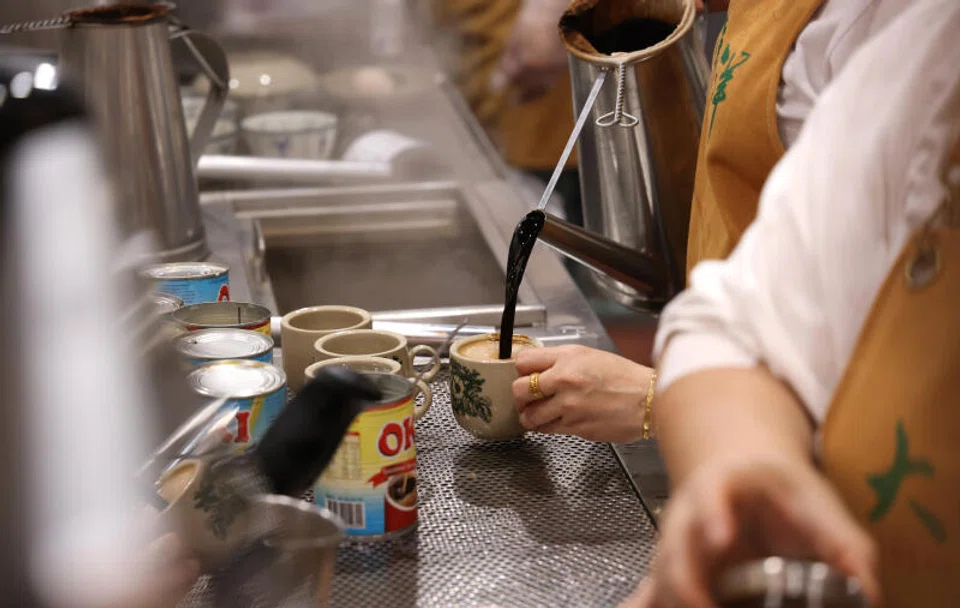
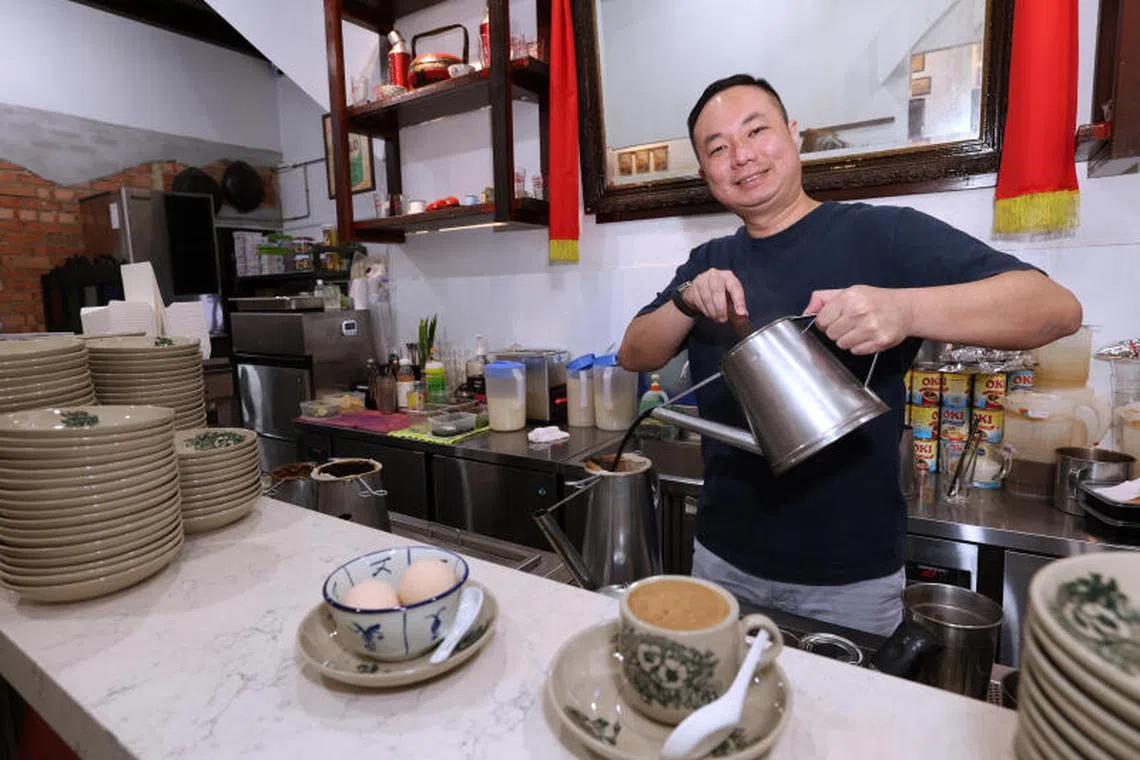
KEITH Kang, the owner of Great Nanyang Heritage Cafe, was forced to adjust his Nanyang coffee recipe in January this year when he observed that the quality of his coffee powder had dropped.
His coffee supplier had been unable to secure robusta coffee beans, which is used to make the traditional coffee ubiquitous to the South-east Asian region, from its usual farm in Indonesia due to low production.
As a result, his supplier had to turn to another Indonesian farm for coffee beans, albeit of a lower quality.
To ensure that the quality of his cafe’s coffee stayed the same, Kang used one cup of coffee powder to make six cups of coffee, instead of the usual 10 cups, for more than two months until supply resumed from his vendor’s usual farm.
While Kang paid his supplier the same price for these different beans over this period, his cost of doing business still went up as he had to use more coffee to compensate for the beans’ lower quality.
“We had no choice because coffee is our signature item and our cafe wants to maintain our quality,” says Kang.
Like Great Nanyang Heritage Cafe, other businesses that specialise in Nanyang coffee, known colloquially as kopi, are finding ways to mitigate the rising cost of robusta coffee beans, which hit record highs this year due to tight supply.
Besides price hikes and adjusting recipes, others are expanding their business so that their coffee inventory prices can be kept as low as possible.
However, business owners say that cost pressures from manpower, rent and utilities – on top of rising coffee bean prices – might leave them no choice but to hike coffee prices next year. They estimate that the cost of their coffee beverages could rise by up to 20 Singapore cents if cost pressures do not abate.
Race to the top?
While Nanyang coffee is a staple at local coffee shops and hawker centres, coffee chains and cafes that tout the traditional brew as their selling point have also become commonplace across the country over the last two decades.
These businesses say their premium coffee beans and specialised roasting and brewing methods set their beverages apart from coffee shops. They include market leaders such as Toast Box and Ya Kun Kaya Toast (both declined comment for this article), as well as others including Kopi & Tarts, Kopifellas, Killiney Kopitiam and Fun Toast.
Currently, coffee prices at these businesses start at about S$2.
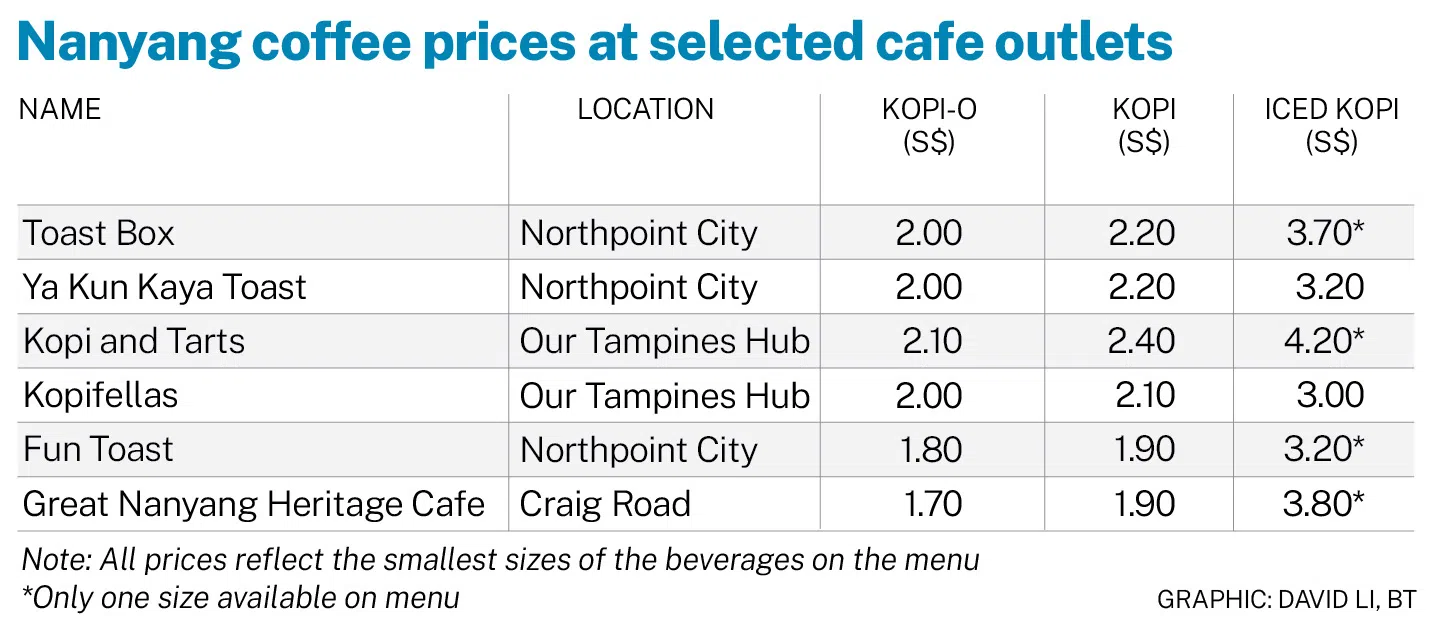
As it is, price hikes by coffee chains earlier this year had caused consternation among consumers.
One example is when popular food chain Toast Box raised its menu prices in August – its second in less than a year – citing ingredient and operating costs.
It has been “a struggle” to keep up with the price hikes in coffee, says consumer Ethan Wong.
The 27-year-old strategic communications manager said that he has reduced his purchases of the beverage from cafes such as Ya Kun Kaya Toast from six times a week last year, to just thrice a week this year. He has also turned to cheaper coffee options at coffee shops and instant coffee mixes.
If prices go up again, Wong says he would avoid chains where the price of the coffee is not justified by the taste or size of the cuppa.
From farm to cuppa
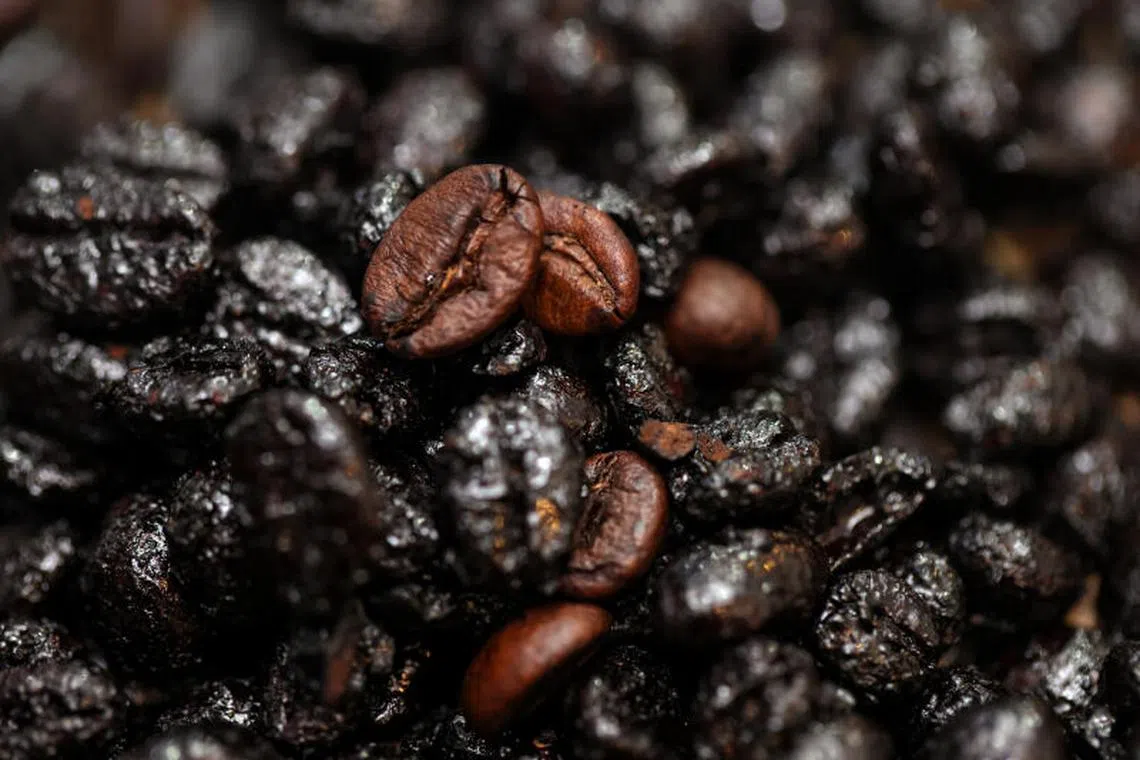
Robusta coffee is mostly cultivated in Vietnam, Indonesia, Brazil and parts of Africa. It is cheaper to harvest than its more fragrant counterpart, Arabica, as it is hardier in warmer climates.
Suppliers normally procure their robusta beans from coffee farms before roasting them with additives such as butter, sugar or corn to give the beans a bold and bitter flavour. The more premium coffee blends use higher grade beans which tend to have a stronger taste.
The final product, which is in the form of coffee powder, is then sent to businesses who brew it as Nanyang coffee in South-east Asia.
Record highs for robusta coffee
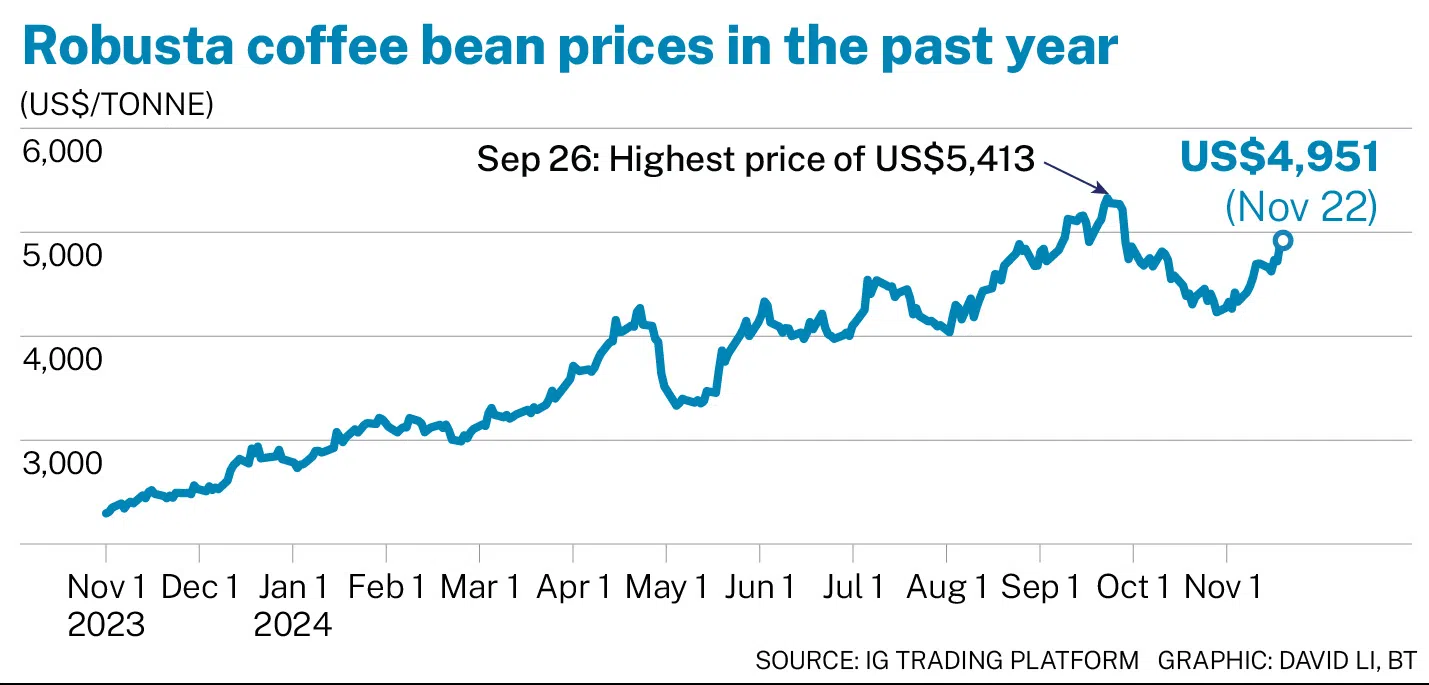
Robusta coffee bean prices have shot up by more than 60 per cent in the last year, tracking the overall rise in prices across coffee beans. Prices hit a record high of US$5,413 per tonne on Sep 26, but have stabilised to around US$4,951 as at Nov 22.
Vietnam – which is the largest exporter of robusta coffee – saw its exports dive this year after weather conditions led to a poor domestic harvest in 2022 and 2023, said market research company BMI in a Nov 8 report.
Yeap Jun Rong, a market strategist at online trading platform IG, says that with arabica coffee bean prices rising significantly in the last year due to supply disruptions, coffee roasters have also turned to robusta beans as a substitute, driving up the price of the latter.
Arabica is typically used in speciality coffee and Western coffee chains such as Starbucks. Its price has risen close to 60 per cent year-to-date, hitting a record high of around US$6,858 per tonne on Nov 25.
Coffee establishments feel the pinch
All coffee chains and cafes The Business Times spoke to have seen higher prices in their coffee supply this year, to varying degrees.
Among those that saw a sharper increase was Great Nanyang Heritage Cafe, which has outlets in Tanjong Pagar and Somerset.
Kang, the owner, says that an 8 kg carton of coffee powder had gone up from S$70 a year back, to more than S$100 now. This translates to an increase of about 40 per cent per carton. He orders about six cartons every week, although this varies based on demand.
Sydney Teo, director of Kopi & Tarts, observed that the coffee price from his distributor Gold Kili has increased by about 15 per cent in June this year, compared to the previous month. The coffee chain has 18 outlets islandwide.
Cafe chain Kopifellas, meanwhile, saw its coffee supply prices go up 10 per cent over the past year. Chief executive officer and founder Terry Neo attributes the moderate increase to bulk orders made by the company for its 15 local outlets and one overseas outlet in the United States.
All three businesses told BT that they, as well as their coffee suppliers, have tried to absorb the cost of the increments as much as possible.
Suppliers are mindful of imposing sudden, additional costs on these businesses while businesses are reluctant to pass on the rising costs of coffee to customers, given that Nanyang coffee is a price-sensitive beverage.
Managing costs
Instead, businesses have been finding ways to mitigate the cost increase.
Kopifellas – whose coffee blend is a mixture of beans from Indonesia, Malaysia and Vietnam – adjusts its coffee formula if there is a surge in coffee bean prices in one market. For example, if prices from Vietnam go up, the coffee formula is tweaked so that it comprises more beans from Indonesia or Malaysia, explains Neo.
However, these formula changes are kept to a minimum so that the coffee taste does not vary much.
“For Nanyang kopi, people just want that cup of coffee to taste the same every single day,” says Neo.
This is unlike speciality coffee, where consumers appreciate the differences in the taste profile of coffee beans, he adds.
Its other business strategy, says Neo, is to expand Kopifellas globally. This will allow him to commit a higher volume of coffee powder orders to his two suppliers and keep the overall price lower.
“I won’t say our (coffee) cost is not increasing but what we are trying to show our suppliers is that they can try to keep the price the same because we can promise a bigger volume,” says Neo.
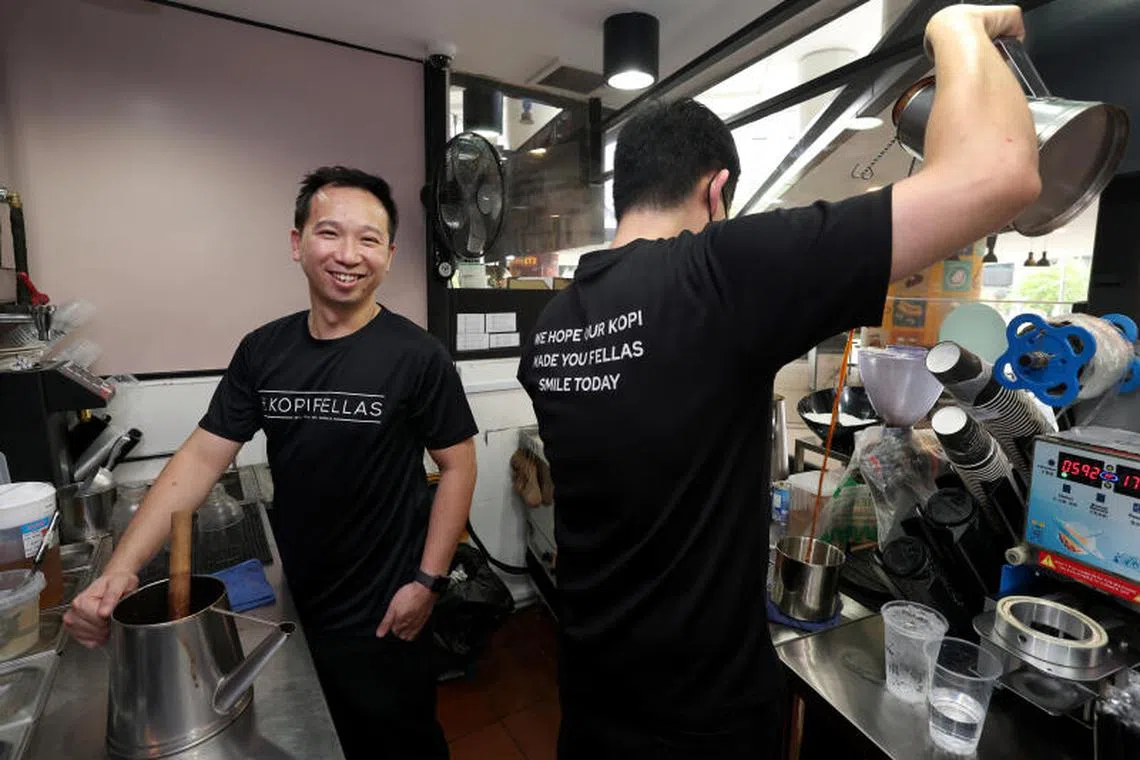
Neo plans to expand the business beyond the saturated Singapore market. Kopifellas is opening its first outlet in the Philippines and second outlet in the US next year.
He is confident that there will be interest in Nanyang coffee abroad, given greater recognition among foreigners for the drink.
After a price revision due to higher rental and labour cost at the start of 2024, margins at Kopi & Tarts have been “quite stable” this year, even with the increase in coffee costs, says Teo. The coffee chain posts an average net profit margin of around 10 per cent every month.
Likewise, Great Nanyang Heritage Cafe, which opened last August, has been able to maintain its profit margins despite the price surge in coffee beans. Revenue from its food items – which is significantly more than coffee beverage sales – have helped to offset the price rise in his coffee supply so far, says Kang.
Is a price hike inevitable?
Nevertheless, businesses are not ruling out a price hike on their coffee beverages next year if robusta coffee bean prices continue to see highs. This is especially so if their bigger cost burdens of utilities, rent and manpower continue to weigh on the business.
Should coffee bean prices rise 30 per cent or more next year, Kang says he would have “no choice” but to increase the coffee prices on his menu at his upcoming outlets.
He estimates that he would have to increase by 10 cents for hot beverages and 20 cents for cold beverages, which require more coffee powder to make.
Similarly, Teo of Kopi & Tarts said that with other costs such as rent going up, he will wait to see if his coffee supplier increases its price again. If this happens, he may also raise his coffee beverage prices by around 10 or 20 cents sometime next year.
Says Teo: “It’s either we pass on the cost to consumers or we absorb the cost, but there’s only so much we can absorb.”
Should they be forced to hike beverage prices, Neo from Kopifellas hopes that all the Nanyang coffee players “move (their prices) together” but not to the point where it becomes an oligopoly where a few major players in the industry control the prices.
A new norm in coffee bean prices
Yeap, the market strategist, says that robusta coffee bean prices are expected to trend upwards even in the coming year.
“With arabica coffee bean prices hitting new highs lately, we may see increased demand for robusta beans as well. The incentive for roasters to incorporate more robusta into their blends to manage costs is also stronger,” he added.
The longer term effects of climate change could also put stress on robusta coffee bean supplies, said observers.
Professor Winson Chow, who specialises in urban climate risks at the Singapore Management University, says that changing weather patterns will affect the growth of all coffee bean varieties.
The increased frequency of extreme weather events, and heightened pest and disease pressures in a changing climate pose difficult challenges to growth and yields in tropical coffee-growing regions.
Should extreme weather events like floods and droughts become more frequent and unpredictable, farmers may switch to crops with better resistance to climate stress. This may weigh on coffee supplies and lead to higher coffee prices for a more prolonged period, adds Yeap.
Sustainable alternatives to coffee have popped up in Singapore, including Singapore-based Prefer Coffee.
The bean-less coffee is made with bread, soya bean pulp and barley grains. The ingredients are fermented, roasted and grounded to powder before being sent to food manufacturers, large fast moving consumer groups and coffee chains.
Prefer co-founder Jake Berber says that the idea to start the company in 2022 came after feedback within the coffee industry on rising coffee prices. Berber says he wanted to create a more affordable and sustainable coffee-drinking option for consumers.
In light of rising coffee bean prices, Berber says that demand for Prefer’s products has gone up.
How much for a cup of kopi?
Businesses agreed that the higher coffee bean prices are likely to be the “new norm” now.
However, they were mixed in their views on how much more consumers would be willing to pay for coffee beverages in the longer run.
Kopifellas’ Neo believes that if the industry starts to sell Nanyang coffee as high as S$7 – a price on par with speciality coffee now – consumers will accept that food prices are increasing and continue to drink coffee.
While some of Kopifellas’ customers may turn to cheaper coffee from the coffee shops, Neo feels that a segment of consumers would also view Kopifellas as the cheaper alternative to pricier speciality coffee.
“Customers who drink two cups of Starbucks a day may choose to buy one of their cups from Kopifellas,” he says.
Kopi & Tart’s Teo, however, says there would be a public backlash should Nanyang coffee rise to such highs as the price perception of kopi is that it is “affordable, cheap and easily available to the masses”.
In the shorter term though, consumers appear resigned that their cup of Nanyang coffee might cost a bit more next year.
Fiona Teo, who patronises coffee chains such as Fun Toast thrice a week, says that while she is “not thrilled” that prices might go up next year, she would still take it “in her stride” if they materialise.
However, the maximum she will pay for coffee is S$3, says the 28-year-old who works in a bank.
Others such as Wong will try to reduce their intake.
He says: “I mean, what can I do? Shrinkflation sucks, so I’ll drink more water.”
Additional reporting by Janice Lim