Can sustainable aviation fuel solve airlines’ ESG problem?
Airlines claim there is not enough supply and suppliers claim there is not enough demand. Meanwhile, the cost is still too prohibitive and the actual impact still debatable.

Tay Peck Gek
FINNISH company Neste is putting Singapore on the global map for sustainable aviation fuel (SAF) with a plant that will make Singapore the world’s largest SAF-producing country in 2023.
The refinery in Tuas will be capable of rolling out 1 million tonnes a year. It will also dramatically increase the current capacity of Neste, which is already the world’s largest SAF producer at 100,000 tonnes a year.
Including its Rotterdam plant, Neste will boast a total capacity of 1.5 million tonnes or about 1.8 billion litres of biofuel for the aviation industry by the end of 2023.
Just how impressive and how meaningful are these growth numbers? The answer depends on whom you ask.
SAF is a fast-growing but still-nascent industry, with many proponents but also many critics.
Some believe it will help significantly in lowering the carbon emissions of an industry that is a major contributor to climate change — an urgent problem if airline operators are to remain in the good books of investors concerned about ESG (environmental, social and corporate governance) measures.
But others believe the impact will be negligible and suggest resources are better spent on other solutions. SAFs are unlikely to be produced with sufficient scale to make a difference, they say, and the actual reduction in emissions is difficult to calculate accurately.
What is SAF?
SAF is the main term used by the aviation industry to describe a non-conventional aviation fuel.
The term actually covers a wide variety of alternative fuels, with a wide range of potential greenhouse gas emissions and sustainability impacts, according to Dan Rutherford, who is director of aviation and marine research at the International Council on Clean Transportation (ICCT), a think tank that shares technical and scientific analyses with environmental regulators.
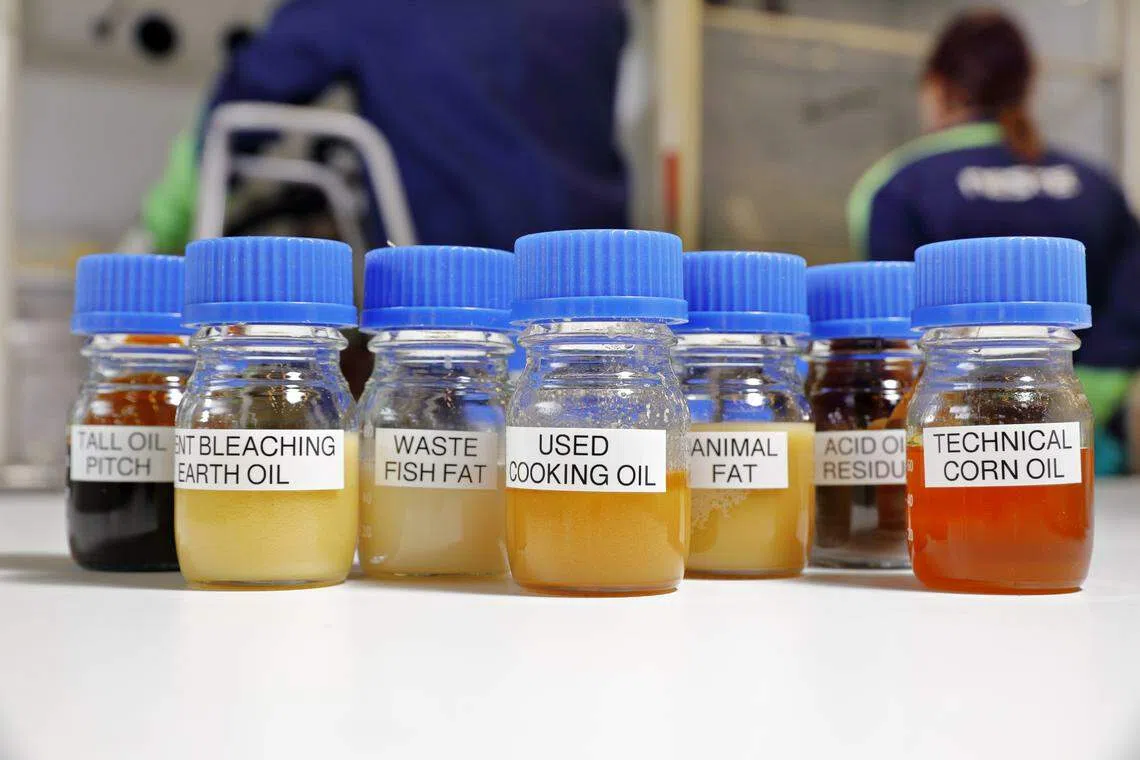
Sustainability impacts vary based on what is being made into the SAF (that is, the feedstock) and how the SAF is produced (the production process). Some SAFs made from purpose-grown crops, such as palm oil, can have higher emissions than fossil fuels and pose strong sustainability risks, such as links to deforestation, Dr Rutherford added.
“In contrast, some SAFs made from sustainable feedstocks such as waste residues or electro fuels made from renewable electricity can generate much higher greenhouse gas reductions compared to fossil fuels,” he noted.
Those in favour of the use of SAFs argue that it is able to lower overall lifecycle carbon emissions by up to 80 per cent, when compared with the use of fossil fuels. Whereas fossil fuels add to the overall level of carbon dioxide by emitting carbon that had been previously locked away, SAF recycles the carbon dioxide that has been absorbed by the biomass used in the feedstock over the course of its life.
Alton Aviation Consultancy analysts Joshua Ng and Wang Yuankai told The Business Times that the airline industry’s focus has shifted towards concrete decarbonisation solutions, which in the near to medium term include SAFs.
Electric jets and hydrogen-powered aircraft are also being explored as possible solutions, but they are a decade or more away from being commercially viable and also likely to work only for short- and medium-haul air routes.
Carbon credits, meanwhile, are seen as a stop-gap measure for the aviation industry, given their low take-up rate. The use of carbon credits also doesn’t eliminate the root cause of the problem, the Alton analysts said, as airlines are left free to continue emitting greenhouse gases.
SAF, on the other hand, is a relatively achievable fix in the near term.
It is a drop-in fuel — that is, there is no need for aircraft engines or fuelling infrastructure to be changed to use SAF. In commercial aviation use cases today, regulations permit a blend of jet fuel with up to 50 per cent SAF.
Current output a drop in the ocean
The International Air Transport Association (Iata) has set a goal for the aviation industry to reach net-zero carbon emissions by 2050. The aviation trade body estimates 65 per cent of the reduction in emissions needed to hit this target could be contributed by SAF.
But, getting there will require an output of 450 billion litres of SAF in 2050 — making Singapore’s and Neste’s contribution a mere drop in the ocean.
Rico Merkert, a professor of transport at the University of Sydney, said the implementation of SAF may not be rolled out fast enough.
The industry is currently producing only 200,000 tonnes or 240 million litres of SAF a year: less than 0.1 per cent of the jet fuel consumed a year.
Production of SAF is also prohibitively expensive.
Neste’s vice president of renewable aviation in Asia-Pacific, Sami Jauhiainen, said the production capacity of SAF is still limited and has not reached its full potential of economies of scale. The price is therefore several times that of conventional jet fuels.
He noted, however, that the cost of climate impact is not included in the present price of fossil fuels.

Said Jauhiainen: “We should bear in mind the cost to the world and our society will be much greater if we do not move fast enough in reducing our carbon emissions. So the question should not be ‘What does it cost?’ but rather ‘What will it cost if we don’t use it?’”
Dr Rutherford of ICCT suggested that incentives or mandates may be needed. It is very unlikely, in the competitive airline industry, that an operator could take on the burden of purchasing much more expensive fuel otherwise. For most airlines, jet fuel is the single largest expense item contributing about 20-30 per cent of total costs.
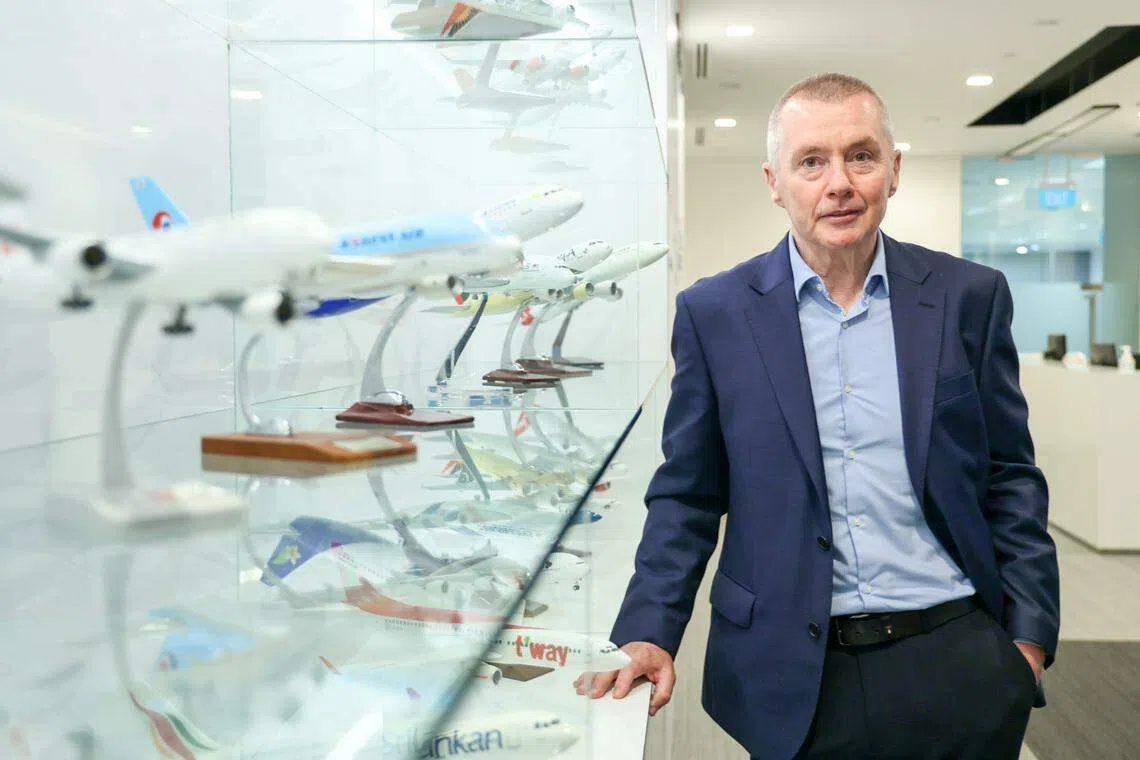
Iata director general Willie Walsh, however, said the problem is not with demand, as airlines used all the available 100 million litres of SAF last year and have placed total orders of more than 14 billion litres in the years to come. He instead urged traditional jet fuel producers to produce SAF as well.
Who makes the call?
Within the aviation industry, there is no doubt that urgent action is needed to tackle the aviation industry’s ESG problem.
At the recent Changi Aviation Summit, for instance, every member on a panel of industry stakeholders agreed that a global solution is needed for the industry to meet its decarbonisation goal.
The problem, as one panellist put it, is that it would take time for “a solution that everybody on the globe can agree to”, whereas action should be taken now.
Neste’s executive vice president for renewable aviation, Thorsten Lange, said during the summit panel discussion that policy schemes are needed to create demand certainty, which is necessary to draw investments to SAF production.
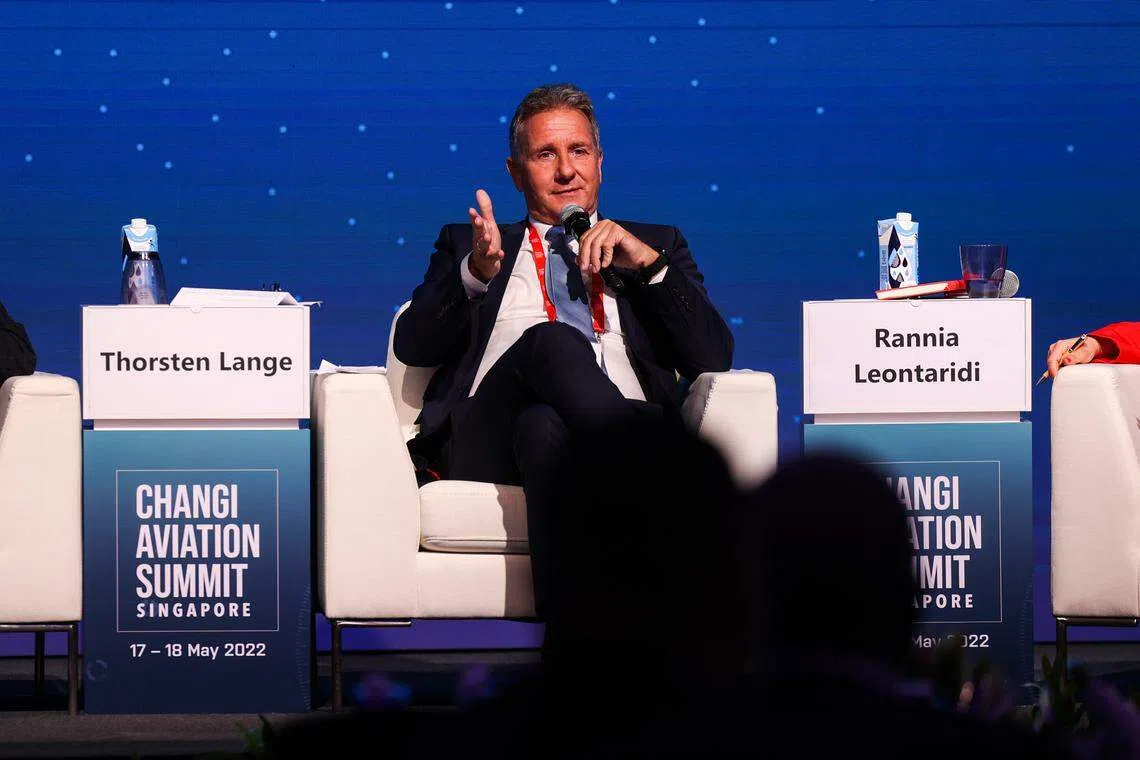
“You wouldn’t invest if you don’t have the decent shots to get the return. So for a return, you need more certainty on demand. And this is actually where regulations are kicking in. You need to somehow nudge the industry along… Every facility that you’re building … costs more than a billion (dollars),” Lange said.
Alton analysts, too, believe regulators worldwide will play an essential role in facilitating and accelerating the rollout of SAF. “This will include the adoption of regulatory standards to allow aircraft to use 100 per cent SAF, mandating SAF production or consumption milestones, as well as levelling the playing field for operators through a globally recognised carbon tax and trading system.”
Several countries are already working towards the promotion of SAF use.
Singapore and New Zealand, for instance, have signed an agreement to work together on promoting sustainable aviation, including studying the viability of “green lanes” between the 2 countries to encourage the gradual uptake of SAF-fuelled flights by customers.
Singapore will also be conducting an SAF pilot to nudge the industry towards lower emissions, with flag carriers Singapore Airlines (SIA) and its low-cost unit Scoot using SAF for all flights from Q3 2022 as part of the 1-year pilot programme.
An SIA spokesperson said the pilot is to operationally validate SAF integration options at Changi Airport, and to consider economic and commercial factors that could lead to greater adoption of renewable fuels in Singapore.
Given the “prohibitively high” cost of SAF, the mainboard-listed airline is working with industry partners to review the end-to-end supply chain challenges, including the availability of feedstock, and reduce the cost of production.
SIA said it is “unable to comment on commercially sensitive matters or financial information” when asked about the cost difference for it to use SAF over fossil fuel.
The carrier added that it is always looking out for partnership opportunities, beyond the pilot, with stakeholders to scale up the adoption of SAF, subject to operational factors such as cost and availability.
Elsewhere, the United States has set a target for SAF supply to meet 10 per cent of aviation fuel demand by 2030, rising to 100 per cent by 2050. Meanwhile, the European Union has proposed a bill mandating that all aviation fuel supplied to aircraft operators at airports on the bloc reach a minimum SAF volume of 63 per cent in 2050.
Who bears the cost?
As government mandates catch on, questions may begin to be raised about who will bear the higher cost of air travel or air cargo.
Dr Rutherford of ICCT believes it is unlikely that SAF production costs will decline to the current price of fossil fuel in the near to medium term. He estimates that fuel costs may be about 30 per cent and 60 per cent higher in 2030 and 2050, respectively, due to SAF adoption, in order to put aviation on a net-zero pathway.
Given that the main contributors to aviation emissions are the rich countries and the frequent fliers in those countries, the pinch may be relatively affordable.
“There’s a lot of uncertainty, but that may translate to a less than 10 per cent ticket price increase for consumers,” he added.
The University of Sydney’s Prof Merkert said the cost of using SAF will most likely be passed on to the consumer, which is not problematic if SAF does eventually contribute to fighting climate change.

Commercial customers are likely to require such green enhancements anyway. In his discussions with corporate travellers and freight customers, he has found that many will soon require airlines to be greener — as part of ESG targets affecting supply or value chains.
“Leisure travellers will also be happy to pay the premium for SAF, as they want to make a contribution to limiting climate change while still having the ability to fly, too,” Prof Merkert added. “The traveller of the new normal is a conscious one.”