Carbon credits not a climate “snooze” button

Kelly Ng
COMPANIES are being asked to be more careful about the way they use carbon credits, as awareness grows of the flaws in carbon markets and the limits to their impact on limiting emissions.
The Voluntary Carbon Markets Initiative launched a provisional Claims Code of Practice last Tuesday (Jun 7) to guide companies and non-state actors in making use of voluntary carbon credits as part of their net-zero commitments.
Among other things, the code requires that companies use carbon credits in addition to, not as a substitute for, science-aligned decarbonisation across their value chains. Companies have to first reduce emissions to meet interim goals before purchasing certain types of claims.
They should also detail in annual reports how the carbon credits have been used toward their climate commitments, including the number of credits purchased and retired, credit vintage, project types and names of relevant certification standards, and so on.
Apart from the social and governance gaps inherent in carbon credit projects, observers note that these often overshadow the real work of reducing emissions.
Jonathan Crook, a policy officer at Carbon Market Watch, which specialises in carbon pricing, said his association does not support the use of carbon credits to “offset” emissions, but recommends instead that companies buy credits as a way to disburse climate finance.
“Having a generic offsetting approach isn't a particularly responsible approach for a company. They should be prioritising reducing and avoiding their own emissions at all costs before resorting to carbon credits.
“In that sense, they can buy carbon credits to contribute finance to a project, but not claiming the emission reductions and removals as their own, or claiming carbon neutrality because of those credits,” he said.
Planting trees are no panacea for carbon removal, stressed environmental activist Chris Lang, who runs a website critiquing carbon trading schemes.
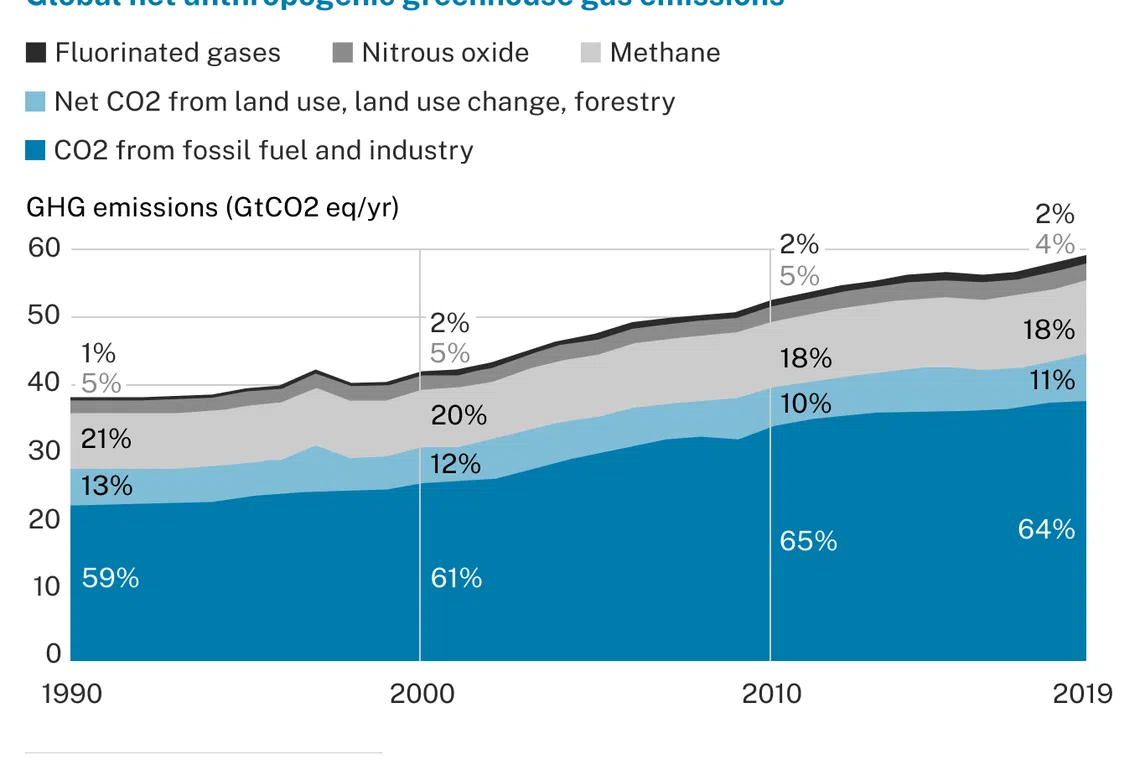
Lang pointed to the latest report by the UN’s Intergovernmental Panel on Climate Change, which highlighted that carbon emissions from fossil fuels and the industry sector were responsible for the largest growth in emissions and 64 per cent of all anthropogenic emissions by 2019, up from 59 per cent in 1990.
In contrast, the proportion of emissions from land use change and forestry fell from 13 per cent to 11 per cent in the same period.
Lang added: “Obviously, reducing the damage to rainforests is an important thing to do as well. But I think we just have to separate addressing the damage to rainforests from the need to leave fossil fuels in the ground. The whole idea of offsetting is a distraction from taking meaningful action to address the climate crisis.”