

Coffee under threat
A shortage looms


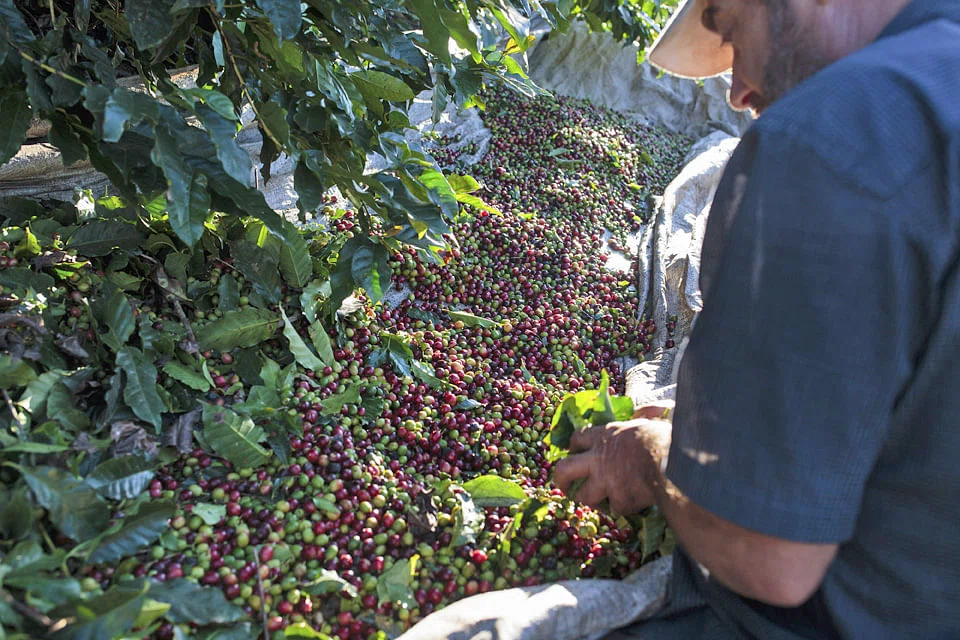

COFFEE lovers usually know exactly how they want their caffeine delivered, whether as a black kopi-O from the neighbourhood coffee shop, a sweet iced latte from Starbucks, or a hand-crafted speciality coffee from their favourite cafe. However, what they may not know is that their daily cuppas are under ever-increasing threat from climate change.
The money they hand over at the counter also hardly translates into actual earnings for the farmers battling the effects of global warming to bring them their caffeine fix.
Dave D'haeze, regional manager for Asia-Pacific for non-profit foundation Hanns R Neumann Stiftung, has been participating in studies about the effects of climate change on the coffee industry in Vietnam, the largest exporter of robusta coffee worldwide.
For the past 14 years, he has worked with other researchers in the global Initiative for Coffee and Climate to track changes caused by climate change and study ways to help farmers deal with them.
According to the initiative's research, climate change has raised maximum temperatures slightly across Vietnam, with dips in some areas, while minimum temperatures have steadily risen by 0.2 to 0.6 deg C per decade over the last 40 years.
While the changes may seem small, they have resulted in greater proliferation of insects and diseases such as coffee rust, a coffee-specific fungus that devastates entire plantations.
"The difference between the two (minimum and maximum day temperatures) gets smaller and it becomes cosier for pests and diseases," says Dr D'haeze.
The increased temperatures also accelerate the evaporation of water in a country where coffee plantations already require extensive irrigation to survive the dry season.
Climate change has resulted in new weather patterns as well. Dr D'haeze and his team found that the rainy season has been starting two to four days earlier each decade, and rain showers during the onset of the dry season have become more common over the past 30 years.
This may sound like a boon, but rainfall in dry months poses a grave danger to the coffee crop, because the dry season in Vietnam is also when coffee trees flower.
"If the flowers open for pollination and it rains, that means the pollen gets stuck," says Dr D'haeze. "Pollination will be hindered and that can seriously decrease yield later on."
The bitter truth
To make matters worse, farmers in many coffee-producing countries can barely afford to deal with these climate change problems, says Victor Mah, president of both the Singapore Coffee Association and the Asean Coffee Federation.
While you may pay a pretty penny for your gourmet brew, the farmers see little of it. Most of the profits are earned by companies in the latter part of the coffee value chain; that is, the coffee trade houses, roasters and retailers who can adjust their prices more easily.
Farmers, on the other hand, have their prices determined by the market, making it harder for them to offset increased production costs.
In the event that their crops are devastated by pests, diseases or severe water shortage, farmers may have to switch to a more profitable crop in order to feed their families.
"In Indonesia, coffee plantations have been eaten up by palm oil estates," says Mr Mah. "It's more profitable, but palm oil is a very selfish crop. You can't grow anything else with it. The rows of soil between the palms are always very damp, and the palm fronds are very big. When they fall, that's the end of your other plants."
In Yunnan, China, warmer temperatures and milder frosts caused by climate change have given the coffee industry a chance to flourish, but the same conditions are ideal for the spread of coffee rust.
When their coffee harvests fail, farmers turn to alternative crops, the most common one being bananas. That, too, has its drawbacks: "It's a faster-returning cash crop for them, but (the) banana is a crop which ruins the land completely when it is grown indiscriminately," says Mr Mah.
Asia Pacific Coffee, a company partly owned by Mr Mah, is working with the Starbucks Farmers Support Center in China to develop a more fungus-resistant strain of coffee to combat the coffee rust problem. He hopes that their work will result in more farmers choosing to persevere in growing coffee, rather than switch to another crop.
"When you're a private company, it's a very big financial burden to carry, and we don't have the big bucks to do it," says Mr Mah. "Only big companies like Starbucks have budgets put aside for these farmer-support activities. It's too much work for the small farmers, but we have to encourage them to keep on growing."
Asia's percolating demand
Meanwhile, demand for coffee continues to grow. According to data from the International Coffee Organization, demand outpaced production by as much as 4.3 million bags in 2015 and an estimated 3.5 million bags in 2016. Researchers at Hanns R Neumann Stiftung estimate that there will be a shortage of 20 million to 30 million bags of coffee, or 1.2 million to 1.8 million tonnes, by 2020.
"We see that there is really continuous growth in consumption," says Dr D'haeze. "Even in the coffee crisis (in the early 2000s), we did not really expect that coffee would continue to be consumed in such large figures, but we saw at that time that there was a change from out-of-home to in-home market, at-home consumption."
European markets and Australia are stagnating or declining, according to data released in March by research consultancy Mintel. However, three of the five fastest-growing retail coffee markets are in Asia. Indonesia's market grew by 19.6 per cent between 2012 and 2016, India's by 15.1 per cent, and Vietnam's by 14.9 per cent.
While this means production may struggle to keep pace, governments of producing countries have more incentive to support the industry as they recognise its potential, as is the case in China.
Traditionally, favourable coffee-growing conditions have been limited to the area between the Tropic of Cancer and Tropic of Capricorn near the Equator. However, rising temperatures have tempered the cold conditions of areas such as Hainan and Yunnan in southern China enough to make coffee farming possible.
Local farmers are not the only ones noticing this, as Nestle and Starbucks have moved into the region, buying up large tracts of land for coffee farms since 2010. A coffee culture is also beginning to develop in the country that has traditionally been made up of tea drinkers.
Speciality coffee chain Mellower Coffee is part of this burgeoning coffee culture. Founded in Yunnan, Mellower Coffee set up its first outlet in Singapore last year after establishing itself in China.
"In the past, Chinese coffee was produced just for instant coffee," says Zhao Lu, general manager of Mellower Coffee Singapore. "Because Yunnan has had other agricultural options, there was little government support for coffee as it was seen as unimportant. The coffee couldn't be sold at a good price, so only a few farmers planted coffee."
Yunnan residents were also not coffee drinkers, so there was no impetus to improve the quality of the coffee or expand the industry. However, with large companies moving in, the government is starting to pay more attention to coffee, says Ms Zhao.
She adds that being a barista is now viewed as a viable career, with more young people pursuing it and dreaming of setting up their own shops. Many coffee shop owners in Yunnan own small plantations to grow speciality coffee for their businesses.
Business blend
Because Mellower Coffee sources for beans from several countries around the world, the chain is well aware of the threat of climate change as it affects their suppliers. Of the solutions being put forth to manage its effects, Ms Zhao sees predictive research and alternative crops as the most feasible at the moment.
"The Colombian government has a group of scientists to foresee and predict environmental changes for the next 10 years," she says. "Whatever they are doing now in Colombia, it's based on what they planned and foresaw 10 years ago."
Both she and Dr D'haeze say farmers should be encouraged to grow alternative crops alongside their coffee plants, so that they have a backup source of income if the coffee crop fails.
Dr D'haeze says: "What is important is to choose alternative crops that have different harvesting periods so that they do not overlap with coffee harvesting."
Macadamia nuts and black pepper are good options because their harvests come before and after the coffee harvest respectively, he says.
He adds that education is important in solving the farmers' problems. In his research on the effects of water stress on coffee yield, he found that many Vietnamese farmers water their coffee plants with up to almost three times the minimum amount of water needed to produce an average crop.
With proper training and the help of accurate weather forecasts, the farmers should be able to schedule their irrigation in a way that minimises wastage.
The problematic industry trading model also remains a challenge for coffee farmers. In Ethiopia, for example, where coffee farming accounts for 80 per cent of total employment, many farmers struggle to earn enough to support their families, and their children often skip school due to lack of food.
Desta's Coffee is one company trying to make a difference in this area by working directly with coffee farmers to ensure that they benefit from profits made on their coffee.
Founded in Switzerland in 2013 by Desta Daniel Kebede, a Swiss national whose father is Ethiopian, the company diverts 20 per cent of its profits towards helping Ethiopian communities. For instance, some profit goes to a bakery it has built in Ethiopia.
For every capsule of coffee sold, the bakery delivers a loaf of bread to an Ethiopian child. The bakery is also used to teach and equip the community with new skills to improve their standard of living.
The project currently distributes 1,500 loaves of bread to elementary schools in the country, enabling an estimated 400 children to continue attending school.
"There's too much focus on finding the best coffee, (and not enough on) the social aspect," says Kevin Teo, founder and managing director of Holah Holdings Pte Ltd, the sole distributor for Desta's Coffee in Singapore.
"There's not much knowledge about the origins of the coffee and the farmers. We want to create more awareness of that aspect of coffee."
How limited production benefits Laos
ALAIN Sengkeopraseuth is a coffee businessman with a special perspective on the industry in Laos. As chief executive of the Green Hills Group in Laos and managing director of the Laos branch of Thai coffee house K2, he manages companies that span the entire coffee value chain, from the nursery to the shop.
His first venture in 2009 was Green Hills Bolaven, a 500-hectare farm in the Paksong district where most of the coffee in Laos is grown. After about five years of focusing on coffee production, he decided to expand his company's reach into the latter part of the coffee business: coffee preparation and retail.
"The evolution was very natural because when you do only farming, the income is seasonal," says Mr Sengkeopraseuth.
"During the four to five months of coffee trading, there's a lot of cash flow and income, but you need to budget for the whole season. We were looking to diversify in the coffee chain to seek more periodical income and cash flow."
In 2014, he set up Green Hills Coffee to handle coffee roasting, sell coffee equipment, train baristas and brewers, and provide assistance in opening coffee shops. Together with K2, Green Hills Group participates in every aspect of the industry.
Climate change and limited manpower are the primary challenges in the Laos coffee industry, he says. "(Climate change) is something external that we cannot control, so we have to deal with it," he says. "There are cultivation and agricultural practices that help us work along with climate change, but we can never control and predict the climate."
For instance, the rainy season began and ended later than usual in 2016, delaying the harvest by six weeks.
The entire production cycle is disrupted by such a delay, because the next flowering season may not be delayed by the same amount of time. Farmers are forced to harvest and prepare for the new crop in a shorter period, which negatively impacts productivity, says Mr Sengkeopraseuth.
Laos is also a sparsely populated country, with about 6.8 million people over 238,000 square kilometres. In comparison, Singapore has 5.4 million inhabitants over 720 square kilometres.
Because of the limited manpower, Laos coffee production will never be particularly large, says Mr Sengkeopraseuth. However, this can be seen as an opportunity instead of a disadvantage, since it reinforces the niche status of Laotian arabica coffee.
Grown at higher altitudes than in other countries, the arabica coffee of Laos has a unique taste and quality. On average, Laotian coffee cherries and beans are also larger in size, says Mr Sengkeopraseuth.
"We're creating a niche market of not commercial beans, but premium beans.
"We have the altitude, we have the environment and the climate that is good and profitable for speciality coffee, for extreme premium coffee, and we've been working on this with the Laos Coffee Association to push the Laos coffee production to this market."
Leila Lai is an ex-BT intern. She is currently in her final year of communication studies at Nanyang Technological University.
TRENDING NOW

Grab CEO’s wife Chloe Tong on life with Anthony Tan and finding her purpose

HDB reviewing ‘jumbo’ flat scheme after Telok Blangah unit listed for sale at S$2.18m

He built the Vingroup empire. Now South-east Asia’s richest man is handing some key roles to his sons

Singapore judge raises doubts iron ore trader Radiant World is owed US$1 billion

