Dow Chemical's Asia-Pac president on the circular economy
Jon Penrice, Asia-Pacific president of The Dow Chemical Company, talks about the materials science MNC's partnerships with governments and industries to close the loop on plastic waste.
 Add BT as a preferred source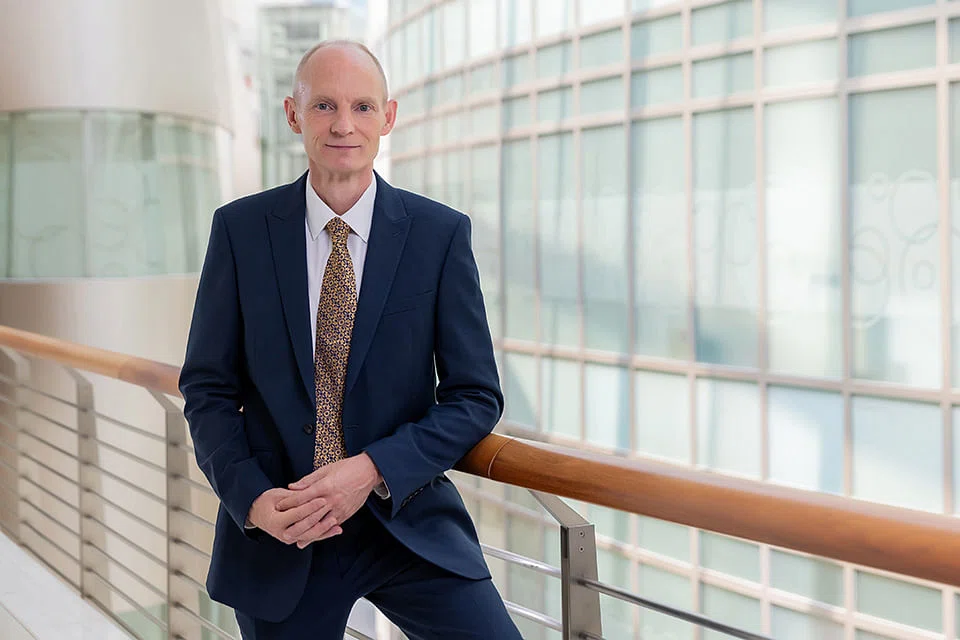
DeeperDive is a beta AI feature. Refer to full articles for the facts.
A CHILDHOOD spent in the United Kingdom's Lake District imbued Jon Penrice with a deep appreciation for nature and the environment, as well as a lifelong enjoyment of outdoor activities.
Yet it was a fairly recent experience during a 2019 work stint in Asia that made The Dow Chemical Company executive realise the urgency of tackling climate change and waste disposal issues, the 57-year-old tells The Business Times via a video call from Hong Kong where he is currently based.
"As I visit countries on a personal basis, I like to do outdoor cycling and I was cycling in the Mekong Delta in Vietnam," shares the Asia-Pacific president of the materials science multinational. There, he observed how the Mekong River, which sustains a fertile and richly biodiverse region, is also one of the most polluted rivers in the world.
"I just saw there the need to address sustainability, from both a climate change point of view and things like plastic waste," he says.
His leadership role at Dow gives him a unique opportunity to drive the change he wants to see, starting with industry action from the manufacturing and materials science sectors.
"(Protecting the climate) applies not just to Dow, but to any business in manufacturing," Mr Penrice says. He cites the amount of energy that manufacturers buy for their operations and how their products are used and disposed of as two major reasons that such companies need to take sustainability seriously.
Navigate Asia in
a new global order
Get the insights delivered to your inbox.
Taking the lead
Dow is leading by example; it is the top user of renewable energy in the chemical industry, and has reduced its greenhouse gas emissions by 15 per cent over the last 15 years. It announced a new target to reduce them by another 15 per cent by 2030 and to go net carbon-neutral by 2050.
Keeping in mind that Dow produces materials used in single-use packaging, the company has not neglected to address the negative impact of plastic packaging in its sustainability targets.
One of its goals is to remove one million tonnes of plastic waste from the environment by 2030, and another is a commitment to "close the loop" for its products by making all of its products reusable or recyclable by 2035.
As Mr Penrice notes: "The plastic that we throw away as a society is ending up in rivers and oceans. That is a highly valuable resource that shouldn't be in the wrong place, like the natural environment, and is (also) a very important source of value."
A 2016 report by the Ellen MacArthur Foundation showed that an estimated 95 per cent of the material value of used plastic packaging, worth US$80-120 billion, is lost annually.
Corporations have a responsibility to help fix this problem, because on an individual level, the value of plastics to consumers is too small to incentivise them to recycle or reduce plastics. There is also a lack of waste collection infrastructure to properly aggregate the waste and extract value from it, as well as few economical and convenient alternatives to single-use plastics.
"We need to find ways to bring down the costs of the recycling process," says Mr Penrice.
"Innovation will help with that, obviously. And there is a role for governments to play, that is to create incentives to invest and bring some of these costs down. In many cases, there are solutions but they are not economic versus what is done today."
Transitioning to a circular economy from the linear one that has functioned for decades will not be easy. Before consumers can effectively participate in the circular economy, there must be infrastructure to collect and process the waste.
This cannot be set up in the same way that the linear economy is structured; that is, with processes carried out at scale in centralised facilities. If waste is gathered up and shipped to centralised facilities for recycling, this misses the point of the sustainability effort.
Instead, the circular economy must zoom in on local communities, providing solutions within a smaller radius, around 50 kilometres, Mr Penrice suggests.
These facilities will have to be located in more rural areas, where power might be spotty or simpler technology is required.
"The engineers of the world are going to have to scale their thinking in a different way," Mr Penrice says. "Engineers typically look for large-scale, low-cost solutions. Now it's going to still need to be cost-effective, but scaled differently to be small and usable in (for example) an Indonesian community."
Mr Penrice believes these types of solutions are possible, but partnerships with governments and recycling companies are needed to implement them widely and tackle the problem at scale.
Dow has implemented more than 100 projects that make use of innovation and such partnerships to devise solutions.
One such project was a collaboration with Sport Singapore to turn rubberised soles from used sports shoes into sports surfaces and infrastructure like jogging tracks. The initiative aims to recycle 300,000 pairs of used sports shoes and divert them away from landfill over three years (see amendment note).
Another project is an agreement in China with recycling company Lovere and Liby, a leading health and personal care brand. Lovere manages plastic waste collection through smart sorting and recycling machines placed around the country. Consumers use the WeChat app to sort and recycle their waste, and receive credits for doing so on the same app.
After the waste is collected, Dow's technology is then used to turn the plastic into new packaging for Liby's products.
Dow continues to look for projects to support at the local level in various countries through the Alliance to End Plastic Waste, which it is a founding member of. It also helps to fund businesses in the resource recovery sector through its contributions to venture capital firm Circulate Capital, which focuses on circular economy businesses and projects.
Says Mr Penrice: "We are always looking to collaborate because we realise that to address sustainability, you have to partner with people who have complementary skills to you. As a materials science company, that's what we understand and where we can really enable solutions. But we're going beyond just being a materials science player, and looking to drive leadership in industry."
Sustainable building blocks
Mr Penrice says that many of the challenges faced in developing more environmentally-friendly products and solutions "scream materials science", making it a no-brainer for Dow to contribute through its material products.
In the manufacture of electric vehicles, for instance, new materials are needed to create long-lasting batteries, manage heat issues and ensure the car chassis is as light as possible to maximise battery life.
Similarly, the materials used to insulate buildings can help to reduce carbon emissions over their lifetime by improving the buildings' insulation efficiency.
"We have silicone and polyurethane technologies that have a very high efficiency for the amount of carbon that is put into the products ... If you think about insulating your house with those technologies, for every kilogramme of carbon you initially invest, you're going to save about 200kg of carbon over the lifetime of the building. These are efficient ways to end up saving carbon, because you get a big multiplier on materials science technology."
Dow has been setting itself sustainability targets for more than 25 years, and Mr Penrice says the company's philosophy and intent in this journey have not changed even as the challenges have morphed.
The pandemic has only brought sustainability issues into sharper focus, and Dow intends to leverage the new urgency to encourage conversations between businesses and governments about the investments needed to solve climate change and plastic waste issues.
"Countries now are putting together holistic strategies for how to address the challenges. We welcome those actions because it's only when businesses and governments work together that we are going to find some solutions," he says.
Building bridges
Mr Penrice's view of Dow's responsibility as an industry leader hews closely to his personal leadership philosophy. He states that leaders need to not only inspire their teams, but also help them understand why and how to get to their goals.
"When your team understands the why, then you have to help them with the how and what... That's always been a very important priority for me, to get the bigger picture of what we are trying to do, how do we effect change that makes a difference, how do you feel part of something bigger just than the task you are assigned to that day. Then you get engagement and motivation."
He adds that helping teams see the bigger picture and how to get there has been key in improving business in new assignments throughout his career.
"Most of us can buy into a vision, but if I ask you to jump into the dark, you're not going to do it because even if the vision is great, you're worried about what the jump looks like... Most people have a great desire to do good. But sometimes they just don't know how to go there."
In his 30-year career, Mr Penrice has bounced around the world with stints in Europe, the United States and Asia in the employ of three multinationals - Unilever, DuPont and Dow. He is currently in his third Asia posting, and says he is "in love with the region".
"It's the diversity... having a conversation with somebody in Japan, Australia, China or India. And not just the diversity of conversation, but the thought process, the food, the culture, the religions. It's just a very enriching environment to be able to see new things," he says.
His experiences in various countries taught him the importance of adapting to cultural differences and humility to respect what each culture brings to the table. As a result, he feels strongly about Dow's focus on inclusion and diversity in its ambition to be the most innovative, customer-centric, inclusive and sustainable materials science company in the world.
"If you want innovation, you really do need different brains to think about the same problem. If you have groupthink where one mentality dominates, you don't get the best outcome for any business issue."
Dow's employee resource groups are tasked with ensuring that employees feel heard, regardless of gender, nationality, thought process or sexual orientation, along with breaking down barriers to speaking up.
Mr Penrice notes that this can be difficult in Asia, where people may defer to hierarchy and wait for their bosses to answer.
"The boss rarely has the answer," Mr Penrice says. "The boss sometimes has to make decisions, but the answer comes from people speaking up. So inclusion is very important to us."
In his leisure, Mr Penrice enjoys activities that let him spend time in nature, like skiing, cycling and hiking. During the pandemic, he had a chance to discover hiking trails and beautiful parts of Hong Kong that he never knew existed.
He has three children whose ages range from the teens to early 20s, and his wife runs her own business in leadership and organisational change in the education sector.
His children challenge him to keep up with the younger generation when it comes to new technology.
"Anything they can do, I can do better on the digital front. Any app or technology they come with, I immediately try to absorb and even outperform them on," he says.
"I think it's so important to stay up to speed on digital technology. I don't really accept that it's an age-related issue. I think it's much more about being an open person, you can look at new technology in an open way."
JON PENRICE
President, Asia-Pacific The Dow Chemical Company
1964: Born in the United Kingdom
EDUCATION
Degree in Natural Sciences, University of Cambridge, UK
CAREER
1986-1989: Marketing manager, Unilever
1989-2004: Global vice-president, DuPont
2004-2007: Global vice-president, Koch Industries Invista
2007-2015: Global general manager, The Dow Chemical Company (Electrical & Telecommunications and Formulated Systems businesses)
2015-2019: Vice-president, The Dow Chemical Company (Polyurethanes business)
Since 2019: President, Asia-Pacific, The Dow Chemical Company
Amendment note: A previous version of this article stated that Sport Singapore and Dow have collected 300,000 pairs of used sports shoes. This is in fact the initiative's target for shoes to be diverted away from landfills over three years.
Decoding Asia newsletter: your guide to navigating Asia in a new global order. Sign up here to get Decoding Asia newsletter. Delivered to your inbox. Free.
Copyright SPH Media. All rights reserved.