

Finding that sweet spot
By integrating research and enterprise, the Singapore-MIT Alliance for Research and Technology (SMART) can innovate to produce the most value for society, says its chief executive, Eugene Fitzgerald.
Janice Heng
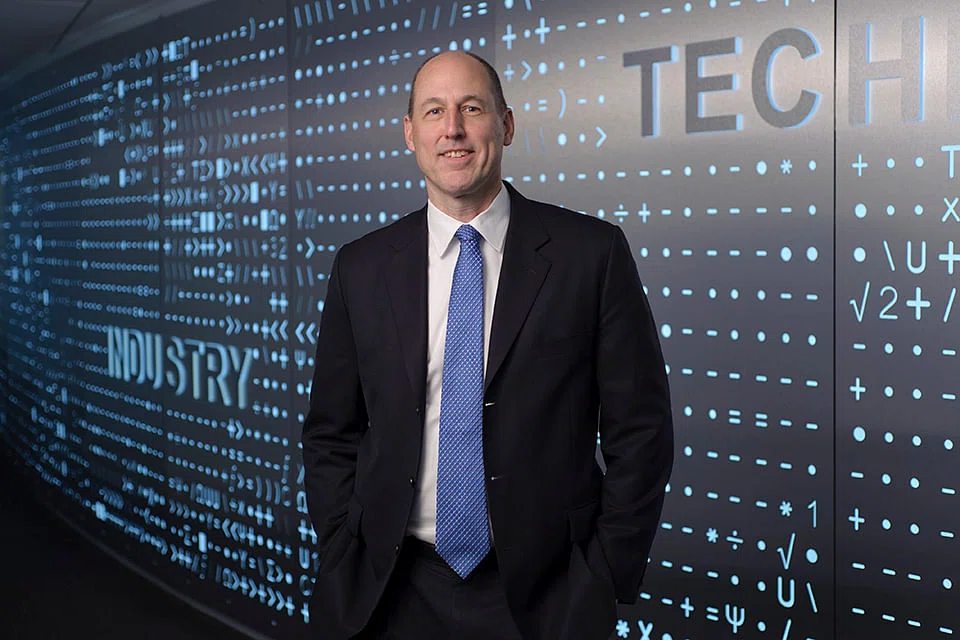
RESEARCH and commercialisation are often seen as separate processes, with scientists handing their findings off to business people. Yet integrating the two is what Eugene Fitzgerald seeks to do, not least in his role as chief executive officer and director of the Singapore-MIT Alliance for Research and Technology (SMART).
The idea is to introduce commercial concerns early in the research process, while still focusing on long-term research rather than on immediate profit, he says.
"It's easier to go very, very short-term where business metrics are very clear, or to go very, very long-term where academic metrics are clear." But the sweet spot, where you can innovate to produce the most value for society, is in the middle, he adds.
That is what SMART seeks to achieve, as a place for integrated research, innovation, and enterprise (RIE), he adds.
SMART is the Massachusetts Institute of Technology (MIT)'s research enterprise in Singapore, funded by the National Research Foundation Singapore (NRF) and part of the NRF's Campus for Research Excellence and Technological Enterprise.
Humble beginnings
Prof Fitzgerald was born in the small town of East Longmeadow, Massachusetts, in the same state as MIT but "a long way from Boston".
"I was one of those classic kids with the electronics set, the chemistry set in the basement," he says. He had "always wanted to invent something important" - not conducting research for its own sake, but for the sake of making an impact.
Given his modest background, he didn't think he would get into MIT, but he did. There, he studied materials science and engineering, a course that allowed him to "do it all", with its combination of physics, chemistry, and engineering.
In his third year, a professor asked him if he had thought about graduate school. He had never planned to go into academia, but it occurred to him that in order to do research that made an impact, he had to go deeper.
He went on to do a PhD in Materials Science and Engineering at Cornell University, then entered industry as he had long dreamed, as a research scientist in AT&T Bell Labs in 1989.
That was "one of the last American iconic large industrial laboratories", he recalls: one that allowed long-term research, before the shift of corporate labs towards shorter-term work.
There, he and his colleagues made a discovery that would change computing - and the course of his life.
From a young age, Prof Fitzgerald had wanted to make an impact. But as he puts it: "I didn't really know what that meant until I had something in my hands that was important."
Getting down to business
The team was developing high-mobility-strained silicon, a form of silicon that allows for the creation of much faster transistor chips.
Prof Fitzgerald saw the value of commercialising their work, but realised that no one around him knew how to go about doing that.
In those days, large labs of course hoped their research "would lead to something, but the mechanisms to bring it all the way (to market) were not well developed", he says.
"What I learned was that I had a drive to continue to make that happen." This was in contrast to some colleagues who were only interested in continuing to study the scientific aspect, he adds. "I was like, 'No, but we can build integrated circuits!' To me, this was like - it's right in front of us."
Prof Fitzgerald returned to MIT to continue his research. By the time that was finished, a gap had opened up between research and the business world, he says. So in 1998, he co-founded AmberWave System Corporation with his former MIT graduate student Mayank Bulsara, to bring strained silicon to the world. Intel later licensed the firm's technology, which is used in most silicon integrated circuits in smartphones and computers today.
The experience was a turning point for the professor himself. "That sparked my interest in, well, how does this stuff result in business?"
Even today, many organisations hold a linear theory of innovation, he says: Start with research ideas, and eventually create a new business. But the only reason that worked in the past was because firms had monopoly power and could "take any tech and force it into the end market".
Real innovation - as in the title of his co-authored book, Inside Real Innovation - is instead an iterative process, cycling through concerns about the technology, the market, and implementation.
Prof Fitzgerald has since founded or co-founded other enterprises in areas such as semiconductors and water purification, continuing to put his ideas about innovation and entrepreneurship into practice.
In 2008, he co-founded not-for-profit entity Innovation Interface, which works with corporations to improve their innovation process.The journey to SMART began in 1998, with the Singapore-MIT Alliance.
Then-deputy prime minister Tony Tan had visited MIT to speak about the vision for the collaboration. Given that Prof Fitzgerald's original field of interest was semiconductors, and Asia was a major part of the global supply chain, he joined the Alliance as "a way to start to understand Asia".
In the early years, the Alliance required researchers to spend at least six months - out of five years of funded research - resident in Singapore. So in 2004, Prof Fitzgerald and his family were based here, with his twin son and daughter attending the Singapore American School.
After 10 years of the original alliance, SMART was created in 2007. Before this, collaborative research had still taken place in each side's respective facilities; this time, SMART would have its own research centre, providing a physical space for collaboration.
The SMART approach is precisely about integrating research and entrepreneurship, says Prof Fitzgerald.
"One of the most important things today is, how do you roughly work in the right direction to begin with."
The linear model of innovation posits that there are many ideas that just need to be sifted through. But it makes more sense to begin with the future in mind: "What is the important problem to work on, that in ten years could have great value?"
Nor does it suffice to merely muse about this, he adds: "You have to create a process that gives feedback loops and steers the research."
One common mistake is to focus on a specific short-term application, and think about bringing that into the future, he says.
"We're already making a mistake because that market application isn't going to be the same ten years in the future."
"If you have too much focus, it actually hurts you in the long-term process."
In the early days of SMART, the aim was to help researchers understand how to find a market, even as their research is proceeding, he says.
"Now we want to bring it all the way back, to the very beginning of the research programme."
It is not merely about how research can lead to innovative solutions, but how the innovation process can help to guide research itself, he adds. Through SMART, researchers can also be connected to companies that might be interested in their research, even at an early stage.
SMART comprises an innovation centre and five large-scale research programmes, all dealing with the big issues of the future.
Research projects are funded for an initial five years, with a review to see if they can proceed to the second five-year phase.
Such a timeline "agrees with our innovation work that shows that fundamental innovation, the really big wins, take 10, 15 years to get to that point where you can think about commercialisation," says Prof Fitzgerald.
Future thinking
"If you look at our history, we have this amazing ability to be ahead of the curve," he adds.
The Antimicrobial Resistance group, for instance, became immediately relevant in the current pandemic. It is now developing rapid, non-invasive, paper-based tests for Covid-19, and is also involved in developing treatments such as the potential Covid-19 antibody drug TY027, developed by Singapore-based firm Tychan which was co-founded by SMART researchers.
The newest programme, Critical Analytics for Manufacturing Personalized-Medicine, takes an engineering or manufacturing approach to cell therapy.
Launched last year, it focuses on how to ramp up production of the required living cells.
In line with Singapore's goal to produce more of its own food, the Disruptive & Sustainable Technologies for Agricultural Precision group studies plants for better ways of farming.
Then there is Future Urban Mobility, which was so ahead of the curve on autonomous vehicles that that topic "almost got ejected from the programme", quips Prof Fitzgerald. Autonomous vehicles are now a major part of the research group's work.
Finally, there is his own area of expertise: Low Energy Electronic Systems. The research team aimed to find a completely new direction for silicon, and thus a "new path to value" in the mature silicon industry.
By incorporating other materials into silicon, they are able to build new forms of integrated circuits - not traditional microprocessors, but other sorts of chips "that no one else can make" he says. These integrated Silicon III-V chips allow for more efficient illumination (such as LEDs) and communication, making them ideal for 5G devices.
A company, New Silicon Corporation, has been incorporated, and the team is now getting financing, expecting to close financing in 2021.
Apart from these five research groups, SMART's Innovation Center promotes understanding of the innovation process itself. Grants help SMART researchers and local institutions take research to the market, and training programmes nurture both researchers and entrepreneurs.
The latter include an Advanced Certificate in Technopreneurship, in partnership with Singapore Management University, which aims to groom possible leaders for deep technology startups that arise from research projects.
And while some researchers remain steadfastly committed to academia, many acquire a taste for industry work once introduced to it, says Prof Fitzgerald.
"Everybody comes in thinking they want to be a prof," he acknowledges. But of some 40 to 50 PhD students he has supervised at MIT, only three went on to become professors at universities, with the rest joining industry instead.
This is at odds with academic ranking systems that value the former route, he notes, but adds: "I've been personally focused more on creating innovation value in the end market."
Happily, his current role allows him to do this both in the context of SMART's overall mission, and in relation to New Silicon specifically. A couple of years ago, the research programme was finally moving towards commercialisation, but it had also grown increasingly difficult to split his time between MIT and Singapore.
Being asked to take over as SMART CEO and director came at just the right time, and spoke to both of his interests: allowing him to further SMART's vision of integrated RIE, while also seeing the silicon project through in person.
At the start of 2019, he became officially resident in Singapore, and took up the posts in SMART. While he is back in the US for now, due to the pandemic, he looks forward to returning once the situation allows.
Just as with high mobility-strained silicon, at the start of his journey in integrating research and enterprise, new silicon is another innovation that he will follow through to the market.
EUGENE A FITZGERALD
CEO and director Singapore-MIT Alliance for Research and Technology (SMART)
1963: Born in East Longmeadow, Massachusetts, US
EDUCATION
1985: BSc in Materials Science and Engineering, Massachusetts Institute of Technology
1987: MSc in Materials Science and Engineering, Cornell University
1988: PhD in Materials Science and Engineering, Cornell University
CAREER HIGHLIGHTS
1988-1994: Research scientist, AT&T Bell Laboratories
1994-2000: Associate professor, Department of Materials Science and Engineering, MIT
1998-2004: Co-founder and chairman, AmberWave System Corporation
Since 2000: Professor, Department of Materials Science and Engineering, MIT
Since 2005: Founder and LLC member-manager, Paradigm Research LLC
Since 2005: Founder and LLC member-manager, 4Power LLC
2006-2014: Visiting professor of management, Johnson School of Management, Cornell University
2007-2017: Founding team and principal, The Water Initiative
2008-2014: Co-founder and executive director, Innovation Interface
Since 2014: Visiting professor, Nanyang Technological University
Since 2012: Lead principal investigator, Low Energy Electronic Systems, SMART
Since 2016: Co-founder and director, New Silicon Corporation
Since 2019: CEO, SMART






