Fintech trailblazer
When he was Hong Kong's Secretary for Financial Services and the Treasury, KC Chan handled ground-breaking cross-border measures such as offshore yuan trading. Now, as chairman of WeLab's upcoming virtual bank, he's leading the HK fintech firm's venture into online banking.
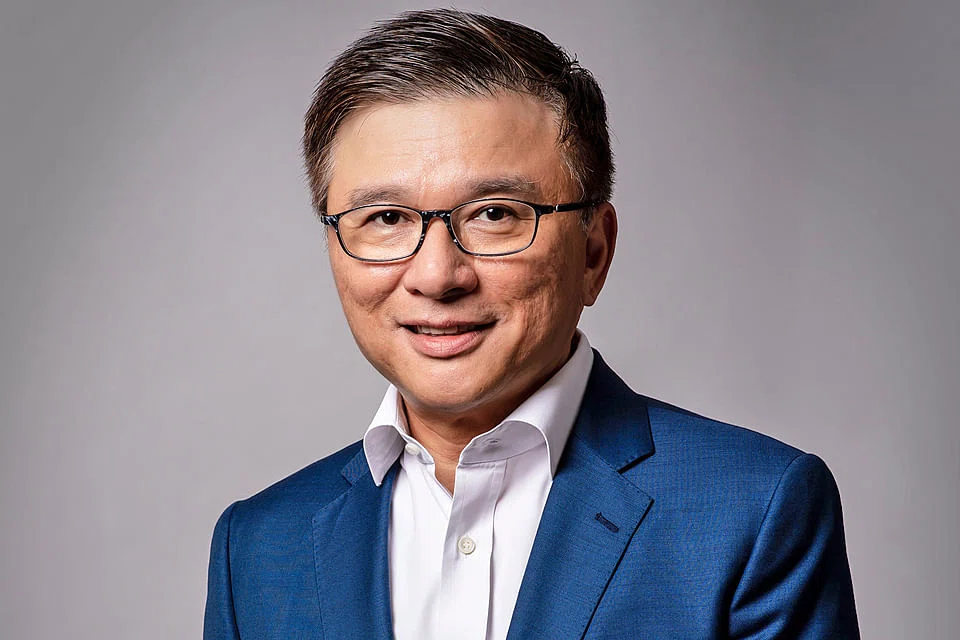
SEATED in a conference room of the company he now chairs, Chan Ka-keung remarks breezily about his new role at Hong Kong's largest independent online lender, WeLab: "The job is the easiest (I've ever had)."
It sounds like an understatement from the former HK Secretary for Financial Services and T-reasury, followed by a touch of irony: "It has a very clear focus. The bottom line is clear."
Known as "KC" among the city's elite, Prof Chan is a C-suite veteran of Hong Kong's academic and government establishments. Since returning to his native Hong Kong from the United States 26 years ago, he has gone from being a professor and university administrator to a public policy adviser on such issues as foreign exchange, competition policy, and consumer protection, eventually taking the top government post overseeing the day-to-day policy-making of the city's financial services industry.
Each time he changed jobs he started as an outsider, only to become a consummate insider, with panache.
Home advantage
In joining WeLab Holdings as senior adviser a year ago, Prof Chan ventured into new territory once again, this time moving into financial technology (fintech), an industry he championed relentlessly while in government.

Founded in January 2013, WeLab was the city's first online micro-lender, and among the first in China, operating from a head office in Shenzhen just across the border from Hong Kong. Early this year, the fintech company's subsidiary, WeLab Digital Ltd, received one of eight business licences granted by the Hong Kong Monetary Authority (HKMA) to launch a local virtual bank. Operations could begin by the year-end.
Prof Chan - who was appointed chairman of WeLab Digital Ltd in April - is tight-lipped about the company's plans for virtual banking in the face of competition from its cash-rich rivals, all backed by financial and mainland technology giants, including Standard Chartered, Bank of China, Alibaba and Tencent. WeLab is the only homegrown fintech company in the race, so he is banking on home advantage.
He will also be leveraging his familiarity with the Hong Kong market, having guided its policy directions for a full decade as finance minister under two consecutive governments.
The 62-year-old seems to have an internal compass guiding his career path. Upon leaving government in 2017, he sought to join the fintech industry. Through a mutual friend, he came to know WeLab founder and CEO, Simon Loong, who jumped at the opportunity to retain him as a senior adviser and prospective chairman in preparation for the bid for a virtual banking licence.
Mr Loong co-founded WeLab with wife Frances on US$1.9 million in initial capital pooled from family and friends, and has grown it into a unicorn in five years. Among his financial backers is billionaire Li Ka-Shing's Tom Group.
Baby boomer
Born in one of Hong Kong's first public housing estates, Choi Hung (which means "rainbow" in Cantonese), Prof Chan belongs to the baby boom generation that has ridden the waves of "miraculous" growth in East Asia's "tiger economies". Hong Kong's public housing scheme ushered in the first affordable mass residential housing in the former British colony. Before that, "people used to live in sub-divided flats"; afterwards "people finally owned their own private homes; it is one of the bedrocks of the Hong Kong economy", he reflects.
While at school, Prof Chan had aspired to become a professor - the public intellectual type - influenced by his voracious reading of history books and biographies of diverse historical greats, from China's Mao Zedong and Sun Yat-sen, to Martin Luther King, Jr.
He also longed to see the world. Upon receiving a scholarship in 1979, he went to study economics at Wesleyan University in the US, followed by an MBA and doctorate in finance at the University of Chicago.
Prof Chan's interest was in the "science aspect of economics" - in finding rational explanations for economic behaviour.
"It was the time when finance was becoming exciting. Wall Street had started to use capital asset pricing models - a new investment paradigm. Before that, there was no modeling. For example, no one understood options and derivatives till the 1970s," he notes. "For me, that was the 'Wow!' moment. It was an intellectual revelation - but much of it does not work."
Prof Chan taught at Ohio State University for nine years before returning to Hong Kong to teach finance at the Business School of Hong Kong University of Science and Technology.
Nine years later he became the dean of the business school, where he spent a total of 14 years.
"Back then, (economic) theories were used as a tool for portfolio managers to manage their investments. They were a tool. Theories are not the truth. That's the problem. A lot of Wall Street people in the 1990s and 2000s, before the financial crisis, applied theories on risk management and their risk management models were wrong," he says.
One such toxic "tool" was deployed in valuing so-called "sub-prime credit default swaps" backed by mispriced loans that American homebuyers took but could not afford to repay.
"When I was the dean of the business school, I told my colleagues - don't teach financial engineering. They were just theories, not truth," Prof Chan shares.
By then he had become active in public service in Hong Kong, including chairing the powerful Consumer Council. These roles allowed him to gain proficiency in broad public issues as well as in government bureaucracy.
All this stood him in good stead when former HK Chief Executive Donald Tsang offered him in 2007 the top government post overseeing the city's financial industry, directly under the Financial Secretary who, along with the Chief Secretary, leads the city's administration.
It was unusual to select a Cabinet minister from academia, though there was a precedent in Arthur Li, the Secretary for Education and Manpower.
It took Prof Chan only 10 minutes to accept the job.
His expertise in finance and mastery of interpersonal communications had won plaudits, but initial doubts were raised over his ability to oversee the city's financial regulators, the HKMA (the de facto central bank) and the Securities and Futures Commission.
Prof Chan's leadership was questioned when a mini-bonds scandal arose during the 2008-2009 financial crisis. Legislators called for his head while grilling him over the government's failure to deal with the mounting losses of small investors who were duped into buying from Wall Street banks toxic structured investment products masquerading as corporate bonds.
"There are no policy (considerations) when you are a professor or a dean. As a government minister, you are responsible for setting policy and selling it - all very complex matters. You need to convince the public," he says.
Despite these challenges, Prof Chan's performance was good enough for Mr Tsang's successor, CY Leung, who kept him in the same post for another term.
Cross-border interlocutor
Much of his 10-year run in government is remembered for his service as a voluble interlocutor with mainland authorities and a capable administrator, handling ground-breaking cross-border measures that had taken years to formulate.
Top among them were offshore trading and settlement in the Chinese yuan, and later the linking of the Hong Kong Stock Exchange (HKEX) with its mainland counterparts. Together, these measures extended China's Open Door Policy to the financial world.
Previously, the Chinese currency was not traded offshore and Chinese domestic investors were barred from investing in overseas stocks.
As Prof Chan sees it, Hong Kong's place as the leading offshore yuan clearing centre was far from ordained. When Hong Kong began using yuan for cross-border trades in July 2009, Shanghai had been vocal in its ambition to reclaim its glorious past as an international financial gateway.
"Beijing is very subtle. It did not say Hong Kong would be the yuan-clearing centre," he points out. "I still think Shanghai clearly can be a strong competitor of Hong Kong."
Prof Chan was tasked with writing and promulgating the policy and regulations for offshore yuan by pooling resources from different branches of the Hong Kong government.
One of his accomplishments was to persuade authorities to allow the repatriation of offshore yuan to the domestic market, to meet investor demand and maintain a constant currency flow. Once that was done, he went out to market it to international investors.
More surprising for Hong Kong, however, was the scheme to connect the HKEX with mainland exchanges in Shanghai and Shenzhen. This was a long time coming; it took more than five years after the securities regulators first hunkered down at the drawing board.
"The question was how to make it happen without opening up China's capital market. The mainland side had been exploring and discussing many ways," Prof Chan shares.
"The final idea came from the Hong Kong Stock Exchange and the Shanghai Stock Exchange. The two exchanges came up with a brilliant solution."
And that was to create the financial equivalent of the English Channel between the closed market on the mainland and its free sibling in Hong Kong, by containing the two-way investment flows in respective silos, segregated like two separate man-made canals.
Prof Chan was credited with coming up with the idea of imposing a floodgate, in the form of monetary quotas for each of these two canals. Money would flow between the two stock markets, but the amounts would be regulated by a "valve", thus ensuring no leakage.
The last project on Prof Chan's watch was to support the mainland-led integration of Hong Kong and Macau with southern Guangdong, into a region known as the Greater Bay Area.
"I was involved in the early stage coming up with ideas that support fintech and cross-border financial facilitation," he says.
Prof Chan envisions giving investors in Guangdong, retail and corporate alike, direct access to financial assets in Hong Kong, such as "financial management products" and banking. "It would be an interesting market," he asserts. "The regulatory regimes would be different."
Already, some 30 per cent of insurance premiums in Hong Kong are sold to individual mainlanders who travel across the border.
Fintech - Hong Kong and Singapore
Prof Chan has also been a key figure in leading Hong Kong into the emerging fintech zone. In 2014, he was instrumental in the setting up of the city's fintech steering committee.
"Financial technology must mean cutting costs and benefitting consumers. There were lots of discussions about fintech and many regulatory issues," he says, including whether to allow money raised through crowd-funding on an online platform to finance a company's equity, which is still not allowed.
Singapore had an earlier start in fintech, with the formation in July 2015 of the Fintech and Innovation Group in the Monetary Authority of Singapore and the roll-out of the FinTech Office in May 2016. Hong Kong followed closely behind with a Fintech Facilitation Office in March 2016 under the HKMA.
"Singapore and Hong Kong are friendly competitors. Singapore has done a very good job in fintech, very proactive in promoting the online payment system and in encouraging startups. The two cities are very similar in development," Prof Chan acknowledges, adding that "Singapore does seem to have more tax incentives".
Should consumers worry about fintech? As expected, Prof Chan shakes his head.
"We've seen technology change the payment system and banking. China is one of the places where this is clearly happening. But China's model is not easy to duplicate in other markets. Still, it shows the potential," he says. "The answer is not to resist technology changes but change (the use of) technology in our market."
Of course, Prof Chan is aware that there could be concern, in both Hong Kong and Singapore, about disrupting the incumbent players in the financial industry.
His take?
"You should not worry about healthy disruption."
CEAJER CHAN KA-KEUNG (KC CHAN)
Chairman WeLab Digital Ltd
Born in 1957 in Hong Kong
Married with two sons
EDUCATION
1979 Bachelor's degree in economics, Wesleyan University, US
1985 MBA and PhD in finance, University of Chicago, US
CAREER HIGHLIGHTS
1984-1993 Professor in finance, Ohio State University
1993 Joined The Hong Kong University of Science and Technology (HKUST) Business School, eventually becoming professor
2002-2007 Dean of Business and Management, HKUST
2007-2017 Secretary for Financial Services and the Treasury, Government of the Hong Kong Special Administrative Region
2017- 2018 Adjunct Professor and Senior Adviser to the Dean of Business School, HKUST
Since July 2018 Senior Adviser, WeLab Holdings
Since April 2019 Chairman, WeLab Digital Ltd
CURRENT ADVISORY ROLES
Member, Competition Commission
Non-Executive Director, Hong Kong Mortgage Corporation Ltd
Share with us your feedback on BT's products and services