

The Fix-It banker
Under CEO John Cryan, Deutsche Bank is being re-engineered into a technology firm.
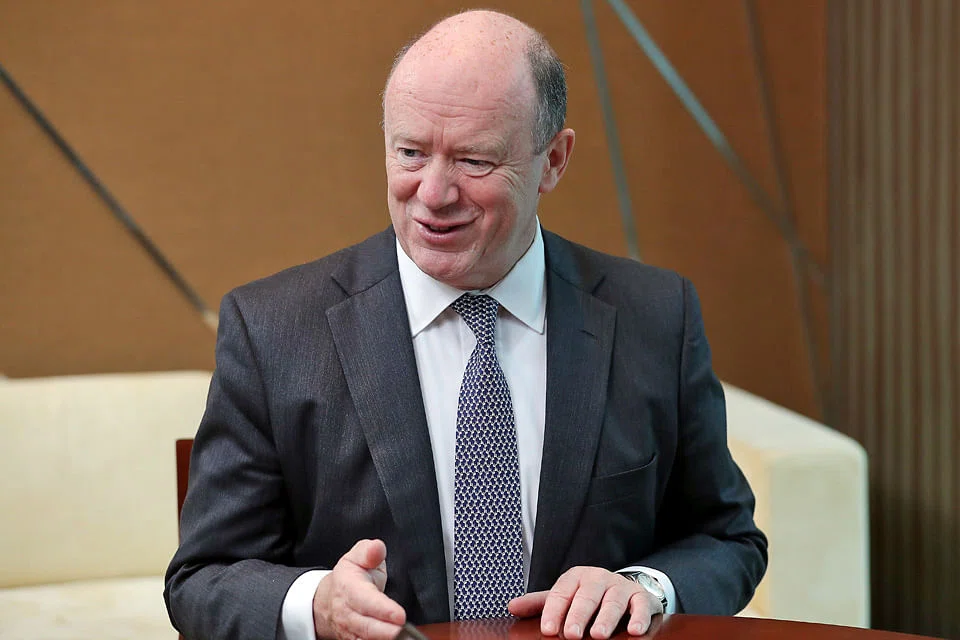
JOHN Cryan wants just to get straight to the point.
From calling out bankers who do work like robots, to accountants who operate like an abacus, the Deutsche Bank chief executive officer has spoken sharply about the impact of automation on jobs in the banking sector.
But one senses that Mr Cryan's comments on the realities of the market come from a place of urgency only because he wants to build a bank that will stand upright in the years to come, but is inundated by the short-term pressures coming from many directions.
"There is an accounting view, and accountants have ruled the world for about 20 years. Business decisions have very often been driven by short-term financial impact," says the Englishman, who started his career as an accountant. "That's something we're trying to move away from, and I always say one of the greatest challenges that I personally have, is doing what I think is important for the bank, versus what other people tell you is urgent. There is that constant tension." His hands grip the ends of the table for most of the one-hour conversation with The Business Times.
"The other world wants you to get stuff done. They want you to fix things immediately. And you end up doing it in a patchwork way, and in a non-strategic way. It increases the complexity rather than reducing it. What we'd like is to buy a bit more time - it's a luxury, I know - and just re-engineer our bank, so that it is fit for the 21st century."
German engineering
For Mr Cryan, the next wave in the bank's progress must come from technology, as the bank tries to reinvent itself into a technology firm. "We firmly believe that technology can confer a competitive advantage. And we've seen that in this region, where the Chinese companies have used extremely effective, very smart technology, to leapfrog a generation of traditional businesses, and gain tremendous market share," he tells BT, during a recent visit to Singapore.
"We feel that that is something that comes natural to us. We think that the German engineering heritage helps. We would like to not only style ourselves as a technology company, but to become an applied technology company. The application is to banking and financial services, asset management, and our trading businesses."
In his two years at Germany's largest bank, Mr Cryan has gone under the hood to fix some uncomfortable problems, with the bank still coming out of its restructuring phase.
"The bank needed to do a lot of things that other people had already started doing, or finished doing. We're just a little bit late on the modernisation. One thing I always tell staff is we haven't really had to reinvent anything. We've been pursuing a relatively well-trodden path. We want to do it to a very high standard (and) sometimes when you're doing it later than others, you can learn from others' mistakes," he notes.
The restructuring has meant eliminating thousands of jobs, and paying US$7.2 billion in settlement over misconduct in the sale of residential mortgage-backed securities during the financial crisis. The bank also raised eight billion euros (S$12.9 billion) through a rights issue that brought its core capital ratio to about 14 per cent.
"The bank has had a lot of personnel change. We wanted to reboot the bank, and reinvigorate it. That's not to say we haven't lost people that we regret - that's absolute, we have," notes Mr Cryan. "In general, clients reduced their level of engagement with us. A lot of it has come back. I'm sure there will be permanent losses somewhere. But the truth is, banks win and lose customers all the time. And if we worry about winning back clients that we once had, we will lose our focus. We should just grow our business and find good-quality clients. Whether there were clients before or not, it doesn't really matter. The world is a very big place and we've got a lot of scope for developing our business."
Mr Cryan shakes off any concerns over a lack of confidence in the bank today. "There were headlines about 'will the bank survive?'. That was a bit silly. But the genuine question is: in what shape will the bank emerge from this period of reconstruction? We did exit markets, we came out of products, and as a combination, we've exited lots of client relationships. But we think the bank is better for it."
He adds: "We're clearer internally on where it is we allocate our resources. The intention of the bank is to grow and (make) sustainably controlled growth. We don't try to make big profits in one year. We just try to make steady, slightly boring profit progression. It's the traditional banking approach, as opposed to a more short-term trading-oriented view on life."
And while the bank has gone through a massive shakedown, Mr Cryan does not buy that as an excuse for poor performance.
"I've done a huge amount of client interaction this year, which has been one of the best parts of my job. I've seen clients engage with us without hesitation, especially since we resolved some of the big litigation cases, and we raised money," he says.
"I wouldn't overstate the situation last year either. We made 30 billion euros of revenues last year, so it wasn't as though there was nothing going on. And to some extent, some people use that as an excuse too, that 'oh, we went through a terrible time'. Well, yes, but lots of institutions have been through terrible times. And these institutions are quite resilient. Right now, we are going into client meetings and talking about the clients' business, not about the bank."
The problem for many banks remains the abundance of liquidity in the market. "That's a phenomenon in the banking sector now - people are not running as much risk as the amount of appetite they have to run. Everyone has tons and tons of cash," says Mr Cryan. "Liquidity is a problem: we've got too much of it."
To ramp up controls and boost efficiency, the bank wants to reboot itself with better technology, resisting the stop-gap measures of employing people to do what essentially can be done by machines.
"The one (aim) that's talked about the most by shareholders is efficiency. And probably in relation to our bank, that's because there's a long way to go in efficiency. We use many, many systems to do the same thing. Once we standardise, we can then computerise, and be much more efficient. That means we won't need as many people in the future, but we hope to accommodate that by natural turnover. We use a lot of offshore centres to do a lot of manual processing, and in this day and age, that really should be automated," says Mr Cryan.
"We've thrown people at a problem," he notes. "When you standardise and automate, you can enhance control. You just eliminate as much as you can the potential for human error, and then, for human interaction. Machines, once you programme them properly, tend to be quite well-behaved. And in some areas in crime prevention and detection, for example in the anti-money laundering and anti-financial crime areas, it's so expensive to do that manually."
Fresh perspective
The bank will have to manage more job cuts, most of which will stem from the integration of Deutsche Postbank with Deutsche Bank. "We'll try to find a new home for them ... but we have to do it (the job cuts), otherwise we won't be efficient enough in Germany," he points out.
Mr Cryan abandoned an earlier plan to sell Postbank, opting instead to integrate it fully into Deutsche Bank, and floating a minority stake in the latter's asset management business. He puts the decision down to a fresh perspective.
"If you look at Postbank through a rear-view mirror, it's quite hard to justify adding to German retail banking, which has historically not been very attractive. So shareholders and other people go: 'Well, it's an interesting move. You're proposing to sell a stake - albeit a minority one - in your asset management business that is capital-light, with a low cost-to-income ratio, that is growing, and yet you're keeping this old-fashioned, stodgy German retail bank. How does that help?'
"It doesn't if you look backwards. If you look forward, and you see what's coming out of London, right now asset management is under review. And we need to be nimble in asset management because it's bifurcating between these passive structures and active funds. Whereas in banking, we see actually an interesting future with a lot of technology, with people in Germany now being willing to engage digitally. Until very recently, they've been more reluctant."
Asia focus
In the growing markets, the bank's focus is on Asia, with links to the Middle East, according to Mr Cryan. "We try to gain market share here too, but the markets here grow much faster, so proportionately they contribute more to the overall growth of the group."
The strategy is not dissimilar to global banks with ambitions to grow in this part of the world: banking homegrown - in Deutsche Bank's case, German - companies in Asia, and expanding the reach to Western companies in the region and Asian multinationals going abroad. It is also boosting its wealth management business in Asia.
"The days of trying to be all things to all people are gone. We're a bit less global. Everybody says they're global, but I don't think anybody is in Antarctica," says Mr Cryan. Under his watch, Deutsche Bank withdrew from Latin America.
And while Singapore is a competitive market, he remains drawn to the city-state for its progressive approach to regulation amid continuing uncertainty over global rules and as banks rev up their use of technology.
"Regulators like linear programming. It's auditable and mappable. With artificial intelligence, you couldn't do that. Regulators are going to have to catch up. Regulators by design always look backwards. It's not their fault. It's actually the policy-setters' fault. They always prevent the previous crisis from occurring," explains Mr Cryan, who is preparing the bank for any eleventh-hour deal over Brexit. "I would say that the MAS (Monetary Authority of Singapore) is ahead of many of the other regulators."
The bank has four innovation labs - or what it calls "digital factories" - to suss out innovative applications in Berlin, London, New York, and California, all with the typical dress code of Silicon Valley. "In Palo Alto, I turn up in a suit and tie, and then they tell me to take my tie off," Mr Cryan quips.
"We're looking to tap talent outside of the general banking sphere. This sounds a bit rude, but we don't want people who join multinational corporations. We want dynamic disrupters. It's about coming up with ideas that are pioneering. We don't mind if one in every 10 is successful, and the rest come to nothing," he says. "That's not to say, importantly, that we don't encourage people in the bank to think of disruptive ideas. Some of our best ideas come from within the bank, which isn't surprising because our people know how a bank works."
The bank plans to set up another digital factory in Singapore, a place where Mr Cryan is well-acquainted, having previously been the president of Europe at Temasek Holdings.
He also still has a soft spot for kaya, a sweet coconut jam and a traditional local breakfast favourite. "Of course I like kaya," he shares. "I complain if I don't get enough Peranakan food. I'm not like one of these Westerners who come once in a while, and eat steak and chips."
JOHN CRYAN
CEO, Deutsche Bank
1960: Born in Yorkshire, England
1982: Graduated with a MA from the University of Cambridge
1982: Joined Arthur Andersen & Co as a trainee chartered accountant
1987: Joined SG Warburg & Co
1992: Joined the financial institutions group of UBS Group
2008: Appointed group chief financial officer, UBS Group
2011: Joined Temasek Holdings as president of Europe
2015: Appointed CEO of Deutsche Bank
TRENDING NOW
Can a first-time homebuyer couple earning S$18,000 a month afford a new EC unit?

He built the Vingroup empire. Now South-east Asia’s richest man is handing some key roles to his sons

Asia needs new energy security architecture

Chagee, Mixue and Luckin won the market. Sustaining their edge is the harder part

