

Football frenzy: The Beautiful Game descends on North America
The first Fifa World Cup to take place in three host nations could add US$40.9 billion to global GDP

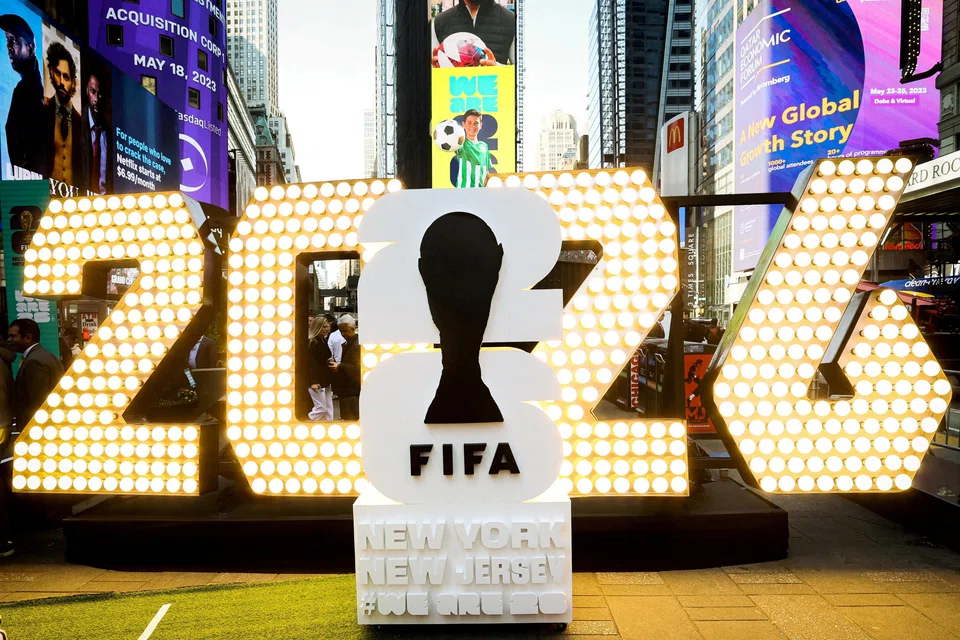
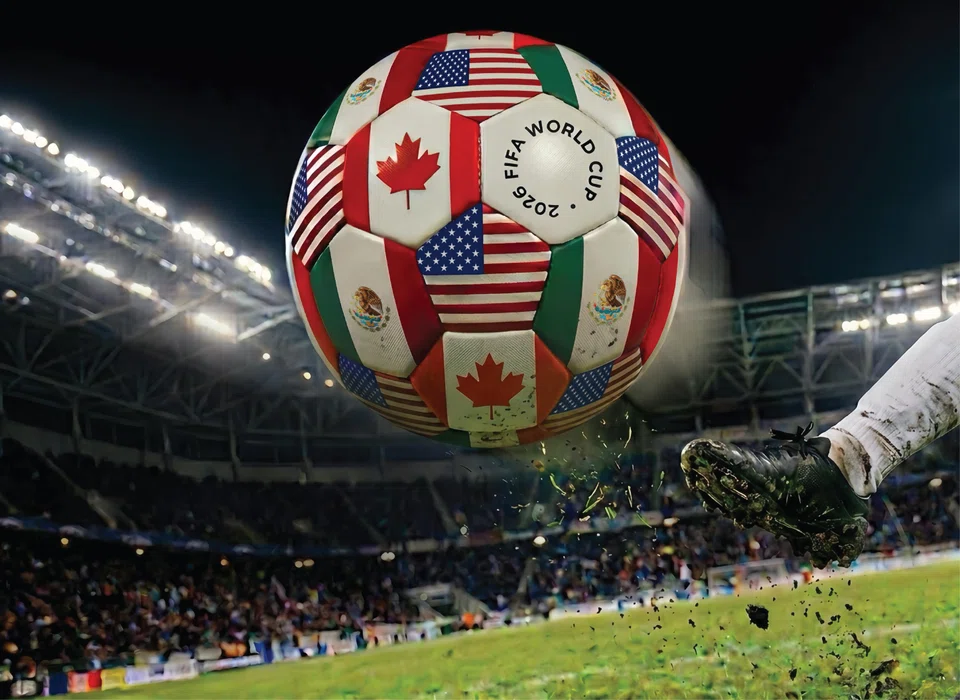
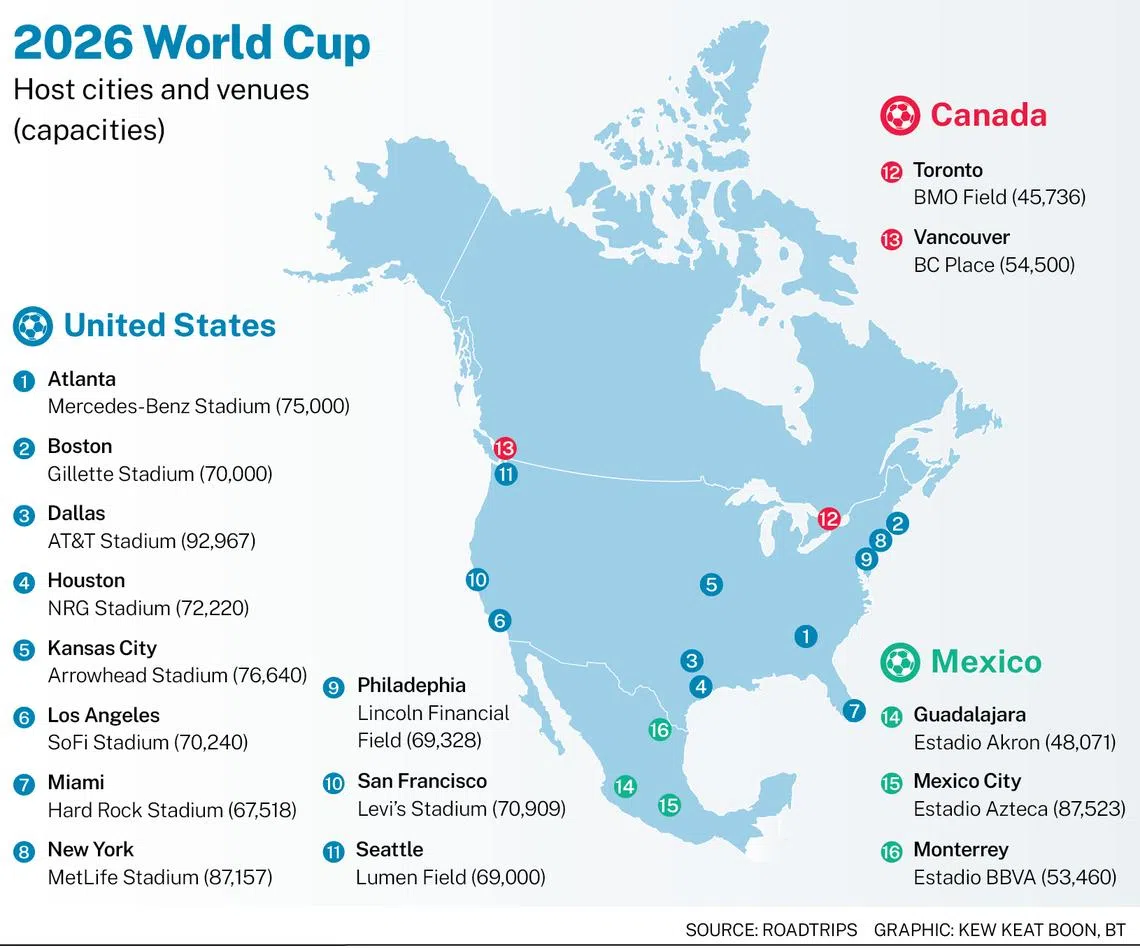
[SINGAPORE] Eight years ago in Moscow, sporting history was made when Gianni Infantino, the president of football’s world governing body Fifa, announced that a “United Bid” by three North American countries had secured the rights to host the 2026 World Cup.
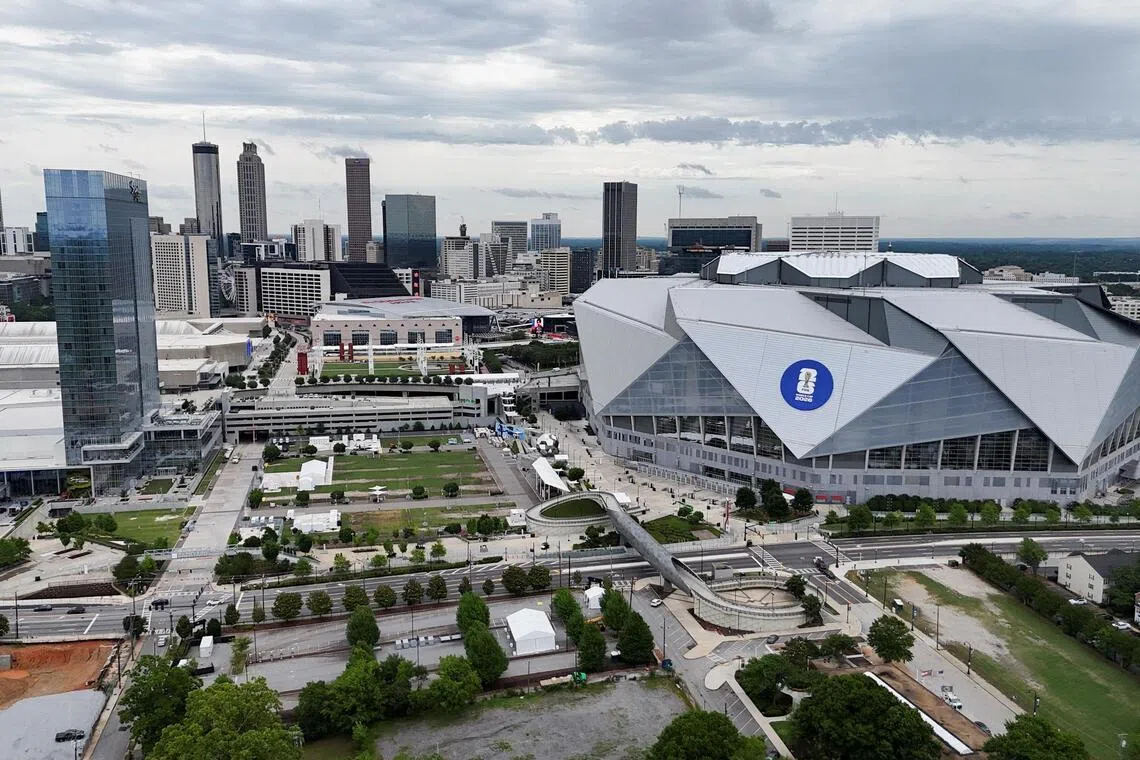
For the first time ever, the quadrennial competition will be staged by the United States, Canada and Mexico.
What’s more, this 23rd edition – set to begin on the night of Jun 11 – will be the largest and longest tournament of all time, with a record 48 teams from six continents playing 104 matches over nearly six weeks in 16 cities.
The expectations are certainly sky-high, even before a single ball has been kicked. Infantino himself has proudly declared that this summer’s World Cup will be the “greatest event in human history”.
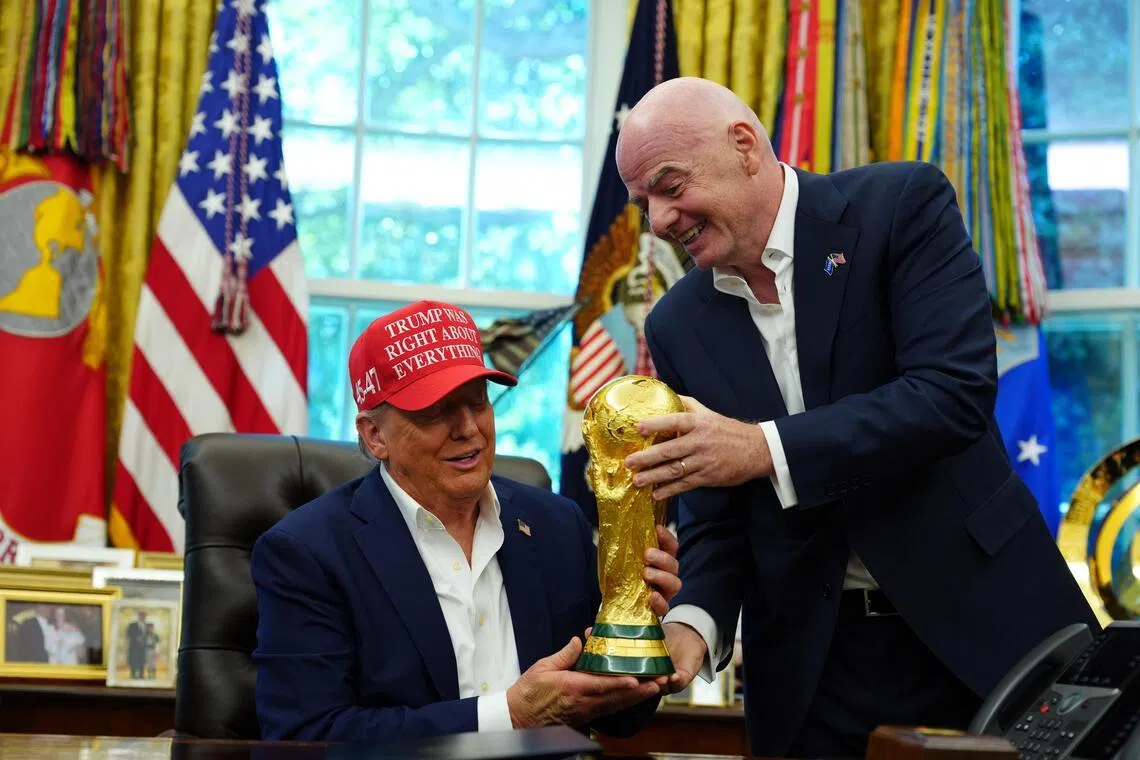
US President Donald Trump – the self-appointed chairman of a White House task force for the tournament – said, after receiving the inaugural Fifa Peace Prize from Infantino last December, that the World Cup will be “an event the likes of which maybe the world has never seen”.
According to some estimates from Fifa, the tournament could contribute as much as US$40.9 billion to global gross domestic product, create thousands of jobs in the host cities and boost international travel.
Controversies galore
The build-up to the big day has been far from smooth, however, with plenty of anxiety over issues such as skyrocketing ticket prices; political tensions and uncertain immigration policies in the US; and the ongoing war in the Middle East, just to name a few.
Iran’s participation in the World Cup has been in doubt for months, with fears about the team’s safety at the tournament arising after the US and Israel launched air strikes on Iran at the end of February.
The Iranian Football Federation quashed any speculation that the team would withdraw, and its training base has shifted from Arizona to the Mexican border city of Tijuana. As at Jun 1, the players and staff are still waiting for their visas to travel to the US.
SEE ALSO



Iran are set to play their first two group games in Los Angeles and a third in Seattle. Should they advance from their group in second place, one of their possible opponents in the round of 32 could be none other than the US.
But it is the soaring prices that have many fans up in arms, as they seek to experience the “greatest show on earth” without being sent to the poorhouse.
Numerous reports have highlighted how the costs of everything from match tickets to hotel nights and even train rides to the stadiums have put the World Cup beyond the reach of many.
Fifa is still dealing with huge backlash over the controversial decision to use dynamic pricing for the first time to sell tickets, with the amounts fluctuating greatly depending on the match demand, the host cities and sales phases.
Four years ago at the 2022 World Cup in Qatar, the most expensive ticket for the final was about US$1,600 at face value. This time, the most expensive face-value ticket sold by Fifa for the Jul 19 final is going for over 20 times more, at US$32,970.
Two months ago in April, when the cost of a ticket to the final was just over US$10,000, New York Mayor Zohran Mamdani quipped in an interview with CBS News: “For a lot of people, you’d have to mortgage your house to be able to afford that.”
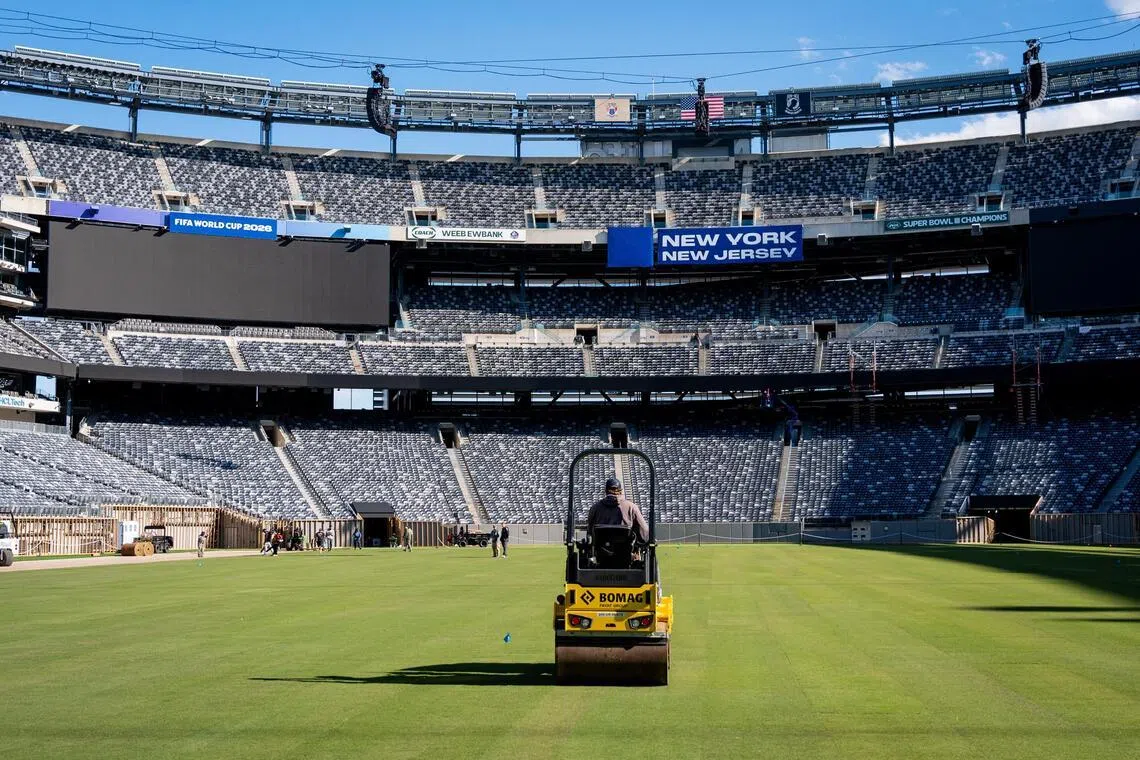
And if you have somehow managed to purchase a ticket for that showpiece match, getting there will cost an arm and a leg too.
A round-trip train ticket from New York to the MetLife Stadium in New Jersey costs a cool US$98 – already a third or so lower than the earlier price of US$150, following public outcry, but still well above the usual US$12.90 fare for such a journey.
Forget about driving to most of the stadiums in the three host nations, as the price of a parking pass has already shot through the roof. Fifa is selling parking passes for games in Los Angeles for up to US$300 each, which is higher than the face-value cost of some actual match tickets.
Football Supporters Europe, an independent and non-profit association of fans, has described the pricing structure of the match tickets as “extortionate” and a “monumental betrayal”.
Trump himself also appeared to be taken aback by the astronomical cost of tickets. In May, told by reporters about the hefty US$1,000 ticket price to watch the US play Paraguay in their opening group match on Jun 13, the US president said: “I did not know that number. I would certainly like to be there, but I wouldn’t pay it either, to be honest with you.”
Applying the market rate
Infantino has repeatedly defended his organisation’s decisions, most recently at a conference in Beverly Hills where he pointed to the prevalence of dynamic pricing for many major sporting events in the US.
“We have to look at the market. We are in a market in which entertainment is the most developed in the world, so we have to apply market rates,” said the 56-year-old, who has been Fifa’s supremo since 2016.
He added that Fifa received over 500 million ticket requests for this year’s tournament, compared with less than 50 million for the 2018 and 2022 World Cups combined. He also pointed out that a quarter of the tickets for the group phase were priced below US$300.
Still, his comments have done little to quell the average spectator’s ire that they are being squeezed for every last penny in order to catch the action live.
In late April, there was disbelief in many quarters when Fifa’s own resale website advertised four tickets to the final at a cost of more than US$2 million each. Yes, each.
Infantino, as always, had a quick response to that: “If some people (sell) tickets for the final at US$2 million, it doesn’t mean that the tickets cost (that much). And it doesn’t mean somebody will buy those tickets. If someone buys a ticket for US$2 million, I will personally bring him a hot dog and a Coke to make sure he has a great experience.”
But no matter how you slice it, what’s clear is that Fifa will rake in big bucks in the coming weeks.
The Zurich-based organisation’s latest financial report stated that it will make a record US$13 billion from the four-year cycle that ends with the 2026 World Cup, with the bulk of it – US$9 billion – brought in this year alone.
To put that figure in perspective, the 2024 Paris Olympics generated around 4.5 billion euros (S$6.7 billion), or US$5.2 billion at today’s exchange rates.
Global brands out in force
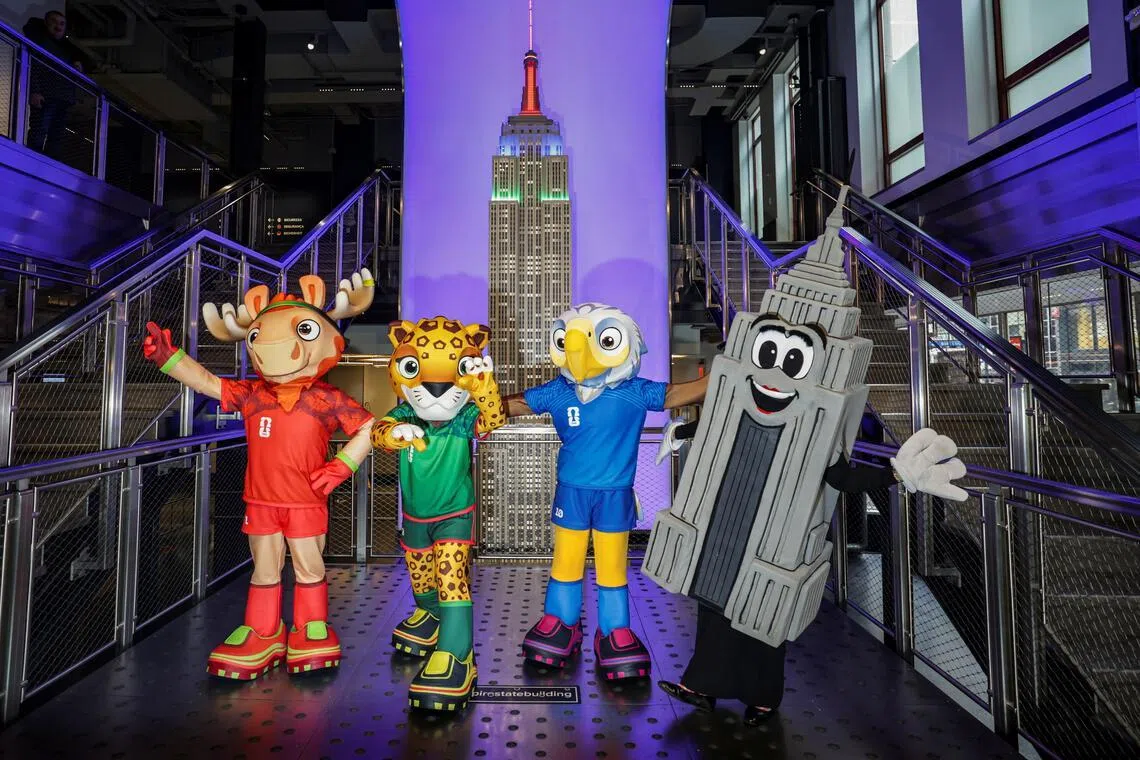
With over six million fans expected for the 104 fixtures, and another six billion watching from around the world, it’s little wonder that this year’s World Cup has a stellar commercial line-up, with global sponsorship packages sold out long ago.
Many of the world’s top brands are associated with Fifa, including Adidas, Coca-Cola, Visa, Hyundai-Kia and Qatar Airways. Among the newest brands to come on board are Aramco and Lenovo, which both signed deals in 2024.
In recent months, fans have wasted little time in buying their team’s official jerseys. Adidas, Nike and Puma collectively sponsor 37 of the 48 teams that have qualified to compete in North America.
Here in Singapore, replica jerseys usually retail for a little over S$100 each, with the so-called “player version” of the shirts – the exact professional kit worn by the players – available for nearly double that amount. It’s also common for hardcore fans to buy both the “home” and “away” versions of the shirts of their favourite teams.
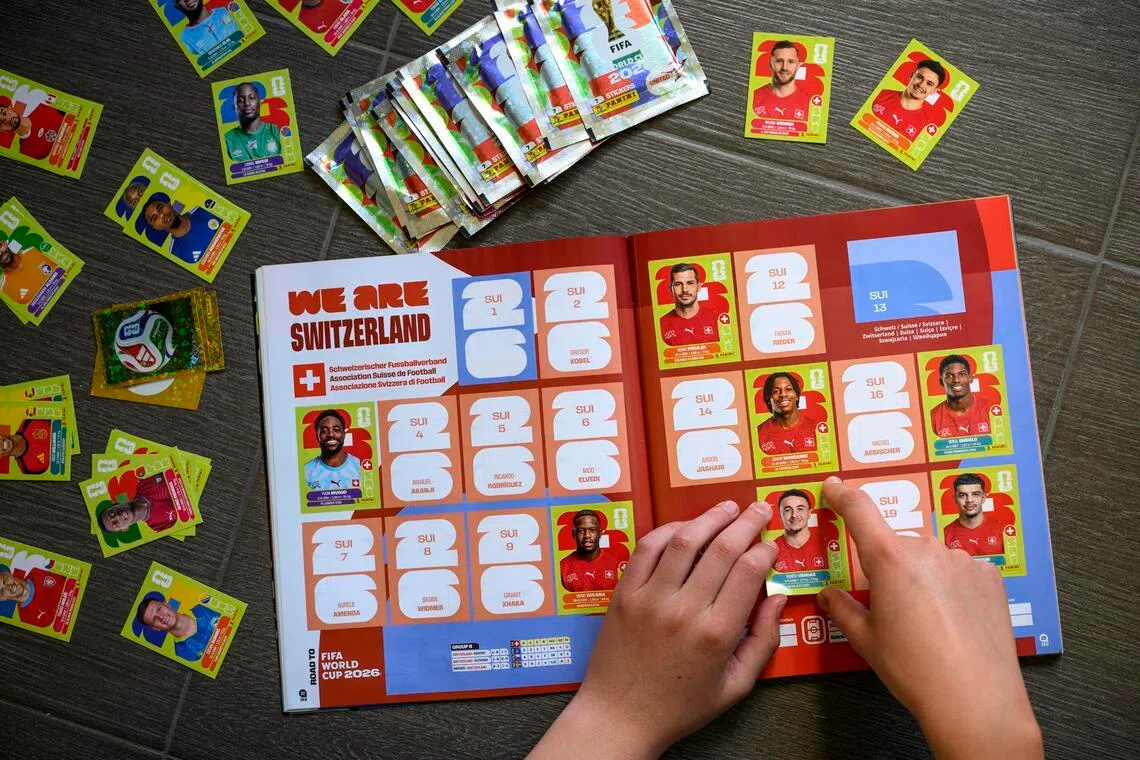
Many collectors in Singapore and around the world are also busy tearing open Panini sticker packets in their quest to complete their albums. “Swap meets” are a common sight at malls, fast food outlets and elsewhere as people meet to trade and sell their duplicate stickers.
Panini, the Italian company that has owned the Fifa rights for more than 55 years, has produced a sticker collection for every World Cup since the 1970 tournament in Mexico. This year’s edition is widely regarded as the most difficult and most expensive to collect, given that the album has 980 stickers due to the sheer number of teams participating.
In terms of advertising revenue, however, the gains are slimmer. This year’s World Cup is expected to inject about US$10.5 billion into the global advertising market, based on forecasts by Warc Media.
This represents a gain of just 1.1 per cent compared to the Qatar World Cup in 2022, and is well below the US$12.6 billion boost attributed to the 2018 edition in Russia.
It is further proof that traditional television – once the main source of ad revenue – is losing market share as more audiences consume content on social media platforms such as Tiktok, and on-demand streaming services like Netflix and Disney+.
Late-night action
In line with this being the biggest World Cup in history, there will be not one but three opening ceremonies – one in each of the host nations.
These glitzy celebrations will take place 90 minutes before the first match, featuring performances by the likes of Katy Perry, Michael Buble, Alanis Morissette and Blackpink member Lisa.
At half-time during the Jul 19 final in New Jersey, Fifa is putting together a show curated by Coldplay’s Chris Martin and headlined by K-pop boy band BTS, along with Madonna and Shakira.
Football fans around the world – especially in Asia – are gearing up for sleepless nights and extra shots of caffeine to follow as much of the action as possible.
The time difference with North America poses quite the challenge. In Singapore, many matches will kick off late in the night, with 29 of the 108 games starting at either 3 am or 4 am, including both semi-finals and the final itself.
Some good news: 29 other matches will start at a much more friendly time of between 9 am and noon.
Local broadcaster Mediacorp has gone the extra mile to make 28 games free-to-air on TV, up from nine in 2022. Those who want access to all 104 games, however, will have to subscribe to a package from either Mediacorp, Singtel or Starhub for S$118.
Getting down to business
After waiting eight long years, the three host countries are all eager to take to the field. The United States open their campaign against Paraguay knowing that anything less than maximum points would make it tough to advance from a group that also includes Turkey and Australia.
Canada is in the same section as Bosnia & Herzegovina, Qatar and Switzerland. Mexico, with a football-mad population backing them all the way, will fancy their chances in their group with South Africa, South Korea and Czech Republic.
Among the bookmakers’ favourites to lift the trophy in New Jersey are top-ranked France, defending champions Argentina, current European champions Spain, as well as Germany and five-time winners Brazil.
Several dark horses are fancied to do well, among them Portugal, Belgium and Senegal. Norway, featuring in the World Cup for the first time in 28 years, could also spring a surprise or two.
This World Cup is a particularly special one for four nations making their debut: Cape Verde, Curacao, Jordan and Uzbekistan. Notably, Curacao is the smallest country to qualify for the World Cup, both by population and landmass.
The hopes of Asia, meanwhile, rest on the shoulders of Australia, South Korea and Japan once more.
Japan, known as the “Samurai Blue”, have perhaps the best chance among the trio as their squad features many players that compete in Europe’s top leagues.
They will want to prove that their incredible wins over European powerhouses Germany and Spain at the 2022 World Cup were no fluke, although they are in a tricky looking group this time with the Netherlands, Sweden and Tunisia.
The time for talking is almost over. After more than 900 qualifying matches held over 30 months and involving 206 nations, it’s time for the final 48 teams to fan out across North America for this final battle. At the end of it all, only one will earn the right to lift that precious golden trophy up high.
Decoding Asia newsletter: your guide to navigating Asia in a new global order. Sign up here to get Decoding Asia newsletter. Delivered to your inbox. Free.
Copyright SPH Media. All rights reserved.
TRENDING NOW

Britain’s mansion tax shows the difficulty of targeting wealth

Once staunchly pro-China, Malaysian Chinese businesses are now distancing themselves from Beijing

The only common thing in S-E Asia is that we all eat rice: Cisco’s Asean president
Singapore data centre operator DayOne opts for US IPO at likely US$20 billion valuation

