From lab to table: Breaking the cost barrier
Startups developing cell-grown meats in Singapore are making their way up the cultivated meat food chain. Can they get past the high costs of production, scale up, and continue to secure funding in the increasingly competitive space?
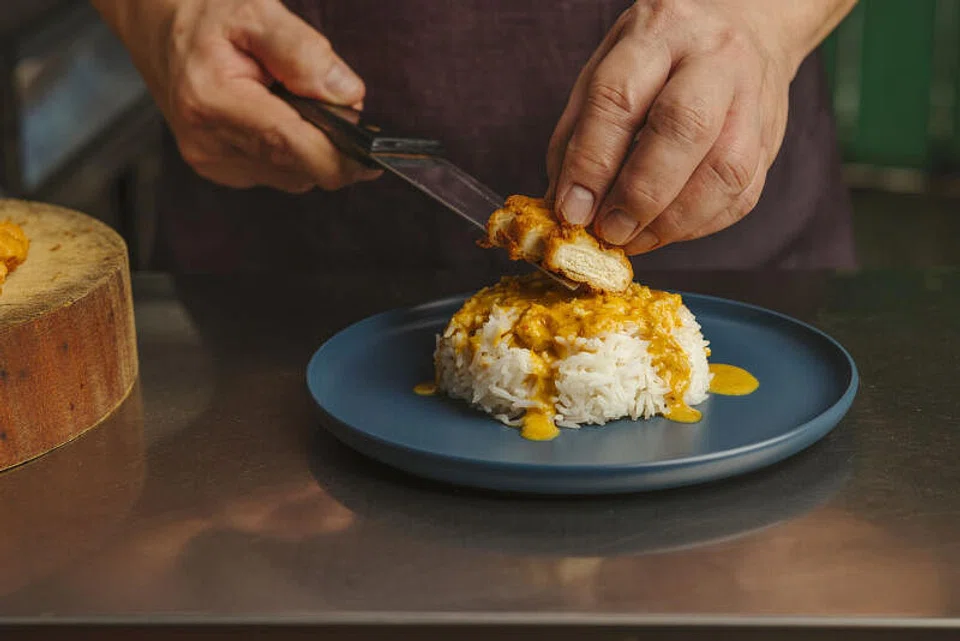
CRISPY chicken cuts fanned out on a plate of rice drenched in golden-brown curry is a staple at the 70-year-old Loo's Hainanese Curry Rice stall. At just S$4, that is a steal - more so when the chicken was grown in a lab, free of slaughter.
Cultivated meat is a novel food made with traditional biotechnology, sharing the same cellular make-up as conventional meat. The product could take some stress off of the world's growing meat demand, but producing it is expensive - averaging US$1,000 for 1 kg of meat.
In the past 4 years, 8 Singapore startups have been cooking up solutions to make cultivated meat more affordable.
Shiok Meats, Singapore's first cultivated meat and seafood company founded in 2018, is launching its cultivated shrimp next year at US$50 per kg. That is just the production cost. It would be initially sold at a higher price to restaurants, says Sandhya Sriram, Shiok Meats' chief executive officer and co-founder.
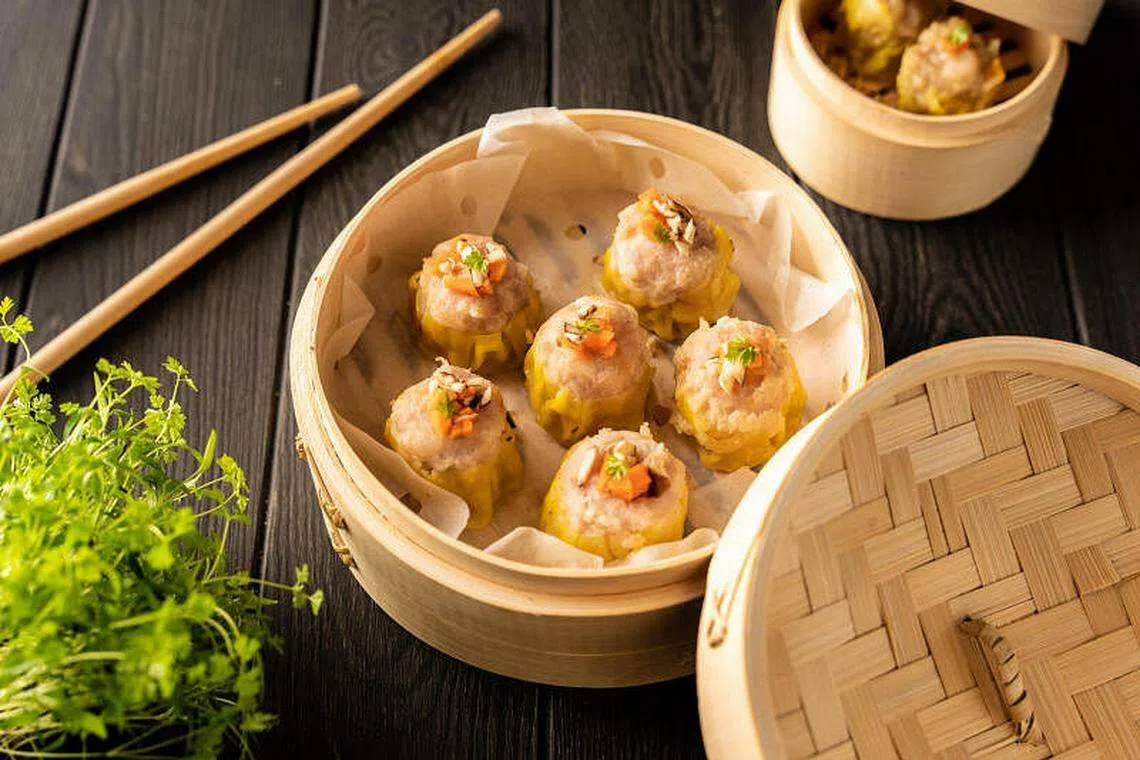
Loo's S$4 cell-grown chicken rice was part of US-based Eat Just's first hawker pop-up promoting its products in familiar local dishes that ended on Mar 1. About a week before the pop-up, hawker shop owner Loo Kia Chee told The Business Times (BT) that while he supports the sustainability aspect of cultivated chicken, he cannot afford it as a regular ingredient.
For now, Eat Just's cultured chicken dishes cost S$23 at mod-Chinese restaurant Madame Fan - far from hawker food prices.
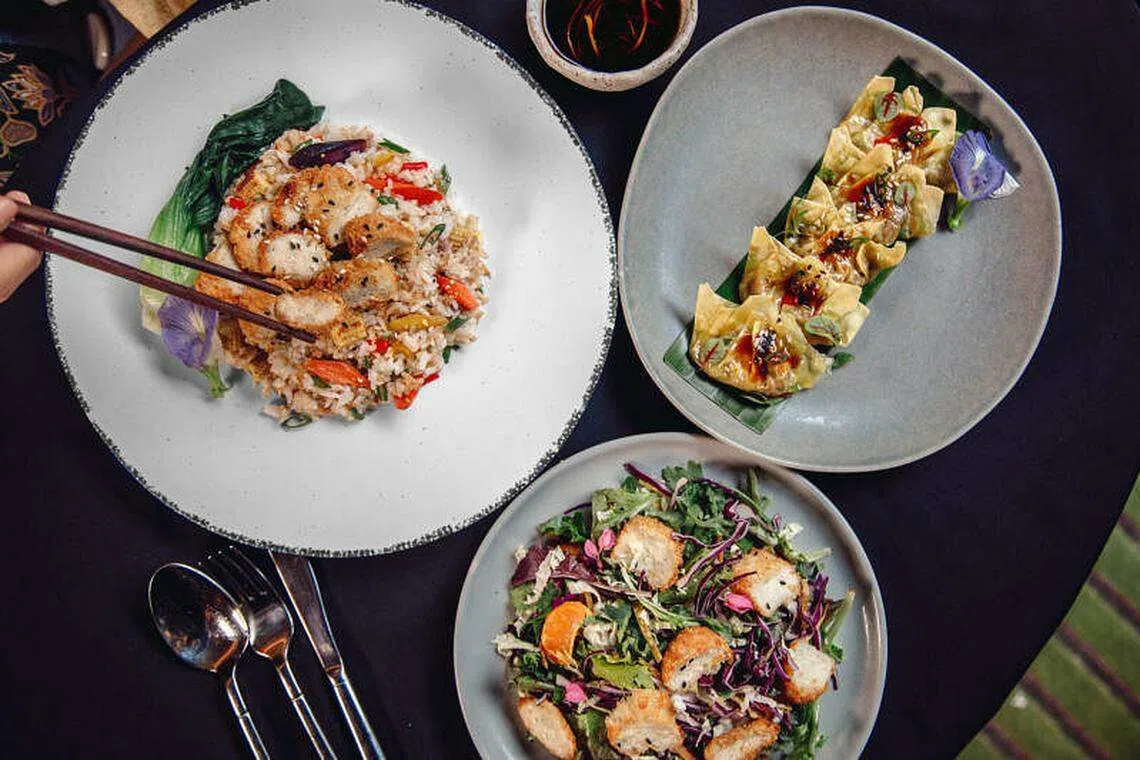
A report, to which the Agency for Science, Technology and Research (A*Star) and Shiok Meats contributed data, showed that production cost of cultivated meat could reach US$5.66 per kg in 2030. The meat in question refers to a paste, similar to finely ground meat, that can be moulded into a patty or nugget.
However, big strides are needed to realise the competitive price of cultured meat, including lowering the cost of growing cells and scaling up production.
Farming in lab coats
Cultivated meat is produced in large bioreactors, made from animal stem cells which are fed a nutrient-rich growth medium. The cells are commonly nourished by foetal bovine serum (FBS), a substance extracted from aborted foetal calves.
The high cost of the growth medium is one of the biggest hurdles to creating affordable cultured meat, says Mihir Pershad, CEO and co-founder of cultivated seafood company Umami Meats.
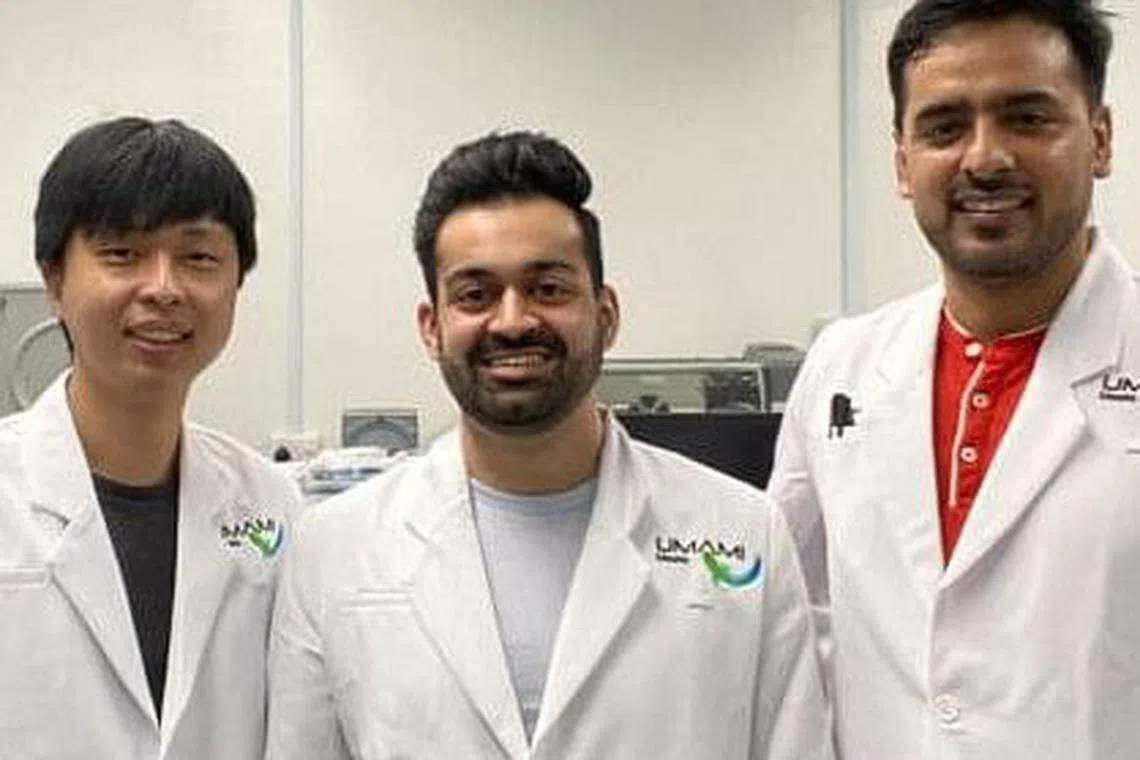
FBS is widely used in the biotechnology industry, but its extraction raises ethical concerns and production is strictly regulated. About 500,000 litres are produced annually and 1 litre costs between US$800 and US$1,000. This premium liquid accounts for up to 90 per cent of production cost, says Pershad.
Umami Meats is developing a low-cost plant-derived growth medium using a food-grade by-product of crop harvest that would otherwise be turned into animal feed. The growth medium currently costs US$10 per litre, and Umami Meats is refining it to get it to under a dollar, says its CEO.
As such, cultured meat products are not always clones of traditional meat. In fact, food safety regulator Singapore Food Agency (SFA) allows Eat Just to sell products that contain up to 75 per cent chicken, and other plant-based ingredients like mung bean protein.
Ants Innovate, a deep-tech startup spun off from A*Star in 2020, is combining its expertise in creating whole cut cultivated meat and plant-based meat to develop "cell essence". It is a technology that uses a tiny amount of cultured cells that, when paired with plant-based pork and chicken, enhances their aroma and savoury flavour.
The company is exploring creative ways to lower the costs of producing cells for food in the short term, says Shujian Ong, its co-founder and director of research and development (R&D). "Instead of using cells as the bulk protein source of the product, we use cells as the flavouring ingredient, because we find that the meaty flavour cannot be recreated by plant proteins," he adds.

A global hub or a small-scale blueprint?
When Singapore was the first (and still the only) country to approve Eat Just's cultivated chicken bites in 2020, observers pointed out that Singapore could be the industry's hub for startups. Singapore already hosts Eat Just and Hong Kong-based Avant Meats, and is home to several local players.
The US, Middle East, China and Europe are catching up to grant approvals within 2 to 5 years, and the biggest companies in terms of production scale are in the US and Israel.
"I have talked to political leaders in the US and they point to the example of Singapore in creating a cultivated meat industry as something that they want to emulate," says Josh Tetrick, CEO of Eat Just.
There are over 100 companies worldwide aiming to create consumer-ready cultivated meat products, according to Mirte Gosker, acting managing director of alternative protein advocate Good Food Institute (GFI) Asia-Pacific.
"The continued growth of the cultivated meat sector is heavily dependent on national governments granting regulatory approvals and allocating sufficient public funds to scale up production, resolve scientific and technical hurdles, and drive down costs," she says.
Local startups can reach out to Enterprise Singapore (ESG) to help connect them with investors, distributors, F&B businesses and other R&D players seeking tie-ups, says ESG director of food manufacturing Bernice Tay. ESG has a partnership with global accelerator Big Idea Ventures, which backs the likes of Shiok Meats; Fisheroo, a cultivated surimi startup; and TurtleTree Labs, a cell-based dairy company.
SFA and A*Star have set aside S$144 million together, to fund urban food tech developments. Umami Meats, in a research collaboration with Nanyang Polytechnic, bagged S$500,000 from this pool in 2020.
While Singapore is at the forefront of regulatory support and has a favourable ecosystem for its startups, it lags in investments compared to the rest of the world.
Singapore cultivated meat companies have raised about US$5 million in 2019 and US$25 million in 2020, and raised more in 2021 than previous years combined, though the GFI has yet to release this data. BT estimates this to be about US$41 million. This is a far cry from the US$1.3 billion raised for cultured meat globally in 2021. Although, almost half of this funding - US$614 million - was snagged by 2 companies.
Israel-based Future Meat bagged US$347 million in a Series B funding round. Eat Just raised US$267 million for its cultivated meat division Good Meat.
Eat Just was valued at US$2.59 billion as of March 2021, before its US$267 million fundraiser, according to market intelligence CB Insights. Forbes first reported in June last year that the company is eyeing at least US$3 billion in valuation for its initial public offering that will likely happen early 2022.
Eat Just is currently not looking to raise another funding round, says Tetrick. "To be able to do this at the scale that we want, over the next decades, it'll require many billions of dollars of investment. "Whether as a private company or a public company, we're always going to be focused on making sure we have sufficient capital to do that," he adds.
"The space is becoming a bit more saturated than it was 3 or 4 years ago. So there's more scrutiny and discerning questions being asked by investors about your proprietary technology and standing out from others," says Pershad, whose startup raised US$2.4 million in seed funding last year, co-led by Better Bite Ventures and Genedant.
Beyond developing the low-cost growth medium, Umami Meats' main focus is on creating overfished or endangered fish such as eel, red snapper and yellowfin tuna.
Shiok Meats' Sriram foresees a challenging time in the future where companies raising larger funding rounds beyond Series B will eat away the capital that other younger companies are trying to raise.
Shiok Meats raised US$30 million as of July 2021 and opened its Series B funding round last February. The company is backed by Big Idea Ventures, Seeds Capital and several investors in South Korea, Japan and Vietnam. It acquired Gaia Foods, a Singapore-based company creating cultivated beef, for an undisclosed amount.
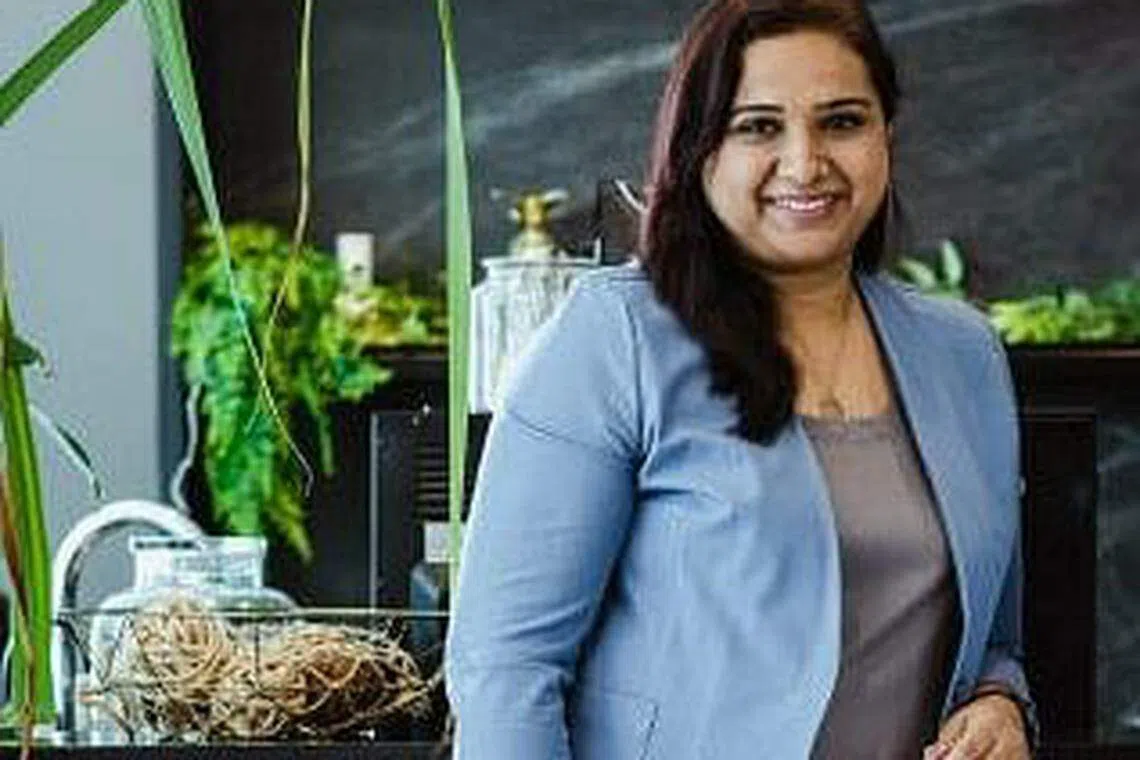
The investor landscape for cell-based companies is not tough now, but it could get more challenging as more competition enters the fast-paced industry, says Big Idea Ventures accelerator programme director Dalal AlGhawas.
"There are many international startups and a lot of them are still in the early stage because they are setting up their pilot plant facility. I would say Shiok Meats is further ahead than most international startups," she adds.
Moving up the food chain
The most important lesson Tetrick learnt in advancing the business is: "Just because something works in the lab at a small scale, doesn't mean that something is going to work at a large scale."
Eat Just started as a plant-based food company in 2011 and launched its cultivated meat division 5 years ago, around the time it achieved unicorn status. Over the past 2 years, it has been producing cultivated chicken in pilot plants in Singapore and the US.
The Temasek-backed company is working to increase its production capacity to around 30,000 to 40,000 litres, which can serve 50 to 100 restaurants, says Tetrick, though he did not specify its current production scale.
Shiok Meats currently has a 200-litre capacity bioreactor in its mini plant launched in October last year, and will add a 500-litre bioreactor soon, says Sriram.
For its commercial plant which will be ready in 2023, Shiok Meats will be acquiring multiple 1,000-litre bioreactors.
Sriram says one of the challenges in scaling up is the "logistics nightmare" in procuring a bioreactor, especially during the pandemic. It takes about 20 months to get a bioreactor, which includes 6 months of careful planning by the team, a year for the supplier to deliver the bioreactor, and another 2 months to install and test it.
Tetrick advises startups to hire process engineers who are skilled in scaling up processes, prepare themselves for the capital intensive requirements, and develop the discipline to sell food.
"Entrepreneurs shouldn't get so fixated on the process of culturing cells in a highly technical way, that they forget human beings are just trying to eat some chicken with their family."