Gaming for a living: Are NFT games a fair gig or low-wage exploitation?

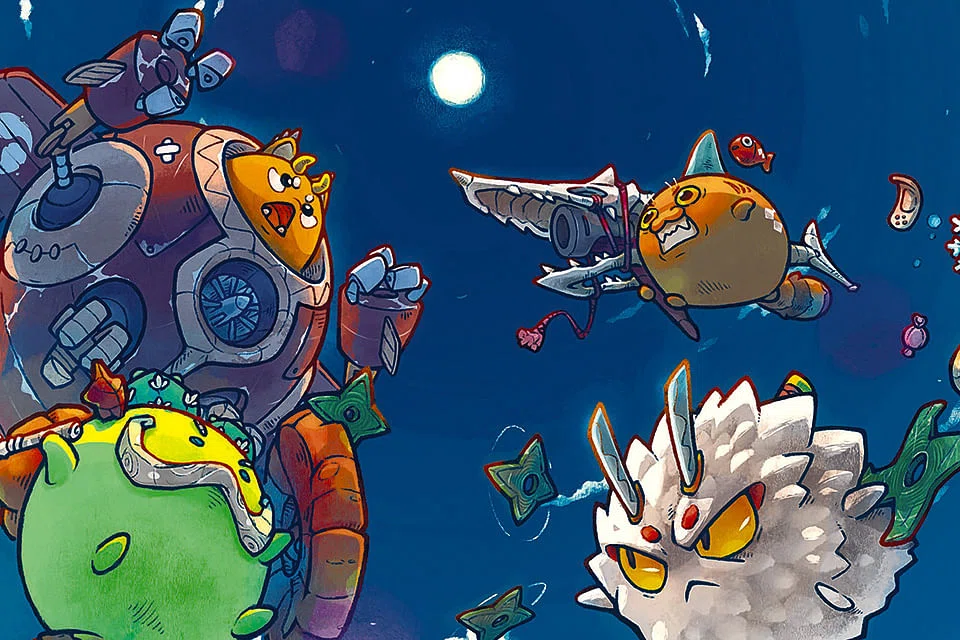

ALL it took was a few months of breeding, battling and trading virtual digital pets on a game called Axie Infinity for John Carlos to decide to quit his full-time day job as an engineer at a local water utilities company.
From the comforts of home - that is in the Nueva Ecija province of the Philippines - the 30-year-old now divides his time between playing the game built by a Singapore-based company, and expanding his family's paint shop business.
This overhaul in life plans may seem extreme at first glance, but it is backed by quick gaming profit. His earnings on the game meant a new pickup truck for his father.
And as word spread that he was making considerable earnings in this "alternative reality", his newfound game plan also attracted friends and family to jump on the bandwagon, he told The Business Times.
"Well, honestly, Axie Infinity has changed my life. I quit my day job and started to focus on being an entrepreneur. My mom, dad and sisters are also playing Axie Infinity. My relatives are playing it, all of my friends are playing it," he said.
Mr Carlos declined to share his actual earnings, but said a player who spends about two hours a day on the game could rake in tokens equivalent to almost US$800 a month.
Blockchain games like Axie Infinity have grown in popularity over the past year.
Some proponents laud how they have helped those from emerging economies, like Mr Carlos, pay the bills and put food on the table. Others hail it as the "player-owned economy" made possible by technology.
This new profit stream from the digital economy can seem comforting to those that have been confronted with employment uncertainty caused by a global pandemic.
But that is just one side of the story. The volatility and lack of regulation in the non-fungible token (NFT) space also call for a more critical look at the risks and ethics behind these play-to-earn games.
For participating in the in-game economy, players acquire digital assets, which can range from cryptocurrencies to in-game assets that are tokenised on the blockchain. Many of these assets come in the form of NFTs, which cannot be replicated - this makes them digitally scarce and valuable. In Axie Infinity, for example, each pet is an NFT. The NFTs and tokens can in turn be sold or converted into fiat money.
Unlike traditional video games that live in a centralised server, blockchain games are decentralised, with in-game assets distributed among players via a similar technology that cryptocurrencies like Bitcoin and Ether run on.
Mitsushi Ono, head of the chief executive's office at Digital Entertainment Asset (DEA), another Singapore-based company that develops NFT games, put it this way: "For traditional games, when you purchase in-game assets and you get tired of playing the games, those assets become garbage and are worth nothing.
"But in blockchain games, all the in-game assets become your assets. When you get tired of playing them, you can trade or sell these assets to others, and maybe you can get a profit out of it."
The cost to play each blockchain game varies. While Axie Infinity requires an initial "investment", the games on PlayMining's platform are free to start, but players who wish to progress further in the games or "level up" will then have to purchase specific assets.
Guild of Guardians, another blockchain role-playing game published by Australia-based company Immutable, also requires players to buy various NFTs to compete and earn rewards. They range from US$200 to US$100,000 in cash.
The "scholarships"
In the case of Axie Infinity, the financial barrier of entry has already risen due to higher transaction fees on the Ethereum network and rising prices of certain tradeable assets.
In a Coindesk article on Axie Infinity in May, Leah Callon-Butler, a director for blockchain consultancy Emfarsis, said that in mid-2020, it cost just US$5 to buy a team of three Axies - the Pokémon-inspired NFT pets that players breed, battle and trade with.
"Today, a decent team will set you back around US$1,000," she wrote.
Some players have banded together to offer "scholarships" to new players who might not be able to afford the initial upfront cost. These function like a profit-sharing initiative, where new players "rent" NFTs from existing players, who in turn get a cut of their proceeds.
Philippines-based firm Yield Guild Games (YGG) is one such platform. Eventually, the recruited player keeps 70 per cent of the proceeds, 20 per cent goes to the more veteran player, referred to as the "scholarship manager", while the guild takes the remaining 10 per cent.
Gabby Dizon, a longtime game developer who founded YGG late last year, was quick to clarify that this is "not an employment model".
"Everyone is working for themselves. A manager guides them (but) they can stop playing if they want. Their Axies will then be reassigned to someone else. Nobody is forcing anybody to play anything," he said.
Mr Dizon said there is no fixed criteria on who receives the scholarships - the scholarship managers are the ones who make the call.
Applications are definitely streaming in, though.
Axie Revolution, a Discord channel - a popular communication platform for gamers - that administers such scholarships, sees at least one "application" in the form of a Discord post every five minutes from aspiring players.
Applicants parade their token-earning power, track record with video games, as well as the number of hours they can dedicate to gameplay - with some committing up to 12 hours a day.
While acknowledging the risks, Ms CallonButler said most conventional jobs, too, require an "initial investment" in tools or equipment.
"The worker makes that investment knowing they will earn it back through future income streams. Buying a team of Axies is similar to this. Or, if the player can't afford to buy them upfront, they could rent the tools they need, like a taxi driver renting a taxi to drive around for the day," she told BT.
Money rolls in
Pitchbook data as at June 28 values global venture capital deals in blockchain gaming for the first six months of 2021 at US$52.5 billion, almost a fourfold increase from the US$13.2 billion recorded last year. Back in 2016, the value stood at US$0.5 billion.
Some of that is being absorbed in Singapore.
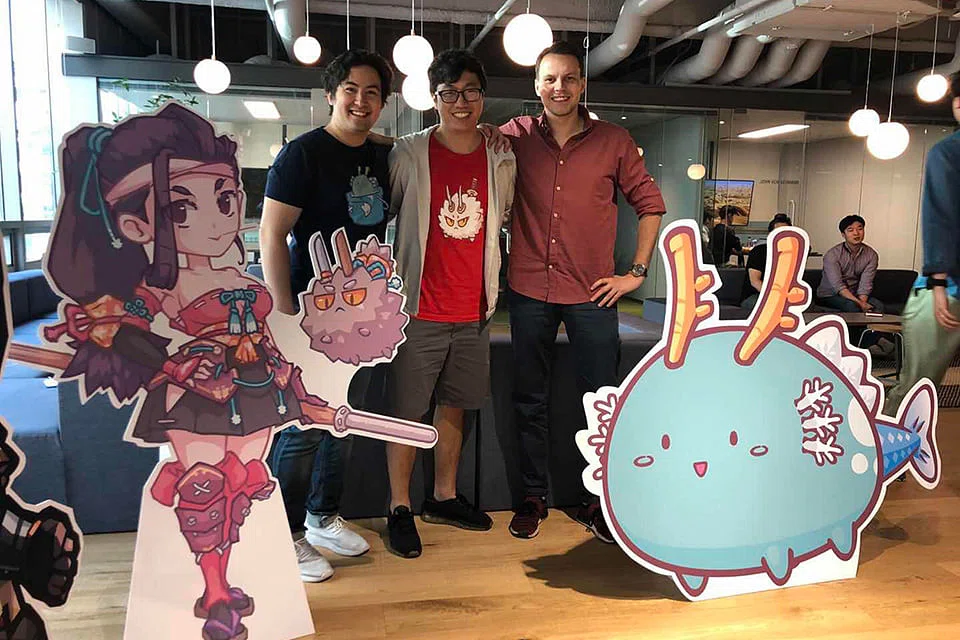
In May this year, Sky Mavis, the start-up behind Axie Infinity, said it netted US$7.5 million in Series A funding to scale its games. Sky Mavis' co-founder and growth lead Jeffrey Zirlin told BT that Axie Infinity's user base was expanding by at least 5 per cent daily.
As at early July, it had 350,000 daily active users while its marketplace saw over US$170 million worth of NFTs changing hands over the last 30 days.
Major international investors, too, are catching on. The ventures-arm of New York-based blockchain consulting firm Delphi Digital, for instance, has made several investments into blockchain games.
Meanwhile, the scholarship platform YGG said in mid-June that it had raised US$4 million in Series A funding, led by Cayman Islands-based gaming and e-sports fund BITKRAFT.
DEA, also based in Singapore, has raised more than US$10 million in pre-sales of its native utility token, DEAPcoins, and is in the process of raising pre-Series A funds.
About 40 per cent of Axie Infinity players reside in the Philippines. Another 5 per cent live in Indonesia, and 7 per cent live in the United States, Sky Mavis' Mr Zirlin said.
The Philippines has a clutch of people with high English-speaking abilities and a "low-wage structure within the economy", he said.
"Mobile gaming is ingrained in their culture also because traffic in Manila is so bad," he quipped.
PlayMining, DEA's blockchain gaming platform, had a million registered users as at May this year, among which 45 per cent are in Indonesia, 33 per cent in the Philippines and 9 per cent in Vietnam.
A few gamers BT spoke said they are aware of the risks involving digital tokens.
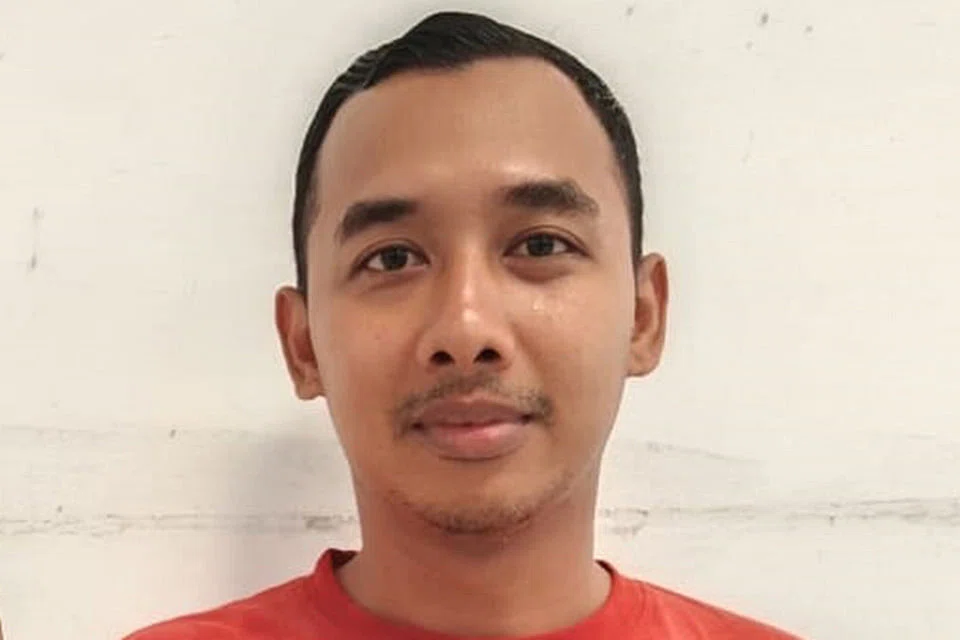
Riky Candra, a medical student based in Indonesia's Riau province, said he sticks to his principle of acquiring DEAPcoins only via free game play, without forking out extra cash.
"That way, I can earn some extra savings and not worry if one day the value plunges very drastically. As a child, I have been addicted to games. I make sure now that I manage my time well," said the 20-year-old, who spends up to five hours a day playing such games.
Bayoe Firmansyah said he has done considerable research and discussed at length the concepts of cryptocurrency with friends. Like Mr Candra, he focuses on the "free stuff".
"I don't buy crypto on the exchanges because I am afraid of the volatility in prices," said the 31-year-old printing operator based in West Java. "I also don't think I could play these games full time, but if I manage to earn enough (from the games) to buy a productive asset, like a rice field, then perhaps I can leave my current job."
Exploitation?
Some observers are still concerned, especially when a considerable proportion of the user base reside in developing countries and are likely to be less literate.
"Given the speculative nature of both Ethereum and Bitcoin (not to mention NFTs), I am led to think that this rising 'leisure economy', if it is a real market at all, is one characterised less by free play, but an opportunistic leverage on desperate labour," said Hong Renyi, an assistant professor at the National University of Singapore's Department for Communications and New Media.
He drew parallels with the Amazon Mechanical Turk (or MTurk) microworkers, who are often assigned mind-numbing tasks for hours on end, sometimes earning just pennies per job.
He acknowledges that these games may offer some individuals greater access to financial systems that they would otherwise be left out of, but some structural issues need to be considered.
"What is the official process for complaints, disputes? How can it ensure some kind of security for the gamers? Otherwise, attempts to celebrate this come across only as self-serving... a way of taking on someone's desperation as an opportunity to hypocritically sell their company as a 'social enterprise'," he said.
An editor who covers video games and e-sports agreed that the "right structure and accountability must be put in place to make sure innocent people aren't abandoned".
"It's common for game studios to abandon a project and move onto the next thing once it's no longer economically viable. That's usually not a big deal. It pisses off the fans, but at the end of the day people move on because these games don't really impact people's quality of life," said the individual, who requested to remain anonymous.
This situation is different, because some gamers are turning to NFTs to pay the bills. "So I hope that responsibility is taken seriously," he said.
Discussions on gaming forums point to the potential for exploitation. BT's casual survey on Discord shows multiple posts warning users of scams.
One such post on June 19 read: "We have seen a major increase of scam attempts in Discord lately. The most common scam is players tricking other players into sending AXS, SLP and Axies only to get nothing in return." AXS and SLP refer to tokens used in Axie Infinity.
Another post on the same day read: "We've received increasing reports of scholarship managers requesting nude photos from their prospective scholars. This is the equivalent of someone asking for nude photos during a job interview."
Emfarsis' Ms Callon-Butler also pointed out: "A fraudster Axie proprietor may decide to keep all the SLP earnings delivered to their wallet and refuse to pay the player their cut. Likewise, a player could operate multiple pseudonymous accounts to reap rewards across multiple scholarship programs simultaneously."
Immutable community?
Some game developers have tried to incorporate safeguards and tap influencers to raise awareness on financial and digital literacy.
DEA, for instance, has put in place know-your-customer tests on its PlayMining that kick in when players create wallets and withdraw tokens.
"There are many areas we need to be careful and aware of. For instance, the price and value of cryptocurrency is subject to change all the time," Mr Ono said.
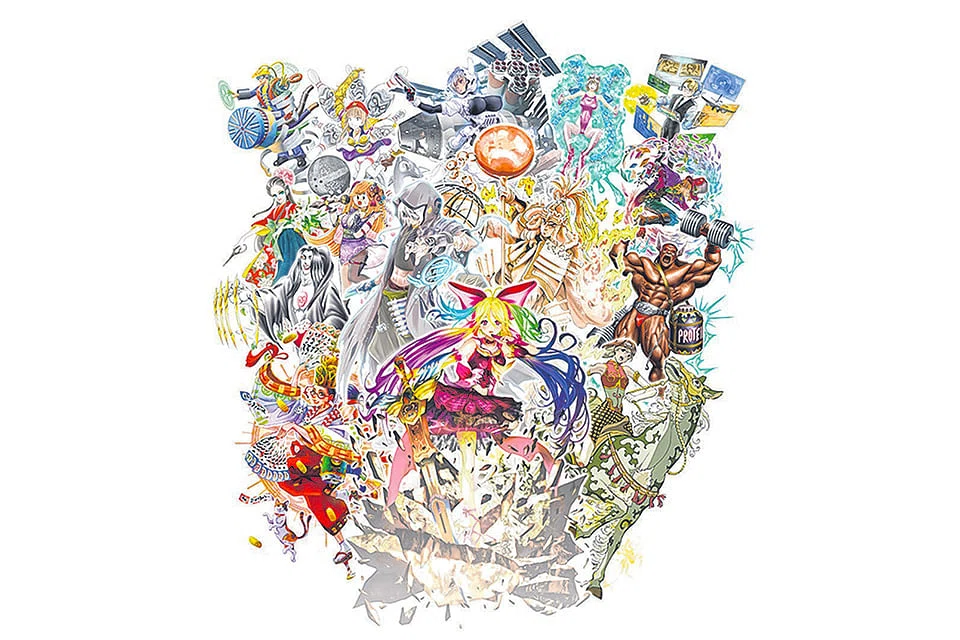
"We collaborate with manga artists to encourage users to understand these games. We also work with influencers and key opinion leaders, who are able to simplify these concepts to young users and speak their language," he added.
YGG's Mr Dizon said part of the role of scholarship managers is also to "teach (gamers) financial literacy".
"They will answer questions like, do I save the money as US dollars so it's more stable? Or do I keep them as crypto? Do I invest in NFTs and keep them? Community managers are the ones who educate the gamers. A lot of them are content creators and they'll create YouTube videos to do that," he said.
Lexus Dela Cruz, an Axie Infinity player and scholarship manager based in Cebu, acknowledged that many players regard the game as a "get-rich quick scheme".
"Most people think of it as an escape from poverty or get-rich quick. They start getting loans without studying the concept just to participate, because they see their neighbours or friends making a lot of money from playing the game. This causes a lot of trouble when there are changes and market dips. I always remind them about the cycle of cryptocurrency," he said.
Nevertheless, this growing play-to-earn phenomenon presents a novel use case of blockchain technology and NFTs, which, in the face of economic and social challenges brought on by the Covid-19 pandemic, has become an integral part of life for some.
Mr Cruz said his gaming community also gathers, physically, to distribute food and relief supplies for those in need in their neighbourhoods. "This usually happens when people have just cashed out their earnings. We encourage our community members to give back when they can, to help more people," he said.
Sky Mavis' Mr Zirlin said about half, or 48 per cent, of the gamers enjoy Axie Infinity primarily for the ability to earn tokens, while the remainder most enjoy the community they have forged, as well as the game play.
He avoids calling Axie Infinity a "video game", because he thinks that label undermines its potential.
"Axie has its own language that nobody else but the players would understand. We have our own customs, traditions, economy, property rights and our own system of governance," he said.
"People are spending a lot of their time within it, there are real relationships and it's becoming a place in the alternate reality that people prefer to spend their time and money, and also, to work in."