

The high costs of neglecting workplace safety
While saving lives through workplace safety measures, firms can save costs too

ON a fateful Sunday recently, a 68-year-old Grab car driver took the last ride of his life. His death after an accident in Ang Mo Kio was Singapore’s 40th workplace casualty this year.
For some companies, workplace safety measures may seem costly to implement. Yet – besides the obvious moral obligation – the costs of workplace accidents are far greater than the costs of preventing them, industry players told The Business Times (BT).
Over the years, the general fatality count has declined, although it has risen since 2020. With about two months left in the year, the 40 workplace deaths so far already surpass the full-year counts of 37 in 2021 and 39 in 2019.
The construction sector accounted for the highest number of workplace deaths and major injuries, with 10 deaths and 84 injuries in the first half of 2022 alone, up from six deaths and 63 major injuries in the second half of 2021.
The importance of reputation
A workplace mishap can have major collateral effects on employers, says Ian Lim, head of employment for TSMP Law.
For instance, accidents that result in injury or death could affect a construction firm’s rating with the Building and Construction Authority, affecting its ability to tender for future projects. “Lack of safety can have knock-on effects beyond the current project a company is involved in,” he says.
Companies’ workplace safety and health (WSH) performance, including injury and enforcement data, is publicly available on the Ministry of Manpower’s online CheckSafe portal.
In response to BT queries, an MOM spokesperson notes that construction companies can be temporarily disqualified from tendering for public sector projects if they are found to have systemic WSH lapses.
“Premium service buyers, business partners, and customers value companies with good safety records and may choose not to engage those with poor ones. A company’s track record also impacts talent attraction and retention, as employees want to work for safe workplaces,” says the ministry.
Another metric is bizSAFE, a nationally recognised five-step programme to help companies build WSH capabilities. To achieve the top ranking of bizSAFE Star, a company must show an understanding of WSH policies and deliver excellence in WSH management systems.
Hooi Yu Koh, chief executive officer of construction services firm Kori Holdings, says that the bizSAFE accreditation shows the performance standards of companies – especially small and medium-sized enterprises (SMEs) – and indicates whether end-users should engage them.
As a rough indication, contractors for big-scale projects should have a bizSAFE level of at least three or four, whereas smaller companies should be at least at level one, says Hooi.
“If the end-user ignores this accreditation and just chooses the cheapest contractors, then there is a risk that they are completely not trained,” he says. “These courses are not costly, and well-subsidised. It’s really a matter of initiative by employers.”
The cost of mishaps
Under the Work Injury Compensation Act, employers have to maintain work injury compensation insurance for all manual workers. Such mandatory insurance will help cover the costs of any injury or fatality – but in the long run, companies that do not maintain a clean safety record also run the risk of higher insurance premiums, Lim notes.
“Some companies intentionally don’t claim under their insurance policies because they don’t want their premiums to go up,” Lim says. “It’s like when there is a minor car accident, some might not make an insurance claim - that’s why you occasionally see people haggling by the side of the road.”
Even with insurance claims, the company still has to foot upfront medical bills, and there could be extra compassionate costs too, notes Khoo Jyh Hao, director of specialist construction services company Utracon Overseas.
“During an accident, there is also a reputational loss or some other kind of non-monetary loss. For example, the staff in a company may be demoralised when an accident or fatality occurs,” Khoo says.
For compassionate and morale-related reasons, when a workplace mishap happens, employers may pay extra compensation to the affected worker or family above what is required by law, he adds.
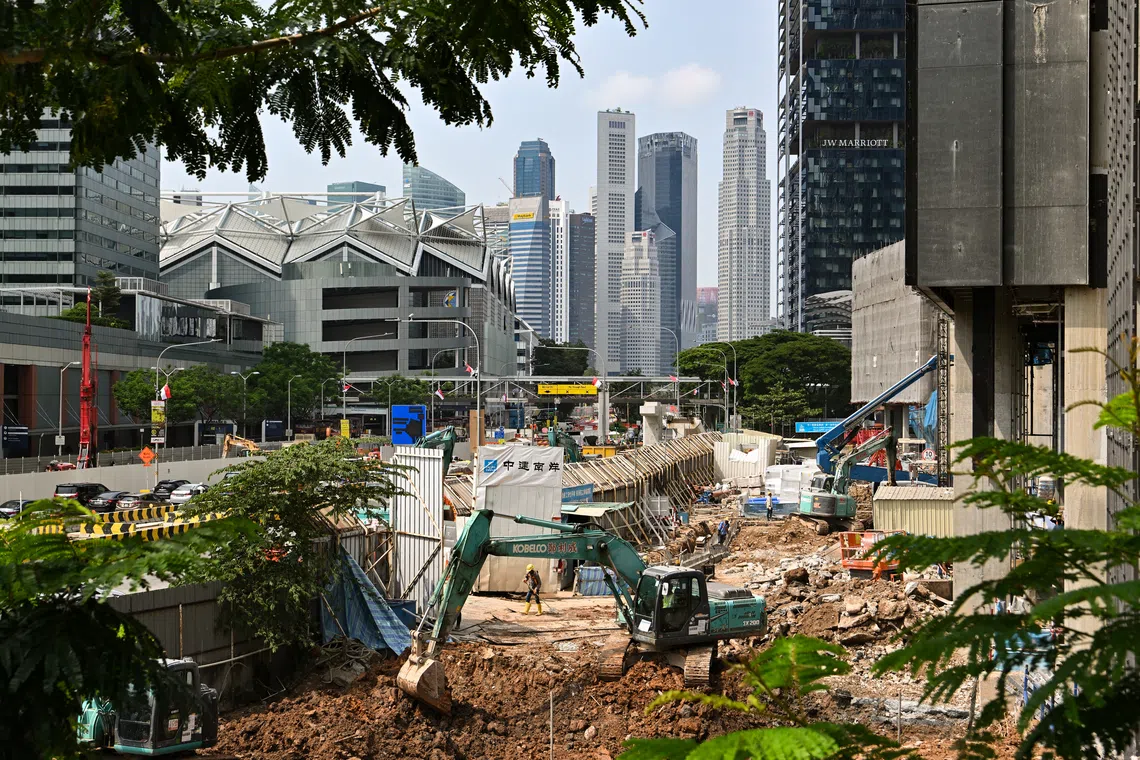
There are other direct costs of workplace accidents, such as having to shut down worksites for indefinite periods of time depending on the nature of a fatality – which has a considerable impact on productivity regardless of the size of a company, says Kori Holdings’ Hooi.
“There are possibly hefty penalties if negligence is proven,” Hooi adds. “The penalties have a direct cost impact on the employer.”
Getting tougher on negligence
But given the rising rate of fatalities, penalties may need to be stricter to ensure better compliance from employers, says Dipa Swaminathan, founder of non-profit organisation ItsRainingRaincoats (IRR).
The solution also lies in empowering workers to spot-check and improve their work environment, she adds.
“When there is a death or fatal injury, the trauma and mental health toll on workers can be huge,” says Swaminathan. “What employers really need to do is to specifically create a comfortable environment for workers to voice their concerns.”
MOM has in recent months introduced new measures to combat the rising workplace death toll.
Together with the Workplace Safety and Health Council, MOM launched an approved code of practice (COP) in October, outlining WSH duties of chief executives and board of directors.
The code sets out management principles and practices of safe companies, and turns these into concrete steps that other firms can adopt and adapt to their circumstances.
“By integrating WSH into the companies’ organisational processes, we aim to reduce the likelihood of workplace accidents occurring,” says an MOM spokesperson.
One possible critique of the COP is that it is just a guide and not enforceable by legislation. However, there are ways the code can haunt employers if ignored, says TSMP’s Lim.
“If guidelines are not followed, you may not get a fine or jail time, but you could get a temporary ban on hiring foreign workers and that could be a lot worse. Many companies would rather pay a hefty fine than (have) such bans (imposed),” he says.
Until Feb 28, 2023, MOM has also imposed a period of “heightened safety”, where a company may be barred from hiring new foreign employees for up to three months if it is found to have serious WSH breaches.
Examples of poor risk controls or unsafe workplace conditions include not installing barricades at work sites situated in high areas, or allowing unlicensed workers to operate forklifts.
If safety lapses are found after a workplace accident, possible consequences include the suspension of work pass privileges and the issuing of a stop-work order (SWO). Errant companies will then have to engage external auditors for a thorough review of their WSH management systems.
The SWOs vary from case to case, but the average duration is four to six weeks. Meanwhile, companies have to bear all costs of any required rectifications before MOM allows them to resume work.
To compound the effect on a company’s reputation, MOM also regularly posts updates about errant employers on its social media platforms.
For example, in a Facebook post on Aug 4, MOM named CAD Associates and KHC Development as two construction firms which would be issued with SWOs for worksites, as well as composition fines amounting to S$21,000 and S$20,000 respectively.
“Stoppages affect productivity, and together with rising insurance premiums, the associated costs can run into the tens of thousands of dollars,” says Hooi from Kori Holdings. “Even after the resumption of work following the authorities’ clearance, productivity will dip for some time until worker confidence has been restored.”
With delays already caused by the Covid pandemic, it is prudent for employers to invest in the necessary safety regimes to prevent further work stoppages, says Samuel Gift Stephen, chairman of non-governmental organisation Alliance of Guest Workers Outreach (AGWO).
“Employers are profit-driven and they tend to cut costs in all avenues. Safety is not cheap – it requires time, effort, and money,” he says. “But companies have to realise that costs can be much higher if safety standards are not met.”
Progress and safety are not mutually exclusive
The rush to complete projects – especially those delayed by the pandemic – and the entrance of new hires this year may have given rise to the workplace casualty toll, notes Philip Ebeneyer, chairman of non-profit organisation Life Centre Community Services (LCCS).
It takes about three to six months to adequately train a new employee, and employers shouldn’t be overworking them until they are prepared for their roles, says 55-year-old Ebeneyer, a health and safety manager for a maritime organisation who also has experience in WSH roles in oil and gas as well as construction.
“If you want to speed up on progress, speed up on safety as well,” he says. “Employers should be well versed or have better knowledge than their workers in their jobs. They should regularly provide information on safety, do constant risk assessments, and provide essential personal protective equipment.”
In a parliamentary reply in July, Manpower Minister Tan See Leng pointed out that of the 28 fatal workplace accidents in the first half of 2022, all “involved workers with at least two years of working experience and therefore inexperience is unlikely to be a contributory factor”.
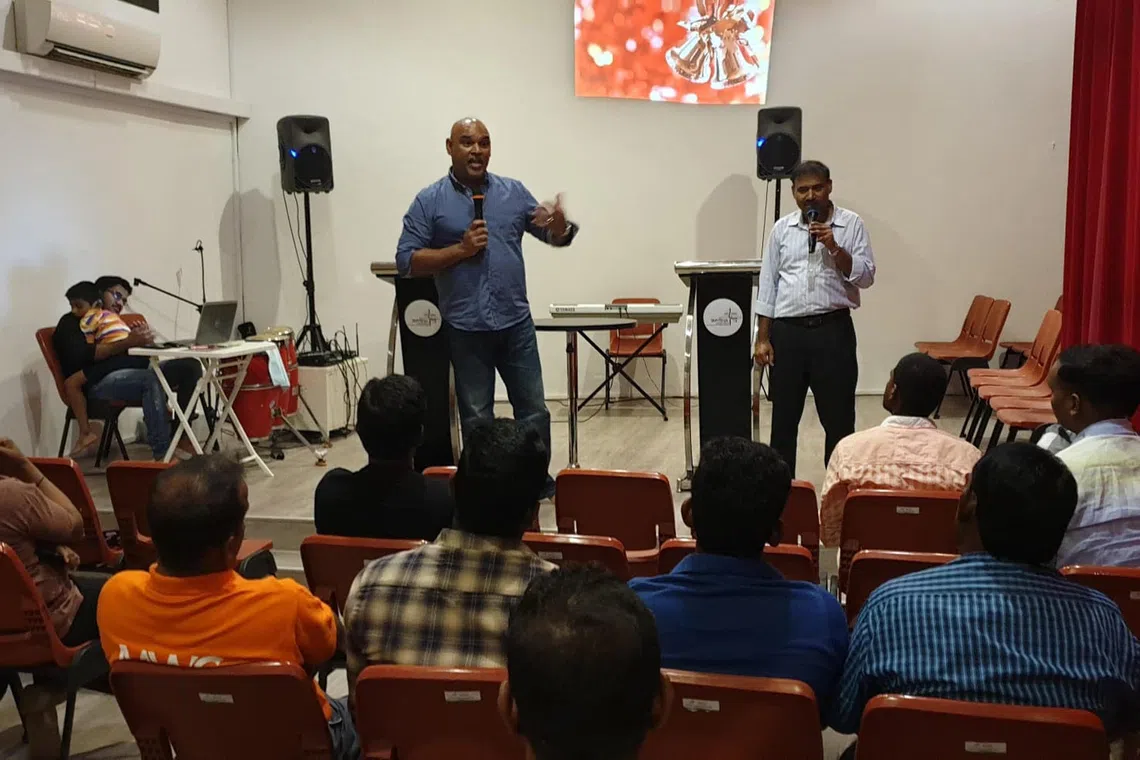
In many companies, workers are sent for initial mandatory safety courses when newly hired, but some employers do not follow up with their workers after that, causing workers to fail in their application of safety concepts over time, Ebeneyer notes.
Employers should have a schedule to regularly refresh safety concepts with workers and ensure compliance with safety standards, he adds.
Ebeneyer and his team of about 25 core volunteers provide such training free of charge at migrant worker recreation centres in Tuas and Kranji during the weekends.
Apart from safety reminders and tips, they provide free “life skill” classes in areas like spoken English, computer skills, and AutoCAD software, often used in construction and engineering.
LCCS is also conceptualising plans to officially create safety experience centres, where safety experts will be invited to conduct talks and workshops, for both employers and workers.
“Our workshops first conduct personality profiling based on the industry the workers are from. Based on that, we explain the associated risks and what can be done to create a safe environment,” he adds.
Moral obligation
Ebeneyer’s work in WSH has taken him to many different parts of the world, including Oman, Cameroon, Thailand, Indonesia and Myanmar.
“Having seen many different parts of the world, Singapore is generally a safe place to work in. In terms of guidelines, regulations and resources, we have so much available,” he notes.
For people or companies starting from scratch, MOM offers free resources on how to set up safety practices, TSMP’s Lim says.
“If you think about it, harsh penalties like work stoppages can have a dampening effect on the economy. But Singapore is not just about profits and attracting investments. MOM is now showing real concern and clamping down hard on errant companies,” he adds.
SMEs that require support can tap the WSH Council’s StartSAFE programme, which connects them with consultants who can help them identify risks and implement good practices. The costs of these StartSAFE consultants are fully borne by MOM.
In addition, companies can tap government grants to strengthen their safety standards and acquire WSH technologies.
“Ultimately, companies should bear in mind that safety is not only a regulatory requirement, it is first and foremost a fundamental responsibility, and a company that has a strong safety culture, sound practices and good safety track record will also benefit as a business,” MOM says.
Employers shouldn’t view workers like machines or tools but rather treat them like how they would their brothers and sons, IRR’s Swaminathan says. “Employers don’t just have financial but also the moral obligations to ensure the safety of their workforce.”
Creating a culture of prioritising safety from the top to bottom levels of an organisation is important, AGWO’s Stephen notes.
“Rather than dealing with the repercussions of an unsafe environment, educating employees and setting up the necessary safety infrastructure from the get-go can help companies remain financially sustainable in the long run,” he adds.
TRENDING NOW

Philippine power giant First Gen rebuffs foreign offers, plans up to US$2.6 billion in expansion

Cliff Tan has 7 million followers and a 4-month waitlist. Why won’t he expand his business?

Could stablecoins be the future of money?
From finance aspirant to Asean CEO: TUV SUD’s Jonas Strahberger on finding people who believe in you

