

Iskandar boleh
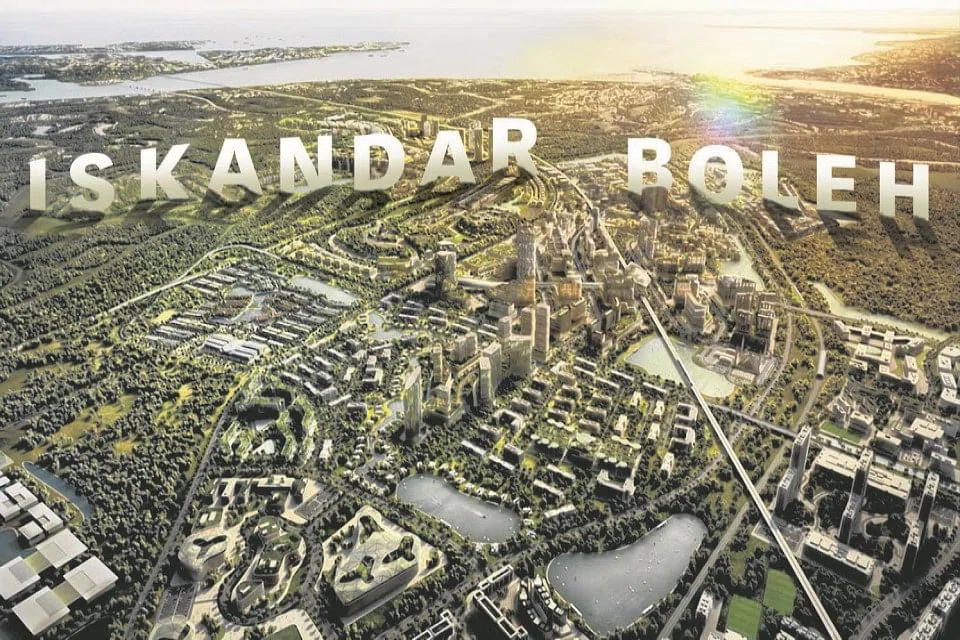
The rosy narrative of Malaysia's booming growth corridor Iskandar, Johor has waned in recent years. Little by little, the economic zone is getting back on its feet. Can it get its mojo back?


SINGAPOREAN Marc N is living the dream with his wife and 2 maine-coon-persian mix cats in Iskandar Malaysia - a "hop, skip and a jump away" from Singapore; or so it seemed until the pandemic-led border curbs stretched the short distance from the dense city state.
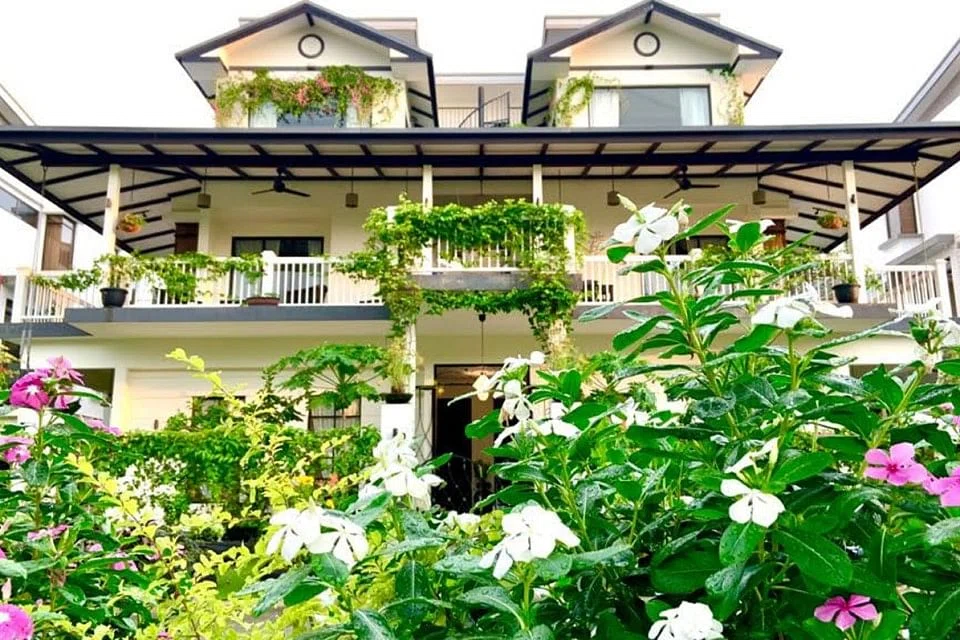
Seven years ago, the 52-year-old, who works for a book-keeping and software company, moved to his self-designed Tuscan-styled home in a freehold gated township that boasts a 200-acre (81-hectare) golf course in Malaysia's southern tip Johor. His villa of 2 semi-detached units merged into 1, with 6 large ensuite rooms, rests on 6,000 square feet of land at a cul-de-sac and fronts a dreamy large pond where pink water lilies float and shelter fish, which are in turn magnets for storks and otters. From their colonial-style balcony that wraps around their abode, he and his Penang-born wife Jen often take in the breath-taking sunset and sunrise over the hills to unwind or simply to "be present".
"It's the best of both worlds to me. If it's my mom's birthday, I can just pop into Singapore and spend the night at my mother's, and then come back here," he said, recalling pre-pandemic times. He added: "I always like to think of Johor in conjunction with Singapore."
That proximity-inspired mindset (plus, let's not forget the cheap butter-fried lobsters, dental treatments and full body massages) has long been Iskandar's irresistible pitch for its neighbours across the causeway. Blessed with abundant land, Iskandar Malaysia has lured tens of thousands of Singapore residents to cough up their stronger currency for a piece of real estate in a purported growth corridor. Launched 16 years ago with great pomp and fanfare, Iskandar was to spur economic activity and spawn more jobs for Malaysians.
By 2014, Singaporeans investors made up some 70 per cent of overseas home buyers in the bustling southern economic zone.
One Singapore-based realtor remarked: "From 2011 onwards, the publicity and marketing blitz led many lower- to upper-middle-class Singaporeans to buy into the Iskandar story. I think Singaporeans see Malaysia as a weekend or holiday getaway, or eventual retirement home. The feeling was: If we make money, great. If we don't, then 'bo pian' (nothing we can do)."
Unfortunately, the second of those 2 scenarios has become the dominant one of late.
The realtor, whose family members have bought a house with a garden as well as a shophouse in Iskandar, said the investments have not been making money. "Yield is low, capital appreciation is slow and the ringgit has depreciated quite a bit. I think most people these days think: 'Anyone can get into JB (Johor Bahru), but who can get out?' Liquidity is low."
Southern discomfort
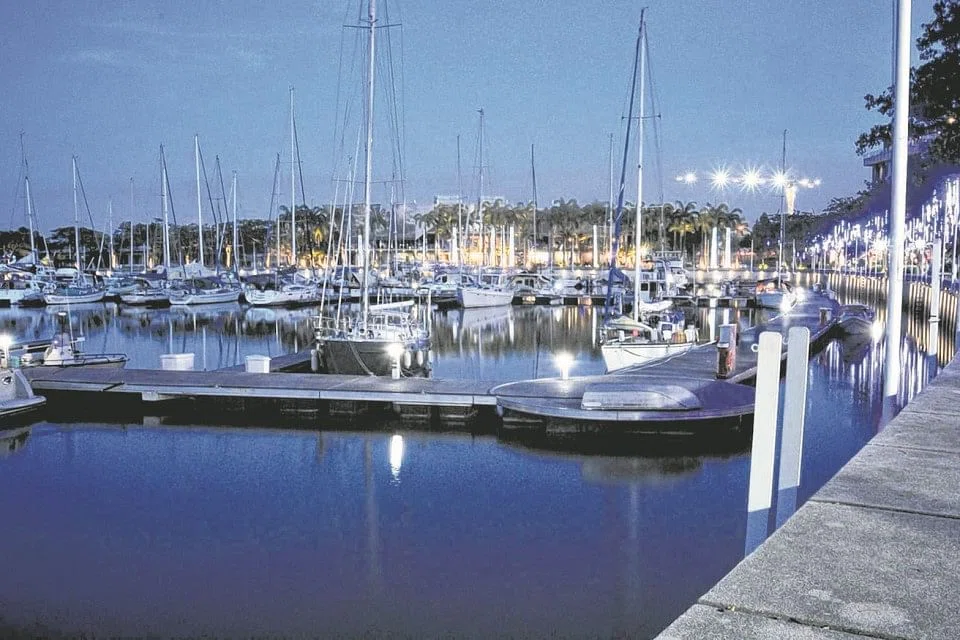
The special economic zone - thrice the size of Singapore - hit a tipping point in 2013 and drew in some RM130 billion (S$42 billion) of cumulative investments from world-class theme parks, a giant British film studio, top universities and a luxury yacht club. Homes sprung up and lent the once sleepy town a mega facelift.
But little by little Iskandar's prospects began to dim. Excessive building by gungho developers - including Chinese developers Country Garden Holdings, R&F Development and Greenland Group - resulted in a glut of new homes, particularly high-rise condominiums.
One grandiose project in particular, Forest City, is being built on 4 reclaimed islands that span 30 square km (about 6 times the size of Singapore's Sentosa) in the Strait of Johor, off Tuas. The iconic project is led by Country Garden, one of China's top developers, and undertaken with a Johor state investment arm. The controversial luxury housing project suffered a setback - not unlike most projects in the region - owing to the pandemic, and has so far merely built on about one-eighth of its total planned area, with 2 hotels and golf courses and an international school having sprouted up.
Frost & Sullivan managing director of Malaysia Hazmi Yusof said Iskandar, as a real estate play, was not sustainable beyond a 3-5 year window. Fresh curbs on foreign buyers of properties in the state did not help. By 2017, Iskandar's red hot zone had turned tepid.
"The growth of Iskandar Malaysia was planned to be in cohesion between the economic sector and the real estate market but it was the latter that flourished faster. The hot property market since then has slowed down as oversupply and affordability concerns loom. For investors, due to the slowing demand, they faced a market environment that saw compressed yields and high competition amidst a lagging market pace," said Sulaiman Saheh, research director of real estate consultancy Rahim & Co International.
Just under 15,800 housing units were launched in 2013 alone - a record for the growth corridor, according to data provided by Rahim & Co International. But 4 years later, the number of fresh units hitting the market had nearly halved. And in the ensuing 2 years, launches moderated further to around 40 per cent below the peak.
Previndran Singhe, managing director and chief executive of Zerin Properties, a Malaysia-based real estate services company, said: "When the subject of Iskandar Malaysia is raised, one cannot help but talk about the large property glut in the region. Johor has the largest property overhang in Malaysia."
As at end-September 2021, Malaysia's second most populous state had a stock overhang of 23,224 units worth nearly RM21 billion - some 43 per cent of the country's total property overhang. Over 80 per cent of the state's overhang comprised condominiums and serviced apartments.
In short, real estate has hijacked Iskandar's big picture development agenda.
Like a ton of bricks
The Covid-19 outbreak added a whole dollop of salt to injury - new launches and total transacted units hit their lowest points in 2020 as home buyers, particularly foreigners, thinned and developers scrapped or delayed newbuilds.
Said Previndran: "The Covid-19 pandemic has ravaged the already weak market that saw 5 in 8 areas (in the state) record a price drop."
Malaysia's top developer UEM Sunrise, which is controlled by sovereign wealth fund Khazanah Nasional and is also the master developer of Iskandar Puteri - one of Iskandar's flagship zones - wasn't spared. "Our Southern projects took a significant hit," said CEO Sufian Abdullah.
He added: "Not only were we cut off from the pool of foreign buyers who used to form almost 10 per cent of our total customer base in Johor back in 2019, there was a sizeable (pool of) potential Malaysian customers who were stranded in Singapore when they chose to stay on for their jobs." Malaysia closed its borders relatively early from the onset of the pandemic. Its land border with Singapore remains restricted.
The prolonged lockdown led the developer to launch less than half its targeted RM1.2 billion in gross development value (GDV) nationwide for 2020, with no new launches in Johor. The resultant economic uncertainties, rising jobless rates and dented consumer sentiments, as well as tightened lending protocols by banks, hurt UEM Sunrise's sales from the southern region, which have fallen 16 per cent since 2019, he added.
Many developers, including UEM Sunrise, have since shifted their gaze to landed townships. For this year, particularly "centred aggressively in the second half", the builder hopes to launch projects worth RM3.3 billion, of which RM632 million will be in Johor involving freehold double-storey terraced homes in Iskandar Puteri.
"Mini Shenzhen" - not
Iskandar's rosy prospects were not marred by overzealous property building alone.
Conflicting visions due to Malaysia's fluid politics, haphazard land release for developments and gaps in the eco-system for businesses to thrive have also done a number on it. The much-vaunted footfall was ever-elusive too.
For Japan's Hello Kitty theme park, about a 35-minute drive from Singapore's Woodlands check point, it was goodbye Iskandar in 2019, owing to low traffic. British studio facilities giant Pinewood bailed on a pact with a local partner that was to lead to a US$150 million studio complex, turning its back that same year on what was meant to be its promising outpost for international film production in South-east Asia.
According to Frost & Sullivan's Hazmi, it has been tough for Malaysia's southern corridor to provide the degree of "scalability" that many companies seek and can easily find in rival economic zones such as India's Gurgaon and Pune - both giant knowledge services hubs of the world.
"Iskandar doesn't have a huge human capital pool, which is the number one qualifier for any decisions to be made in terms of business location for large companies. It is hard to compete with, say, India, or show that it has the best value to offer at a large scale."
Many multinational corporations have set up offices in Iskandar simply for business support - akin to offshore or nearshore services, but not quite the seat where key business decisions are made. This doesn't quite gel with Iskandar's holistic goal of value creation.
"That's what we discovered as well. We couldn't do business with, say, our Japanese client in Iskandar, as they didn't have a proper business centre there. So, the ecosystem was quite rigid. What is of value is when we go into a location, there is a near automatic market access, meaning I can do business with my fellow neighbours. This was missing," said Hazmi.
Getting its mojo back
Iskandar Malaysia aims to turn South Johor into a flourishing economic zone by doubling its population and workforce to 3 million and 1.3 million, respectively, by 2025. The budding "metropolis" also hopes to woo investments of RM383 billion by then. As at mid-2021, it had drawn total cumulative investments of RM341.4 billion, led by manufacturing, mixed development and residential projects.
Last year, between January and April, some RM7.3 billion of investment projects were completed with 80 per cent led by foreign monies - not too shabby for pandemic times. It's a "positive indication" that the Iskandar region still retains investor trust, said Zerin Properties' Previndran. He noted, however, that Johor has for years basked in the ranks of the top 5 states in Malaysia for wooing foreign and domestic investments, but dropped out of the list 2 years ago.
Nevertheless, Iskandar's key protagonists seem to be getting their act together.
With much of the capacity building (or rather, over building) done, some fresh steps to unlock value are lending renewed hope and changing the conversation on the region's prospects.
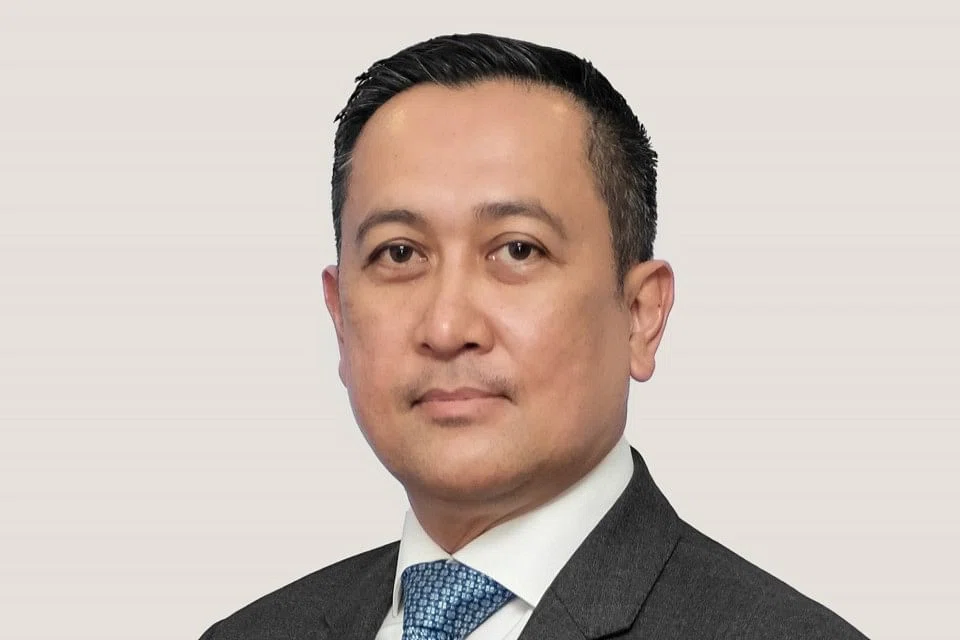
"The first 2 phases (of Iskandar) were about planning, building and strengthening. Back then, there was a flurry of physical activities to create a strong foundation. You would have seen the emergence of infrastructure, highways, incentivised business zones, industrial parks, factories, malls, hospitals, theme parks, hotels, universities and many more," explained the newly appointed CEO of Iskandar Regional Development Authority (IRDA) Badrul Hisham Kassim.
He added: "Now the region is in the innovate and sustain phase...this ranges from people development to environmental preservation to smart city creation. So, naturally, you don't physically see the rush especially in the past 2 years."
For one, plans to turn Iskandar into a zone for drones and robotics, to draw emerging tech talents and galvanise the gig and digital economy, are picking up pace.
Development of massive drone test sites, done in collaboration with DHL Express, have kicked off in Medini, Iskandar Puteri. These sites span some 690 hectares and are being touted as among South-east Asia's largest sites to test and fly drones, with hopes to generate 1,000 high-value jobs and woo RM315 million worth of investments within 3 years. If all works out, they will also ratchet up Iskandar's long-held smart-city goals.
"Iskandar has realised that they have got to take a bolder position versus saying: 'We are building 10 new condominium projects, please come to Iskandar'. It is trying to be a regional sandbox or living lab that allows companies to try and test all kinds of things which they can't do in, say, KL or Singapore, due to safety and other issues," said Hazmi of Frost & Sullivan.
Iskandar has also added Sedenak, located in the north, as the corridor's sixth flagship zone, to promote agritech and high-tech industries, research and development, as well as low-carbon activities; and with that, hopes to turn the state into a food supply hub.
IRDA's Badrul says: "Fifteen years is a short duration to build a truly strong and sustainable metropolis but I think we have achieved much in that span of time since our inception. Despite the pandemic, I am convinced that the dream is still alive."
The switch in momentum has won Hazmi's favour.
"So, I was a convert in the beginning. I thought Iskandar was going to a game changer and become a mini Shenzhen in South-east Asia. But then, by 2017 up to 2019, I thought it was on the way to failing," said Hazmi. His firm, Frost & Sullivan was one of the early movers in the growth corridor.
"But in the last 2 years, I must say that I have become a revert - from a non-believer, I am back to being a believer. I see that the authorities have assessed the situation and are on the way to rejig their approach from building capacity to building an ecosystem. I think they are on the right tangent," he said, adding: "But of course, the devil is in the details and it's all about implementation."
TRENDING NOW
Three ex-employees of Envy group join Ng Yu Zhi in bankruptcy

He built the Vingroup empire. Now South-east Asia’s richest man is handing some key roles to his sons

Grab CEO’s wife Chloe Tong on life with Anthony Tan and finding her purpose
Incidence of civil servants buying property near unannounced MRT stations ‘a concern’, but may not establish misconduct: PSD

