

Life after death: The art of taxidermy
The art and science of preservation is entering the mainstream in Singapore. What's behind the allure of insect and animal carcasses?

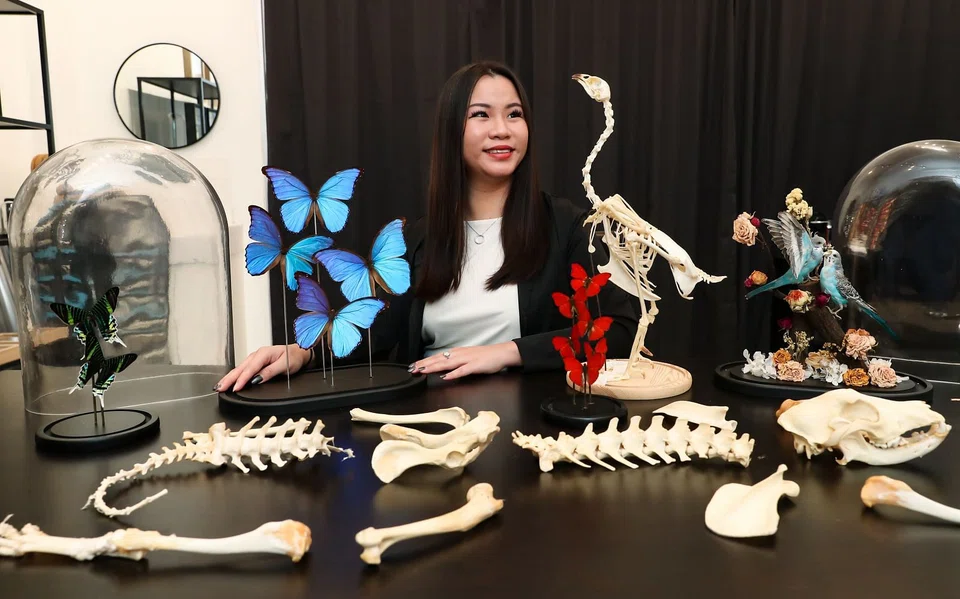
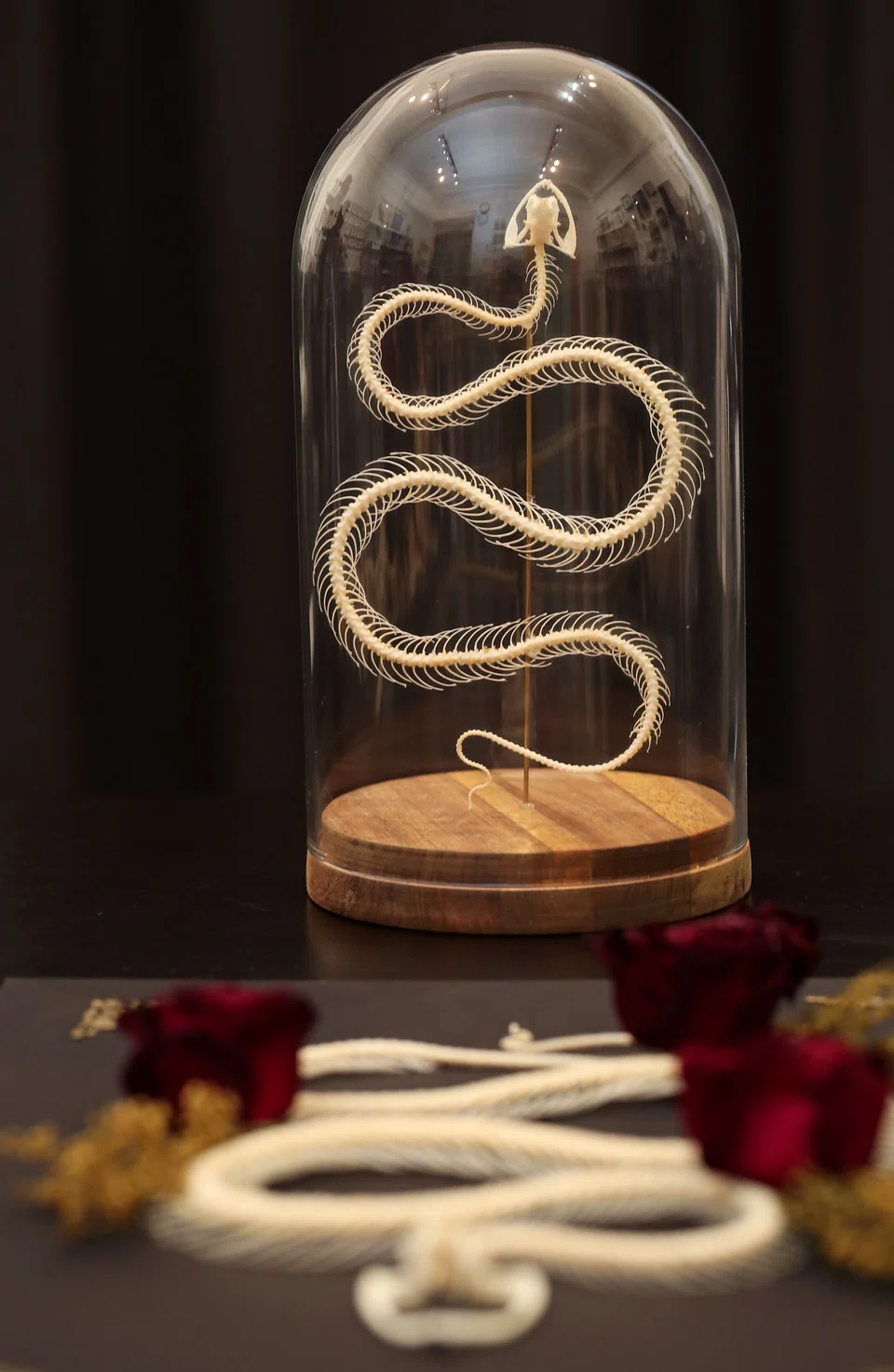
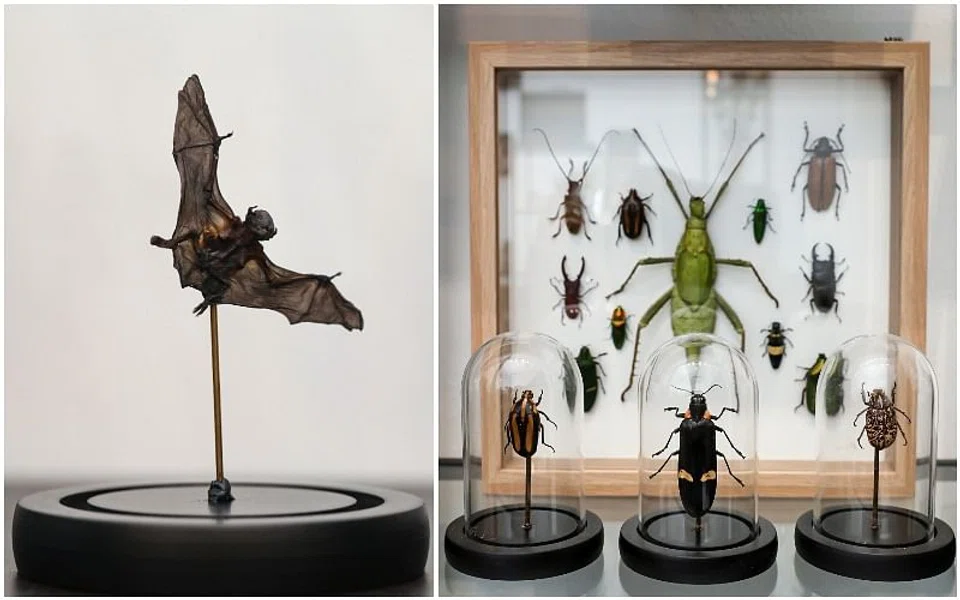
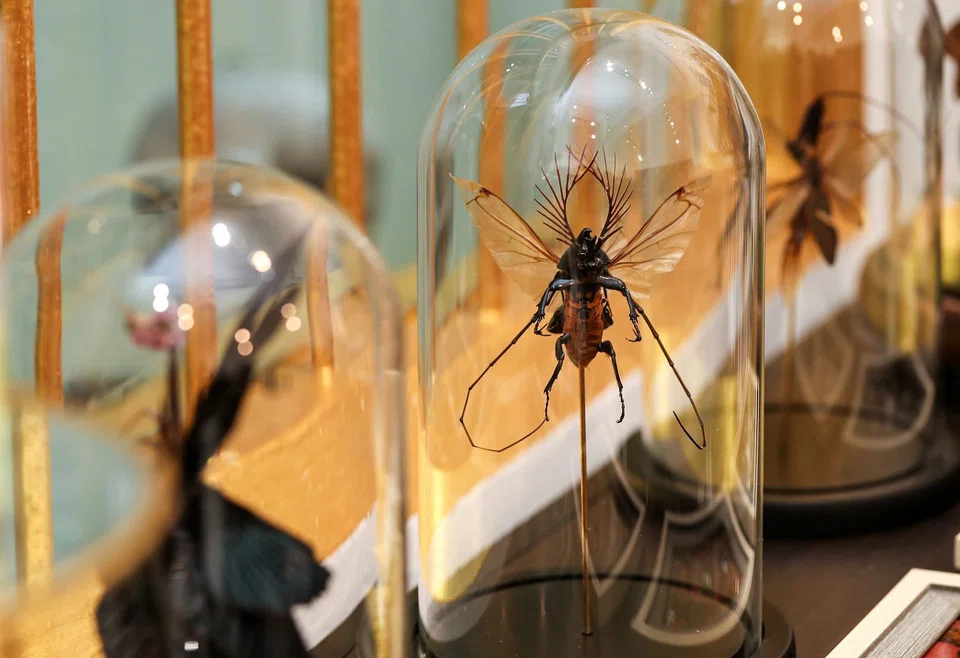
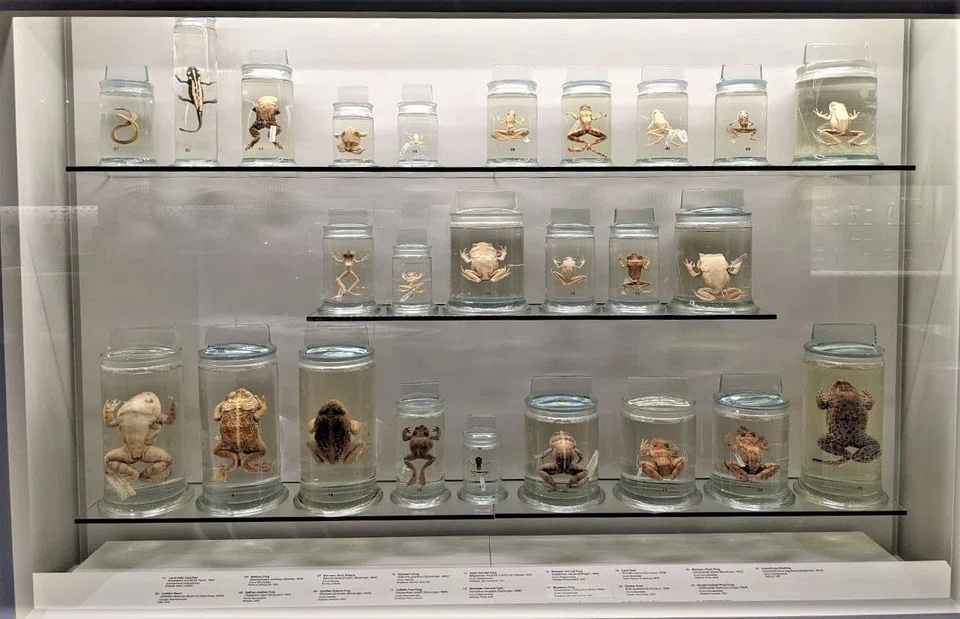
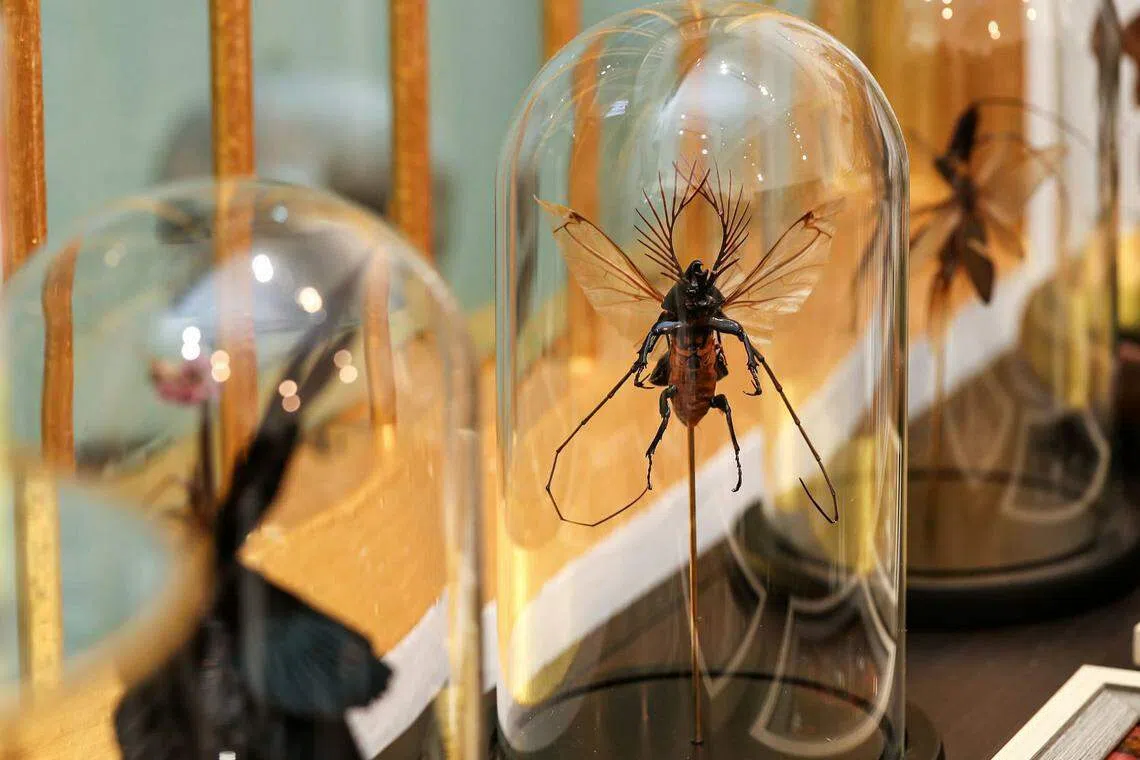
A MONKEY skull rests among an assortment of bones on a glass shelf, next to bats suspended in liquid, and the skeletal remains of snakes and frogs. Across the room, a flurry of iridescent blue cascades within a transparent dome of morpho adonis butterflies. Ducklings, frozen in time, huddle with soft -pink flowers in teacups. The green sheen from a jewel beetle jostles for attention with the wingspan of a rust-brown atlas moth.
Eternally preserved after their demise, the insects and animals are showcased in frames and glass cases. The delicate specimens, some adorned with flowers and crystals, have been immortalised at Black Crow Taxidermy & Art, whose chief taxidermist Vivian Tham turns carcasses into artwork and sentimental keepsakes.
Black Crow Taxidermy & Art appears to be the only entity in Singapore selling preserved specimens and providing a suite of preservation services commercially to the public. It also organises workshops centred around insect pinning, butterfly domes, frames, and the like.
Despite having operated for less than 2 years, it has seen demand swell rapidly. The business had its beginnings on Carousell in June 2020, before it was incorporated as a company with a studio at Pearl's Hill Terrace in August 2021.
Black Crow Taxidermy & Art maintains a strict no-kill policy, and does not deal with endangered, threatened or protected species such as otters. All specimens are already dead before they are handed over; the team also does not accept specimens that were killed intentionally. Its specimens include deceased pets, roadkill spotted by the public, and dead insects from local butterfly or bee farms. Most are donated, though some farms request for the delivery fee to be reimbursed.
Private collectors are flocking to the studio, as the dearth of commercial taxidermists here has led to pent-up demand over the years. Advertising professional Uli Chan, who owns 6 specimens, says she was "very excited" when she found out a local taxidermist had set up shop. "Previously, I wasn't able to really collect more specimens (from abroad) because they're quite fragile and it can be a huge hassle to bring them to Singapore."
Like many collectors, Chan is drawn to the beauty of taxidermy. "It's essentially nature that's preserved in its peak form. It reminds me of the fragility of life." That also aligns with her interest in gothic culture. The black-and-white butterflies, deer skull with black antlers, and mummified bat blend in with Chan's gothic Victorian home decor, which features frosted windows, a 1970s Ouija board, sage-green walls, and a teak desk.
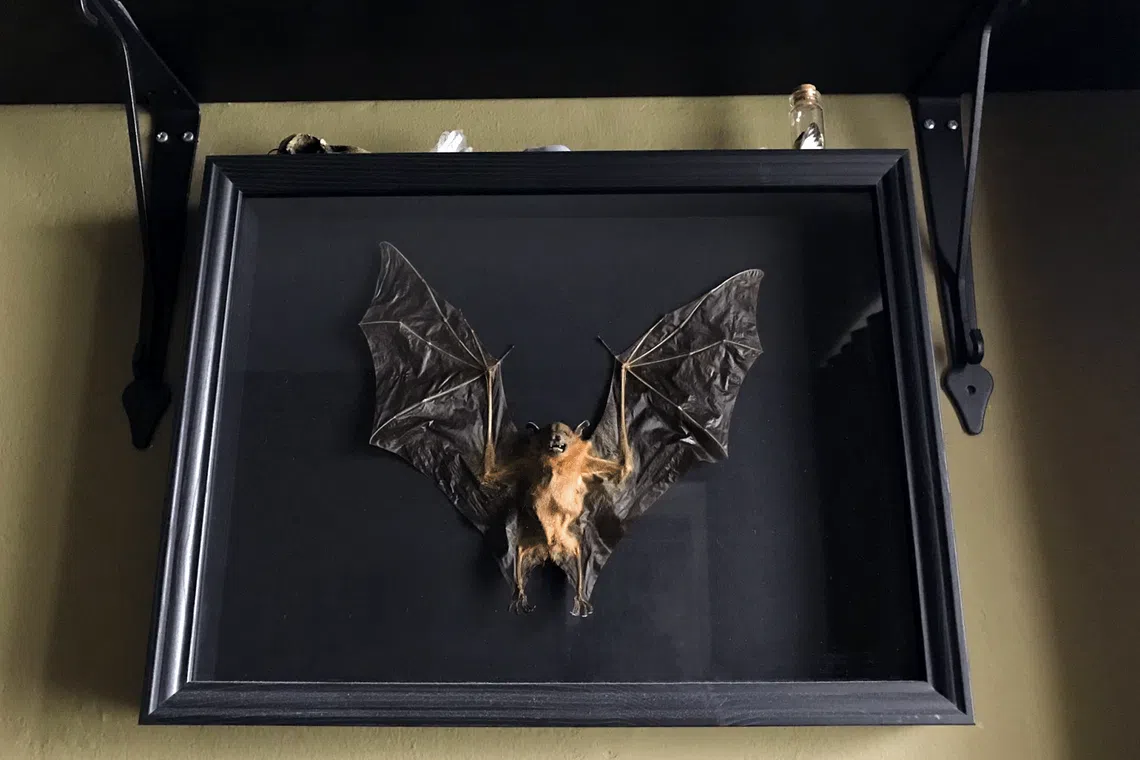
A tattooist who wishes to be known as Julian has been amassing specimens since 2012. "I treasure them as little relics of the past... I love anything related to natural history, so I collect old scientific drawings, fossils and other relics as well," he tells The Business Times (BT). A few of his vintage taxidermy pieces - from the 1940s and earlier - have old scribblings on them, "which are lovely and give them lots of character", he adds.
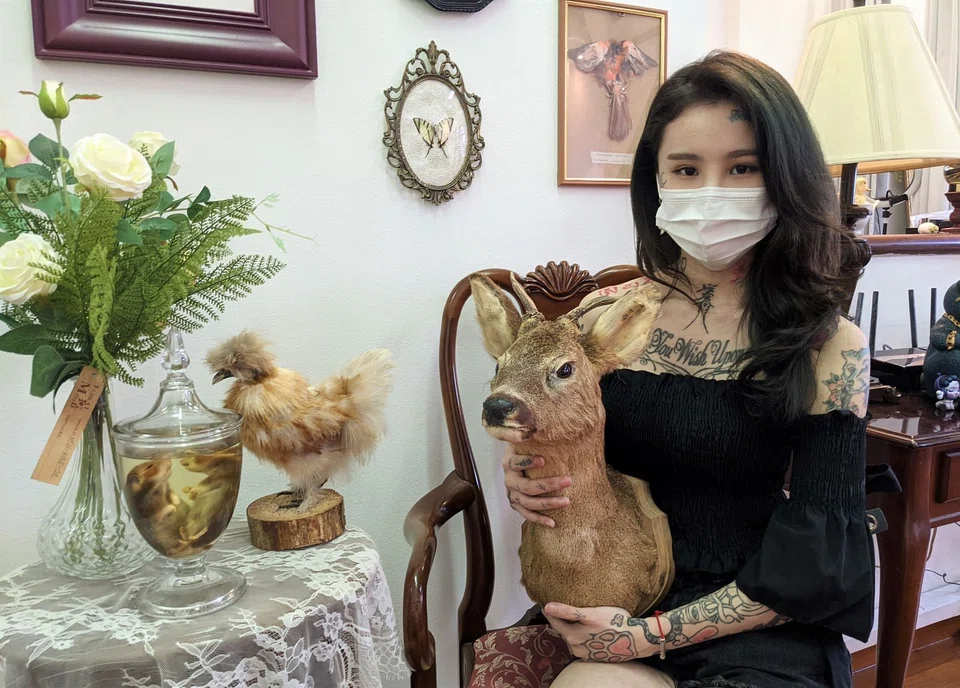
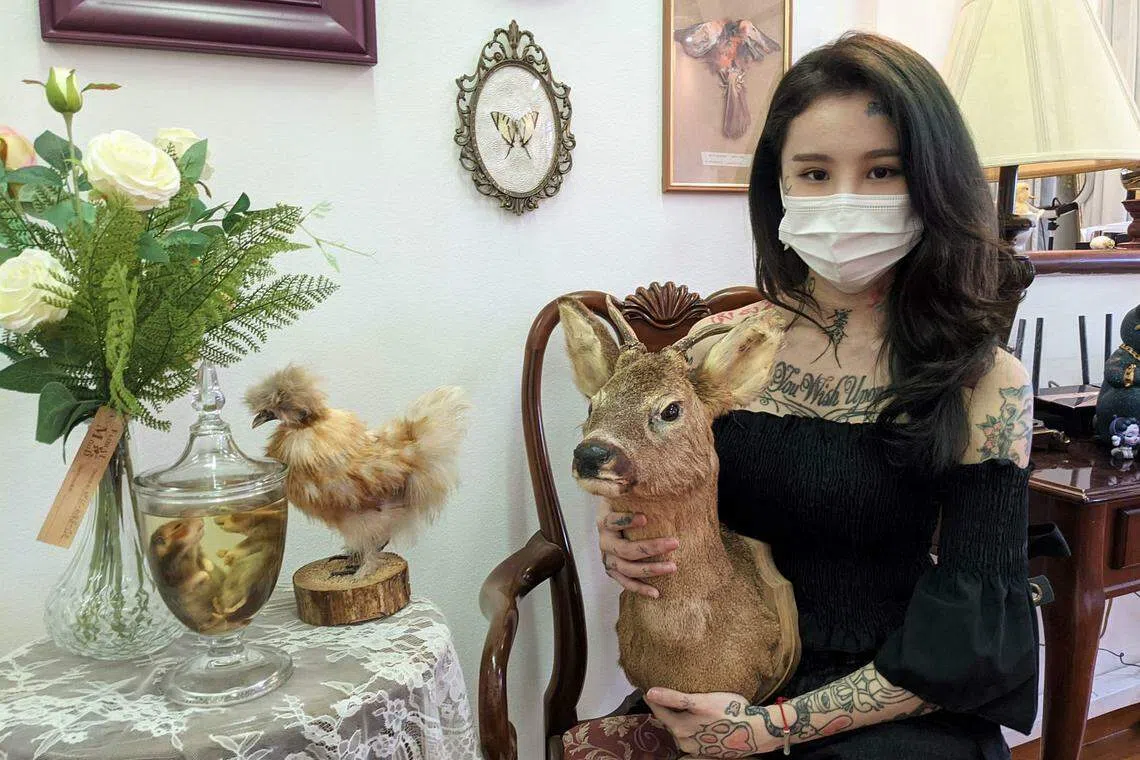
Another tattoo artist, Woo Jie Hui, owns more than 20 preserved items including a garter snake, a Silkie chicken and Syrian hamsters. She says the allure of taxidermy lies in the intricate details and technical finesse. "There's no way you can get close to some of these species (when they're alive), especially in a city. And when the taxidermist makes it extremely anatomically accurate, you can observe and appreciate the face, feathers, fur and scales up close without it running or wriggling away."
With more than half of her collection sourced from overseas, she has encountered her fair share of shipping issues. "Certain (exporting) countries may reject an item, or shipments can be delayed by 6 months or more. The seller also needs to properly label the specimen," Woo notes.
In Singapore, individuals must apply for an import permit from the National Parks Board (NParks) to bring in a product that is derived from a species listed on the Convention on International Trade in Endangered Species of Wild Fauna and Flora (CITES). Examples of CITES-listed species are the giant panda, red fox and beech marten.
Adrian Loo, group director, wildlife management at NParks, says a total of 34 CITES permits were issued for imports of taxidermy specimens from 2016 to 2020, mainly as personal effects. All imports of wildlife products must comply with NParks' health requirements to ensure the product was properly treated and free from diseases.
"Under Singapore's Endangered Species (Import and Export) Act, the penalties for importing, exporting, or re-exporting scheduled species without a permit carries a penalty of up to S$50,000 per scheduled species (or a maximum aggregate of S$500,000) and/or up to 2 years' imprisonment," Dr Loo notes.
Private collectors who spoke to BT emphasise that buying from ethical taxidermists is important to them. "All the parts I get are foraged... The animals are found dead in the wild or as roadkill," Julian says.
Chan always asks sellers where the supply came from: "As buyers, we have the responsibility to at least check. Most of the time, the sellers are able to tell me in detail how they got the specimens."
'Fast-forwarded' growth
At Black Crow Taxidermy & Art, Tham describes the growth journey as "fast-forwarded", as the original plan was to open a studio only in late 2022. This comes as the pandemic-weary, unable to travel, are eager to try new hobbies. Returning customers are also building up their vial and frame collections.
The studio holds roughly 20 workshops a month. The typical participants are couples, friends, retirees, and families. Parents often bring their children - especially aspiring veterinarians - for the sensory learning experience.
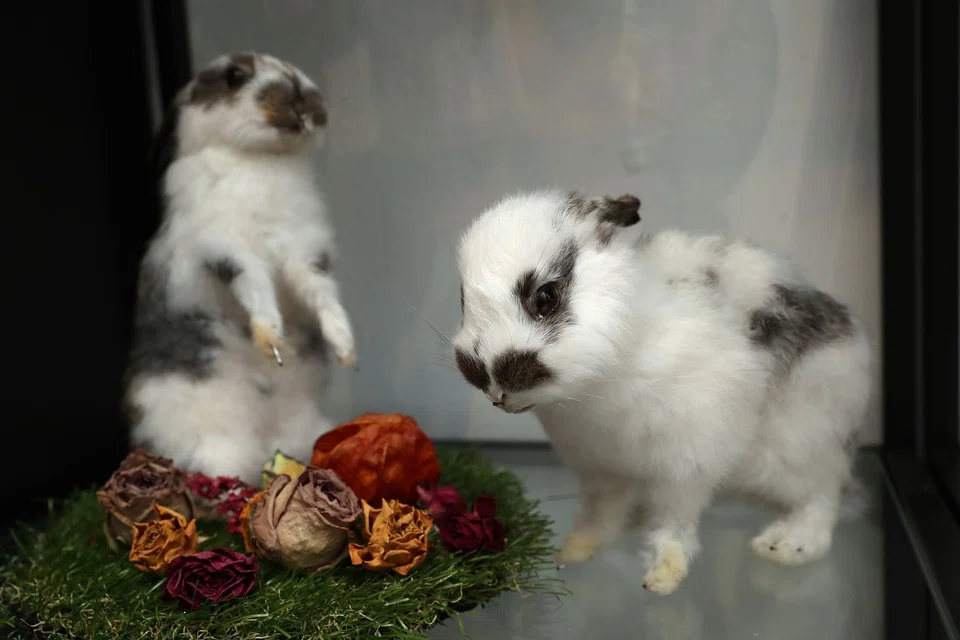
"We let them lightly touch specimens such as rabbits and butterfly wings. It's more hands-on; they can see the real thing beyond pictures and words in textbooks," Tham says.
The studio is also gaining traction among corporate customers, for company events and team-building activities. Employers have requested workshops for up to 100 participants.
Retail prices at Black Crow Taxidermy & Art vary based on the species, size, preservation method, and design. Those displayed in glass domes can go for S$135 for a crow skull, and S$400 to S$800 for a viper skeleton. Butterfly domes 12 cm in height are about S$120 to S$135. Framed items' prices hover around S$140 to S$1,200 for a bat, scorpion, longhorn beetle, atlas moth or luna moth. Workshop prices start from S$65 per pax for a 45-minute session to create a small butterfly frame, and about S$99 for a 1.5-hour session using a medium-sized dome.
But not all is rosy. Tham laments supply-side challenges such as shipment delays - exacerbated by Covid-related disruptions - and the lack of economies of scale at the moment, which threatens to squeeze profit margins.
"We tried to buy from local glass-makers and frame-makers, but most only accept orders for hundreds or thousands of pieces, which we don't have the storage space for." For those willing to sell smaller quantities of 50 to 100 pieces, the cost prices are "extremely high", she adds. A 2-metre-long 3D frame was quoted at S$1,200 by a local seller, compared to S$500 from overseas, for example.
"We'd have to jack up our retail prices if we source locally, so it doesn't make sense business-wise. Otherwise, our profit margins would be negative," she notes.
When a pet dies
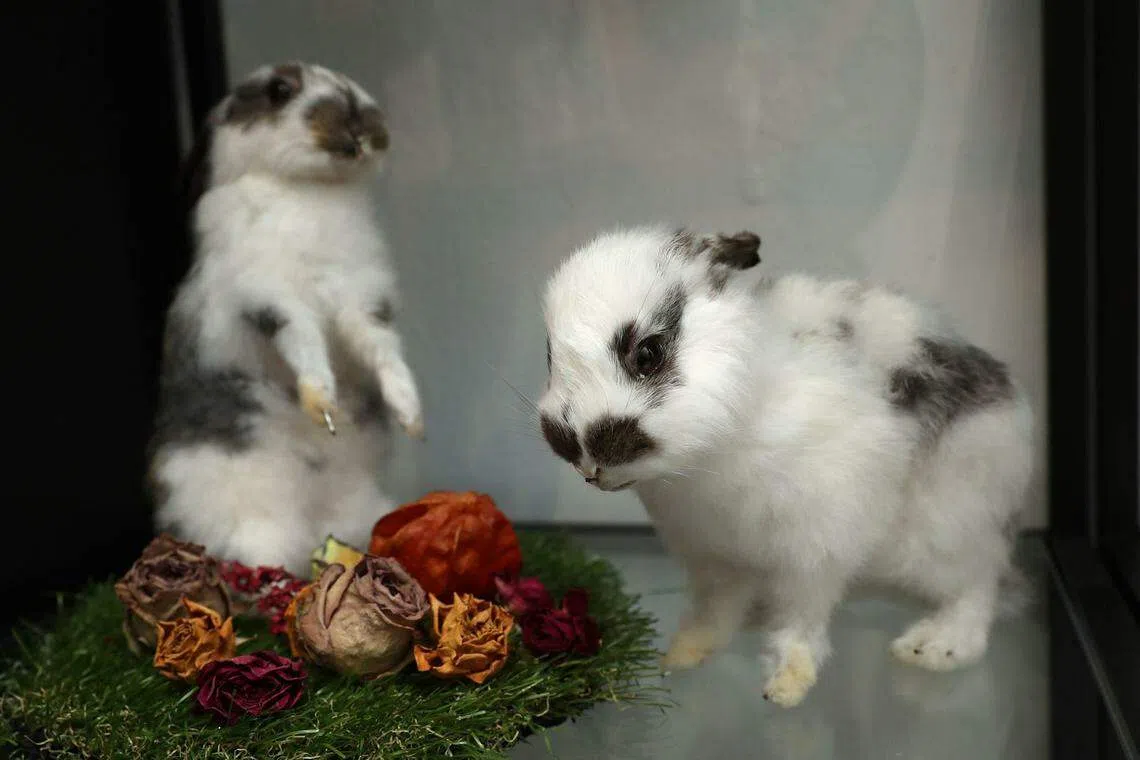
Bereaved pet owners, seeking a way to cope with the grief, are a key part of the taxidermy clientele.
Singapore Counselling Centre's chief wellbeing officer John Shepherd Lim points out: "To understand why some might opt for taxidermy, it's important to look into the role that pets can play in a person's life - with some more reliant on their pets for emotional support and companionship than others."
A pet's death can potentially be largely destabilising, especially for people who might be facing multiple losses in significant aspects of their lives or are dealing with a sudden pet loss, he says.
"While taxidermy does not negate the fact that the pet has passed on, it can play a role in restoring a degree of peace and consistency in the individual's life, as the owner is able to continue having the pet's presence with them in the house," Dr Lim adds.
Black Crow Taxidermy & Art offers taxidermy for dogs and cats at S$1,250 for the first 5 kg, and S$100 per kg thereafter. Prices start from S$150 for birds and hamsters, and from S$500 for rabbits.
Aside from preserving the entire likeness of the animal, some owners wish to preserve only a body part, while others opt for cremation but request a trinket - such as a resin pendant containing fur or ashes - as a keepsake, Tham says.
Crossing borders
Overseas, where taxidermy apprentices and hobbyists are common, specimens preserved by the less experienced and skilled can be several times cheaper than those done by seasoned professionals.
Still, after adding shipping charges, tariffs and other fees, imported specimens can potentially cost a pretty penny. Restoration and cleaning may be required, too, if it was not well preserved or sustained damages during shipping.
The bulk of Woo's taxidermy collection cost about S$400 to S$600 as they were mostly from amateur hobbyists, although she has spent over S$1,000 for a mummified stillborn puppy.
Tattooist Julian has bought bones for as little as S$10, but also forked out S$480 for a squirrel from the 1990s. He plans to get a 1930s taxidermy piece for some S$2,000.
Essentially, all well-preserved specimens should last forever, without mould or decay. It is not uncommon for private collectors to own specimens that have lasted many decades. The general rule is to keep them away from direct sunlight, liquids and food sources, which attract pests.
Poorly preserved specimens tend to last a few months at best. Two of Woo's imported butterfly frames became infested with ants and could no longer be salvaged. And the head mount of a roe deer - preserved by an apprentice in the 1970s - that she bought had torn skin and ears and a worn-out nose when it arrived in Singapore. Woo thus sent the deer for restoration, to make it look life-like again.
Branching out
The Black Crow team is eyeing myriad expansion opportunities, especially after it grows its headcount and the business becomes scalable. They are in talks with organisations such as nature groups and international schools for potential partnerships relating to flora and fauna, conservation and education. A bouquet preservation spin-off might be in the pipeline as well.
In the immediate term, they will integrate more technologies such as 3D printing, and explore other preservation techniques including diaphonisation, which entails dyeing the bones and cartilage and rendering the muscles transparent. Isopods and fish are also next on the ever-growing list of species Tham is looking to work on.
Creative and artistic elements will remain a focus. Tham hopes to expand her repertoire of chimera artwork, which involves piecing together parts from different species to form a hybrid specimen.
The team is also developing a structured, days-long crash course on taxidermy, for beginners to learn animal anatomy, practise dissection, and take home a mounted piece. And in the "very long run", the dream is to open a dedicated academy, offering accredited, in-depth courses on all preservation methods, Tham says. If this comes to fruition, it might well be the world's first specialised and accredited taxidermy programme.
Taxidermy studies
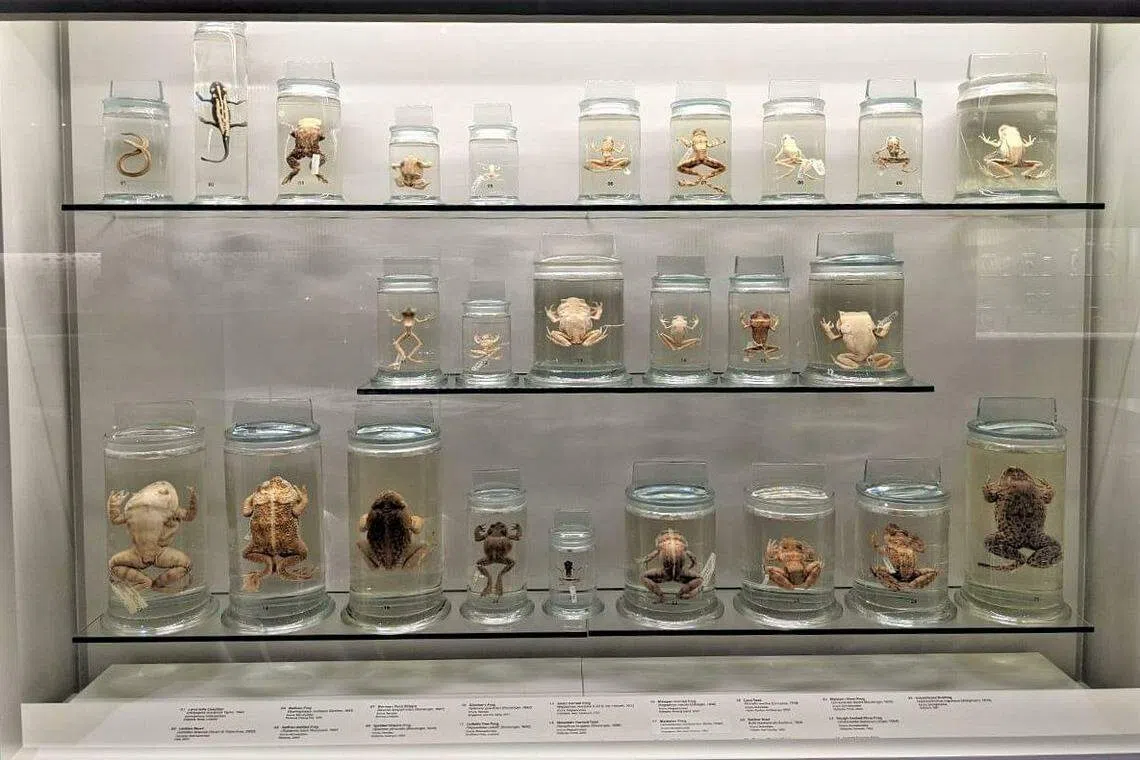
Beyond its commercial appeal, preservation has long offered research and educational value. Specimens often feature in museums and wildlife parks around the world. The Singapore Zoo, for instance, preserved polar bears Inuka and Sheba, after their deaths in 2018 and 2012.
At the Lee Kong Chian Natural History Museum, National University of Singapore (NUS), the roughly 100 or so taxidermy specimens were obtained largely during the colonial period or from public donations, and have lasted till today.
Marcus Chua and Kelvin Lim, vertebrate curators at the museum, tell BT that these specimens include birds such as eagles, reptiles such as crocodiles, mammals - from rats to rhinoceros - and even fishes. Tigers and turtles form the bulk of the donations offered.
"Scientific specimens would usually require taxidermy only if there is a need to depict how an animal looked when it was alive, usually for the purpose of education or exhibition," they add.
Separately, Black Crow Taxidermy & Art has been aiding several scientific studies at universities in Singapore. The company also lets arts students study its specimens' patterns and colours to create new textiles and materials.
TRENDING NOW

From legacy to launch: Francis Yeoh and Yeoh Pei Xien on family unity and YTL’s next‑gen ventures

Things to know about DBS’ incoming chairman Anthony Lim

Wealthy Indonesians snap up government bonds as yields near 8%: OCBC

From local AI partnerships to global opportunities: How MNCs help Singapore firms scale

